U.S. Army Tests Drones to Replace Soldiers in Its Most Dangerous Breaching Missions
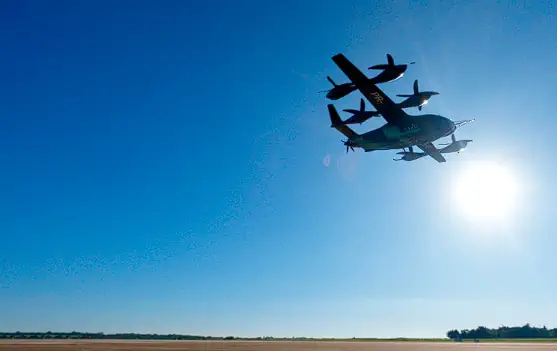
The Oregon Army National Guard has successfully tested a heavy-lift drone to deliver explosive Bangalore torpedoes through wire obstacles, replacing soldiers in breaching operations that carry an estimated 50% casualty rate. The trial used Lorica Technologies' Mule 28 drone, and the unit is now working toward AI-enabled autonomous breaching capabilities.

Highlights
- Oregon Army National Guard soldiers tested the Lorica Technologies Mule 28 drone to deliver live Bangalore torpedoes through wire obstacles, targeting Army breaching missions with an estimated 50% casualty rate.
- The Mule 28 weighs 45 lbs (approx. 20 kg), is powered by eight motors with 28-inch dual-blade propellers, and can lift payloads up to 200 lbs (approx. 90 kg).
- Lorica Technologies developed the Mule 28 airframe for this project in approximately six weeks; the drone also integrates target-locating sensors and an AI processing unit.
- The working group evaluated commercial drones priced between $2,000 and $40,000, ultimately selecting the $40,000 Mule 28 as a cost-effective alternative to risking soldiers' lives.
- Lorica Technologies confirmed the next-generation Mule 28 prototype will prioritize AI obstacle-recognition to enable increasingly autonomous breaching operations with near-zero susceptibility to electronic jamming.
The phrase "breaching the line" evokes one of the Army's most perilous missions: sending combat engineers through enemy obstacles to cut a path for follow-on forces. Now, the U.S. Army is exploring whether drones can take on that role instead.
A Mission With Up to 50% Casualty Rates
Breaching operations are extraordinarily dangerous. Army estimates suggest a deliberate breach can result in casualties of up to 50% among participating troops. To reduce that devastating toll, combat engineers from the Oregon Army National Guard recently tested heavy-lift drones delivering tube-shaped explosive charges — simulating a passage through enemy defensive positions. The trial was officially announced by the U.S. Army.
Soldiers from B Company, 741st Brigade Engineer Battalion, 41st Infantry Brigade Combat Team, flew drones loaded with live Bangalore torpedoes in winds gusting up to 40 km/h (25 mph) over Idaho airspace. At the Orchard Combat Training Center range, operators guided the drones to detonate the charges and clear wire obstacles, taking cover before the blast.
The Result of Months of Research
The successful test was the culmination of months of work by the battalion's drone working group, established by battalion commander Lt. Col. Eric Zimmerman to explore how commercial drones could be used to clear wire obstacles. Although the U.S. Army has been actively expanding drone use in riverine operations and testing the conversion of resupply drones into rocket launchers, the working group said they found no precedent for this specific tactic anywhere in the U.S. Army.
Zimmerman cited the war in Ukraine as the inspiration. "Watching what's happening in Ukraine and their ingenuity makes you want to step up and think bigger," he said.
Other Units Following Suit
The trial comes as units across the Army seek to use drones for the battlefield's most hazardous tasks. Earlier this month, soldiers from the 101st Airborne Division used drones to drag grappling hooks and detonate 3D-printed munitions through concertina wire.
The working group evaluated commercial drones priced between $2,000 and $40,000 before receiving the Mule 28 — a 45-lb (approximately 20 kg) heavy-lift drone developed specifically for this project by Lorica Technologies.
Mule 28: Specs and Capabilities
The Mule 28 features eight motors driving 28-inch dual-blade propellers and is capable of lifting payloads of up to 200 lbs (approximately 90 kg). The airframe also integrates target-locating sensors and an AI processing unit. Lorica Technologies completed the airframe development for this project in approximately six weeks; the company currently produces three additional Mule 28 variants.
2nd Lt. Andrew Lucas, co-lead of the working group, put the case plainly: "Breaching is the most casualty-intensive mission for Army engineers, with expected casualty rates of 50%. If you can breach with a $40,000 drone instead of pushing soldiers into harm's way, it's absolutely worth attempting."
From Inert Training Rounds to Live Explosives
Engineers began by drilling repeatedly with inert training rounds until the drone could reliably and accurately deliver simulated charges on target before transitioning to live explosive flights.
Soldiers initiated detonation via shock tube connected to the Bangalore torpedo rather than a wireless trigger, eliminating the risk of electronic interference or premature detonation.
The Path Toward AI-Autonomous Breaching
Lucas suggested future drone breaching capability may require minimal human intervention. "Technologically, we're not far from an AI-enabled drone that can autonomously identify the location of concertina wire," he said. In theory, a soldier would only need to provide a general location; the drone would independently identify the obstacle, position itself, and deploy the Bangalore torpedo. Because all processing would occur onboard, susceptibility to electronic jamming would be near zero.
According to Lorica Technologies, the next-generation Mule 28 prototype will prioritize integrating AI obstacle-recognition capabilities, with the goal of enabling increasingly autonomous breaching operations.
原文來源: 查看原文
FAQ
Reviewed and published by the LAETimes editorial desk ·