'We Live Like Ghosts': Inside Ukraine's Secret Long-Range Strike Drone Unit Targeting Russian Refineries and Military Sites
A highly secretive Ukrainian long-range drone strike unit operates under extreme secrecy — communicating only via encrypted channels, paying exclusively in cash, and keeping their work hidden even from family. Assigned to Center No. 1 of Ukraine's drone forces, the unit has struck targets deep inside Russia, including a Moscow oil refinery and the city of St. Petersburg, as part of a sustained campaign to disrupt Russian fuel supplies and military infrastructure.
Highlights
- Ukraine's Center No. 1 is a classified long-range drone strike unit whose members conceal their identities even from family and operate exclusively via encrypted communications and cash transactions.
- The unit struck a Moscow oil refinery in June 2025, sending black smoke over the Russian capital, and also targeted St. Petersburg during a major international summit.
- Ukraine conducts weekly drone strikes on Russian fuel depots and refineries as part of a sustained strategy to cut off Moscow's energy revenues.
- Unit members are required to keep personal phones in airplane mode at all times and connect only to personal portable routers; polygraph tests are used for vetting and security breach investigations.
- According to unit member 'Joey,' the primary operational bottleneck is not drone availability but the limited number of hours in a day.
'We Live Like Ghosts': Inside Ukraine's Secret Long-Range Strike Drone Unit
They operate entirely in the shadows — and that is precisely the point. The Ukrainian soldiers behind some of the most audacious long-range drone strikes of the war live under conditions of near-total secrecy: communicating exclusively through encrypted channels, telling their wives and children nothing about their work, and conducting all daily transactions in cash. Their real names are strictly protected, and any publicly traceable evidence of their identities is forbidden.
A member using the call sign "Joey" has been involved in strike operations since 2025, yet his friends and even his parents have no idea. That is by design.
"Don't draw any attention to yourself, don't show off. Even when the war is over, you will never be able to talk about what you've done," he told Agence France-Presse in a rare interview.
The former marine serves with Center No. 1, the strike arm of Ukraine's drone forces. His unit has carried out several major attacks inside Russia, including an air strike on a Moscow oil refinery in June that sent thick black smoke billowing over the Russian capital, and a strike on St. Petersburg timed to coincide with the opening of a major international summit held in the city.
The Ukrainian government frames these operations as legitimate retaliation against Russia's nightly bombardment of Ukrainian cities, and conducts weekly attacks on fuel depots and refineries in an effort to cut off Moscow's energy revenues.
Joey is clear about why secrecy is non-negotiable.
"We are high-value, high-priority targets in the eyes of the enemy."
Hiding in Plain Sight
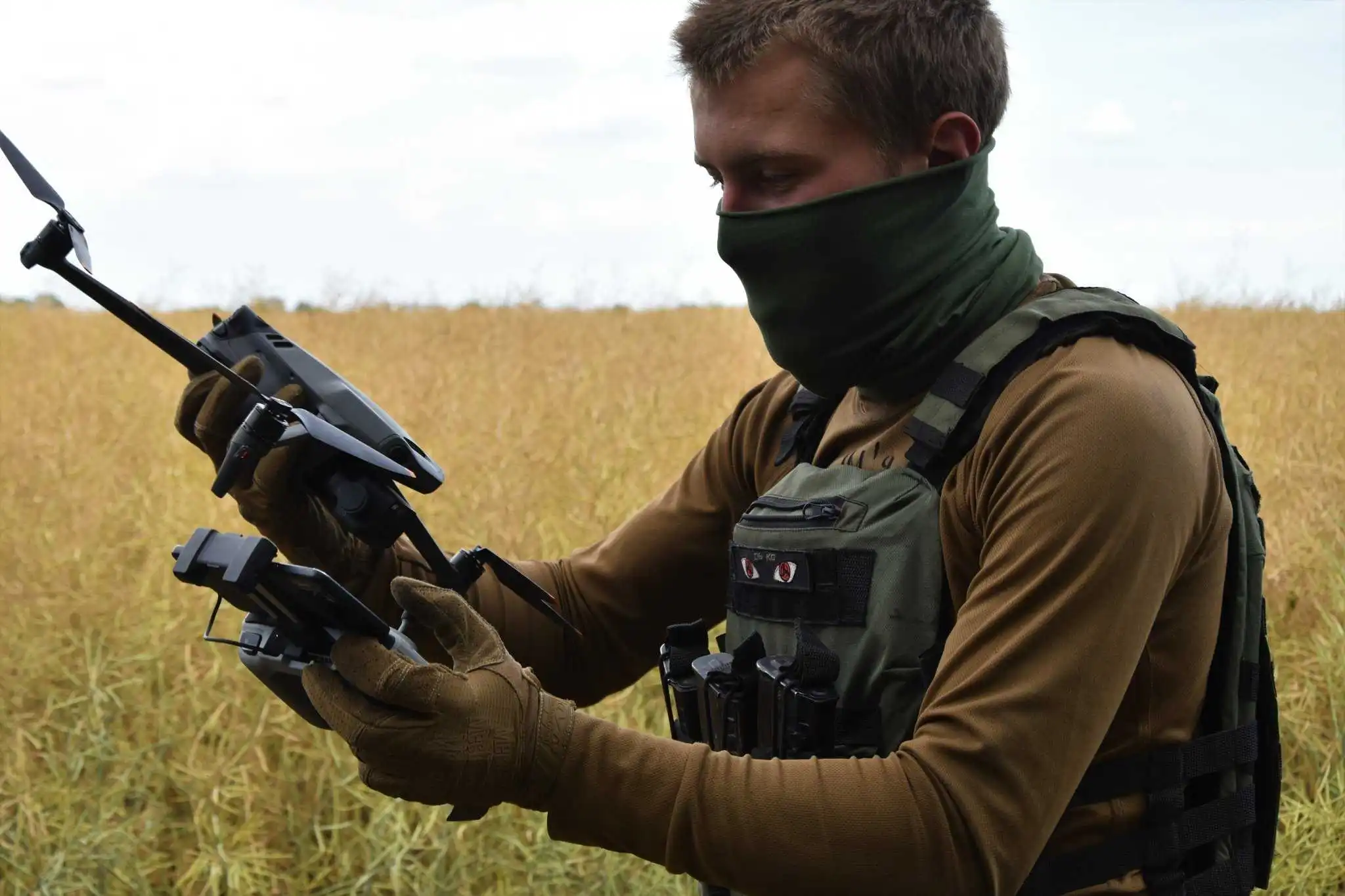
Unit members' names and ages are classified. No photographs or video footage that could identify their faces was permitted during the AFP interview.
Another Center No. 1 soldier, who goes by "Voron" — Ukrainian for "raven" — explained the mindset behind their deliberate invisibility.
"We ourselves know very well what the price can be — for our loved ones and for ourselves — which is why we actively and consciously choose to stay in the shadows as much as possible," he said.
He added that Russia is determined to "hunt down at least one deep-strike team at any cost." He knows this from the other side: before joining the unit, he served in a different formation whose mission was to track and eliminate Russian long-range drone teams.
Before the war, Voron was a painter and martial arts instructor. He is married with a child, and believes his wife "suspects" the nature of his work — but "never asks questions."
To maintain his cover, he continues to post on social media through his old unit's page and shares photos featuring his previous unit's insignia, giving the impression he is still stationed there. "All my relatives and friends think I'm still in the special forces," he told AFP.
A Ukrainian military intelligence (GUR) officer who goes by "Wolf" put it simply: "In everyday life, you wouldn't recognize us. We keep a low profile… we look like ordinary people."
Voron echoed that point: "People imagine commandos in camouflage, but in reality we walk around in shirts and jeans."
Ironclad Information Security
Discussing missions in public is strictly prohibited — even words like "take-off" or "wing" are off-limits in conversation. All purchases are made in cash; ATM withdrawals are deliberately spread across different machines to avoid patterns. Even signing up for a petrol station loyalty card is banned.
All three unit members interviewed by AFP said that phones must remain in airplane mode at all times — whether on duty or off — and may only connect to a personal portable router carried on their person. Dedicated encrypted handsets are used for military communications, and any device with location-tracking capability is strictly forbidden.
Polygraph tests are used when a security breach is suspected, and also as part of the vetting process for new recruits.
The Bottleneck Is Time, Not Drones
As Ukraine's deep-strike campaign intensifies, the unit's biggest constraint is not a shortage of drones — it is, as Joey put it, "the number of hours in a day."
He says he hopes one day to personally lead a strike on the Kremlin, and dreams of "Russia's total defeat."
He describes the long-range strikes as ice cracking beneath Russian feet.
"We are doing everything we can to make it collapse under them."
Source: Agence France-Presse (AFP)
Image note: File photo of a drone operator from Ukraine's 36th Naval Infantry Brigade with a DJI Mavic 3.
原文來源: 查看原文
FAQ
Reviewed and published by the LAETimes editorial desk ·


