Video Appears to Show Ukrainian Forces Downing Russian Shahed Drone with US-Made Merops Interceptor as Army Eyes In-House Production
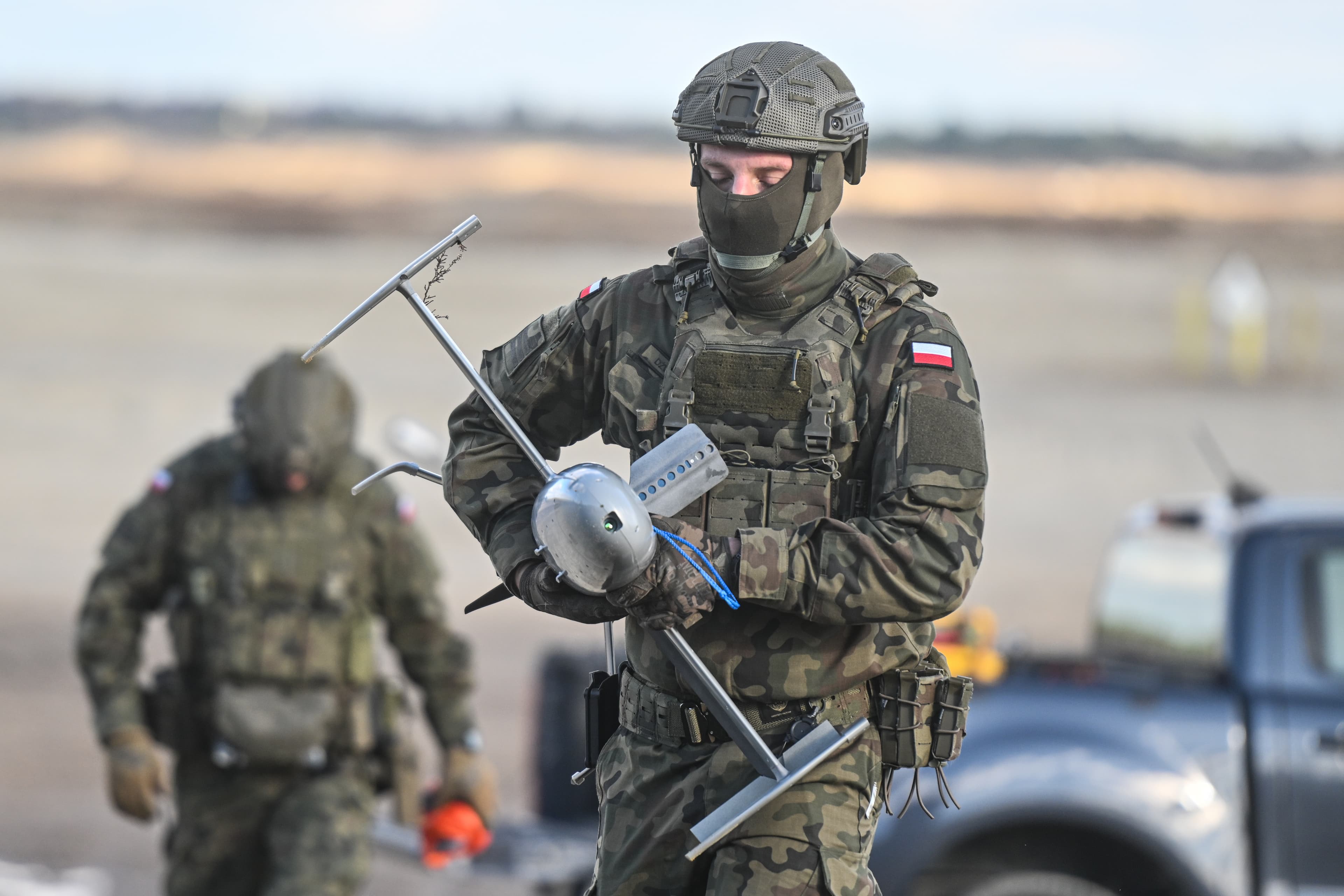
Ukraine's 427th Independent Unmanned Systems Regiment 'Rarog' has released night-vision footage apparently showing a US-made Merops interceptor destroying an Iranian-designed Shahed drone. The clip surfaces as the US Army launches a 'Low-Cost Interceptor' programme seeking government-owned designs priced under $1 million per system, aiming to reduce reliance on sole supplier Perennial Autonomy, which holds a $500 million Pentagon contract.
Highlights
- Ukraine's 427th Independent Unmanned Systems Regiment 'Rarog' posted night-vision footage apparently showing a Merops interceptor destroying a Shahed one-way attack drone.
- The US Army launched its Low-Cost Interceptor programme on 23 June, seeking systems priced under $1 million per unit with government-owned designs to reduce sole-source reliance on Perennial Autonomy.
- Perennial Autonomy signed a three-year, $500 million Pentagon contract in May 2025—the largest single counter-drone procurement in Pentagon history—at approximately $15,000 per Merops unit.
- Merops has reportedly downed more than 4,000 Russian drones in Ukraine and accounts for an estimated 40 percent of all confirmed Shahed kills, according to US Army Brigadier General Curtis King.
- Romania integrated Merops into its national air-defence system on 29 June; Lithuania procured 48 units earlier in 2025, while Ukraine's $1,000–$3,000 domestic interceptors have achieved cost-exchange ratios of up to 85-to-1.
Kyiv, Ukraine — A Ukrainian drone unit has released footage apparently showing a US-made Merops interceptor pursuing and destroying an Iranian-designed Shahed one-way attack drone, underscoring the weapon's battlefield effectiveness as the US Army pushes to field its own mass-producible version.
Ukraine's 427th Independent Unmanned Systems Regiment, known by its callsign 'Rarog', uploaded the unverified night-vision clip to its Telegram channel last month. The footage shows an interceptor closing on a loitering munition before a flash appears on contact. The unit operates both Ukrainian-made interceptors and foreign systems and did not specify which platform was used in the engagement.
Rob Lee, a senior fellow at the Foreign Policy Research Institute, reshared the video, describing it as the first publicly available footage he had seen of Perennial Autonomy's Merops interceptor 'striking a Shahed/Geranium one-way attack drone.'
US Army Launches Low-Cost Interceptor Programme
The footage emerges as the US Army moves to establish its own drone-intercept capability.
On 23 June, the Army held an industry day in Arlington, Virginia, formally kicking off its Low-Cost Interceptor programme. The service is seeking an all-up system costing less than $1 million per unit alongside a government-owned design that any manufacturer could be licensed to produce, with a live-fire demonstration scheduled for this autumn.
Army Secretary Dan Driscoll stated in May that the initiative would allow the Army to disaggregate the interceptor into individual modules—procured or licensed separately—and handed to contract manufacturers. The goal is to give the Army autonomy over the weapon rather than dependence on a single prime contractor.
The Army currently does not hold a design licence for Merops and cannot produce it independently. The new programme is intended to change that, giving the service government-owned blueprints it can take to any manufacturer rather than being tied to a single vendor.
Perennial Autonomy and the Pentagon's Landmark Contract
The company from which the Army is seeking design independence is Merops manufacturer Perennial Autonomy. The defence start-up, founded in 2023 by former Google CEO Eric Schmidt, signed a three-year, $500 million contract with the Pentagon in May—the largest single counter-drone procurement award in Pentagon history—giving the firm significant leverage in the military supply chain.
The Pentagon's pivot to Merops was driven in part by the expenditure of hundreds of Patriot missiles, each costing more than $3 million, to intercept Iranian Shahed drones—a practice that severely depleted air-defence stockpiles that Ukraine depends on.
According to Driscoll's April congressional testimony, following the outbreak of hostilities with Iran in late February, the Army procured 13,000 Merops interceptors in just eight days at approximately $15,000 each.
'They protected American forces,' the Army Secretary told lawmakers, emphasising that the unit cost is a fraction of a single Shahed. 'That's a trade we'll make every time.'
A Merops interceptor costs approximately $15,000, compared with a Shahed valued at between $30,000 and $50,000.
Merops Technical Specifications
Merops is a fixed-wing drone with a wingspan of roughly three feet (approximately 90 cm) and a top speed of 174 mph (280 km/h). When communications links are jammed, it can autonomously acquire targets via thermal imaging or radio-frequency sensors.
According to German production partner Twentyfour Industries, Merops has shot down more than 4,000 Russian drones over Ukraine.
Brigadier General Curtis King, commander of the US Army's 10th Air and Missile Defense Command, told reporters at a base in Poland in November that by conservative estimates, Merops accounts for 40 percent of all confirmed Shahed kills in Ukraine. NATO has also integrated Merops into its eastern-flank defence forces.
Romania incorporated Merops into its national air-defence system on 29 June, joining Poland as a deployment nation; Lithuania procured 48 units earlier this year. Reuters reported that officials plan to deploy them along the Danube corridor, a region that has seen repeated Russian drone incursions from adjacent battlefields.
Persistent Technical Challenges
Merops is not without limitations. In mid-June, multiple videos circulated online showing Merops interceptors failing to bring down Russian drones. Greek outlet Pronews reported a failed intercept during Romanian field tests in April, which military officials attributed to 'target evasive manoeuvring.' Nonetheless, Pronews rated Merops as one of the most cost-effective low-cost tools on the drone battlefield.
Ukraine's Low-Cost Domestic Alternative
Ukrainian forces also make extensive use of domestically produced interceptors costing between $1,000 and $3,000 each. Since 2024, these have downed thousands of Russian drones, with cost-exchange ratios reaching as high as 85-to-1 in Kyiv's favour.
In August of last year, Ukraine proposed to the Pentagon that it help scale up production and co-manufacture these low-cost interceptors for the United States—an offer Washington declined.
原文來源: 查看原文
FAQ
Reviewed and published by the LAETimes editorial desk ·