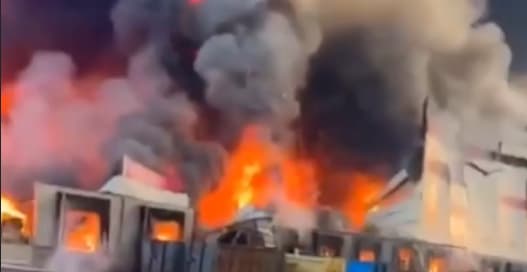
Iran: The Most Successful Failure in American Airpower History
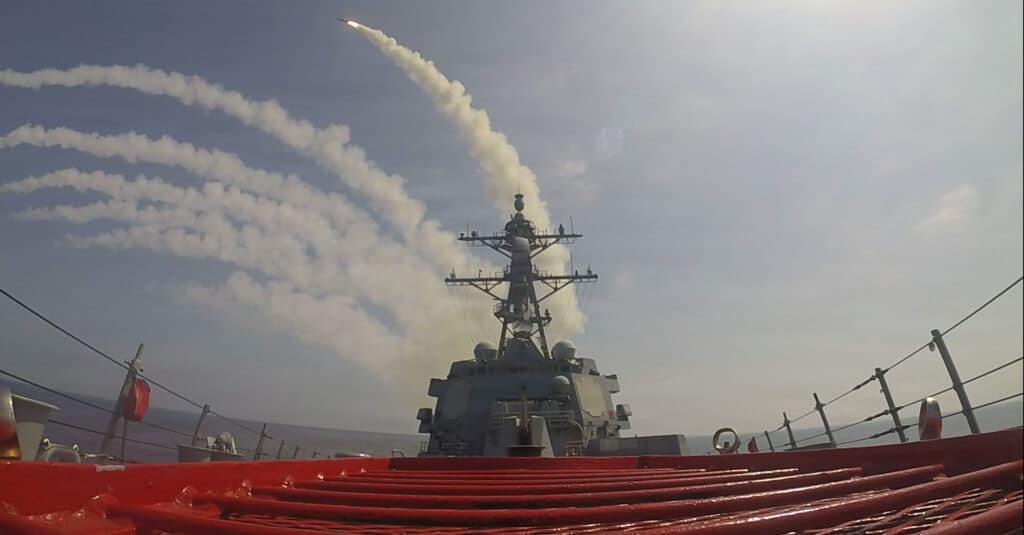
The United States entered the conflict with a sophisticated 'annihilating warfare' plan, yet had no meaningful answer to Iran's 'disruptive warfare' strategy. The conflict exposed a critical blind spot in U.S. asymmetric warfare thinking and underscored the growing battlefield significance of low-cost drones and unconventional tactics.
Highlights
- The U.S. military entered the Iran conflict with a conventional 'annihilating warfare' doctrine but lacked a coherent response to Iran's asymmetric 'disruptive warfare' strategy.
- Iran's drone swarms cost only a few thousand dollars per unit, forcing the U.S. to expend munitions worth hundreds of thousands of dollars each to counter them — a severe cost imbalance.
- Low-cost drones do not require sophisticated command-and-control systems yet can effectively deplete the defensive capacity protecting high-value U.S. assets.
- Iran's core strategic principle — 'not winning, but making the adversary pay' — neutralized the decisive edge that traditional U.S. airpower superiority would otherwise provide.
- The conflict is widely cited as illustrating that strategic adaptability and cost-effective asymmetric tactics can outmaneuver technologically superior but conventionally oriented military forces.
The United States entered the conflict armed with a meticulously crafted plan for "annihilating warfare" — yet it had no substantive response to the "disruptive warfare" strategy Iran chose to employ.
The Gap Between Plan and Reality
The U.S. military has long excelled at planning for high-intensity, high-technology conventional conflict: precision strikes, air superiority, and the destruction of enemy infrastructure through overwhelming firepower. Iran, however, operated on an entirely different strategic logic — leveraging proxy forces, low-cost drone swarms, and sustained harassment operations to achieve maximum strategic disruption at minimal cost.
The Core of Asymmetric Tactics
At the heart of Iran's strategy is the principle of "not winning, but making the adversary pay." This approach effectively neutralizes the decisive advantages of traditional U.S. airpower. When each U.S. precision munition costs hundreds of thousands of dollars and the drones fielded by Iran and its allies cost only a few thousand, the logic of the resource attrition battle has already been reversed.
Drones Rewriting the Equation of War
The large-scale deployment of low-cost drones is the most emblematic element of Iran's disruptive strategy. These systems require no sophisticated command-and-control infrastructure, yet they can effectively exhaust the defensive resources protecting high-value targets — forcing adversaries to counter low-cost threats with disproportionately expensive responses.
Historical Lessons and Future Implications
The most significant lesson this conflict leaves behind may not be about whose weapons are more advanced, but whose strategy is more grounded in reality. U.S. airpower remains unmatched by conventional metrics — but when an adversary refuses from the outset to compete under the same set of rules, "the most successful failure" becomes a defining irony of military history.
原文來源: 查看原文
FAQ
Reviewed and published by the LAETimes editorial desk ·