The Drone Arms Race Accelerates: A Revolution Spanning Battlefield to Commercial Market
On June 25, 2025, Ukraine launched one of the war's largest coordinated drone strikes against Russia, deploying approximately 660 UAVs overnight across targets from Moscow to Crimea. The conflict has cemented drones as a decisive modern warfare weapon while propelling the global commercial drone market toward a projected $65 billion annually by 2030, driving advances across AI, battery, and sensor supply chains.
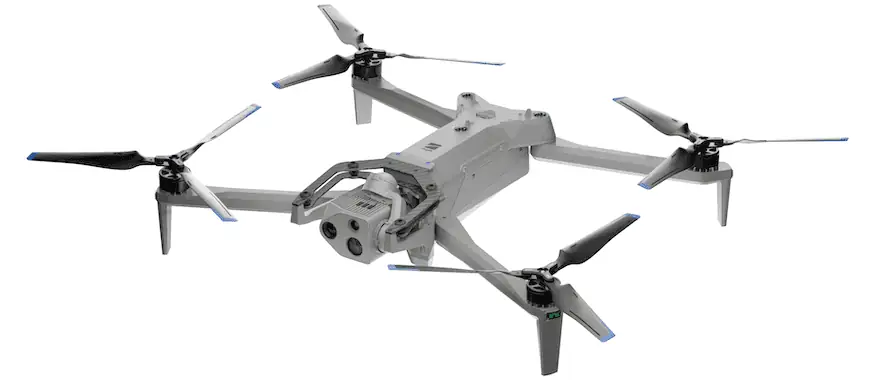
Highlights
- On June 25, 2025, Ukraine conducted one of the war's largest UAV strikes, deploying approximately 660 drones overnight against targets from Moscow to Crimea.
- The global commercial drone market is projected to exceed $65 billion annually by 2030, driven by logistics, agriculture, utilities, and emergency services applications.
- The U.S. Department of Defense has allocated over $53 billion for autonomous systems in its latest budget, including $17 billion earmarked for unmanned air, land, and maritime platforms.
- Swarm tactics using low-cost UAVs are forcing militaries to expend expensive interceptors against drones that cost a fraction of the defense system's price, redefining asymmetric warfare.
- AI, advanced batteries, and lighter composite materials are enabling dual-use drone innovation, with breakthroughs in military UAVs flowing directly into commercial and eVTOL markets.
The Drone Arms Race Accelerates: A Revolution Spanning Battlefield to Commercial Market
Adapted from Aircraft Value Intelligence (AVN) Global Aviation Comprehensive Report
For anyone who still doubted whether drones have become the decisive weapon of modern warfare, the latest wave of deep-penetration strikes into Russian territory should settle the debate.
660 Drones in a Single Night: A Milestone in Military History
On June 25, 2025, Russia sustained one of the largest coordinated aerial attacks of the war — approximately 660 Ukrainian drones operating in a single overnight campaign. Targets included military airfields, logistics hubs, and other strategic installations across a vast swath of territory stretching from Moscow to Crimea.
The operation demonstrated how far drone technology has evolved. Small, inexpensive, and difficult to intercept, modern UAVs can penetrate sophisticated air-defense systems and strike hundreds of miles behind the front line.
Rewriting Military Strategy
This is rewriting the strategic equation. For decades, air superiority depended on fighter jets, bombers, and costly precision-guided munitions. Those platforms remain essential, but commanders now face a fundamentally new threat: large numbers of relatively inexpensive UAVs operating in concert.
"Swarm" tactics can overwhelm even the most advanced defensive systems, forcing adversaries to expend high-cost interceptors against drones that cost a fraction of the price.
The battlefields of Ukraine and the Middle East have become testing grounds for this new model of asymmetric warfare. Countermeasures are barely rolled out before new tactics emerge. Militaries are rewriting doctrine even as the conflict continues.
Dual-Use Technology Driving the Revolution
The technologies powering this transformation did not appear overnight. Better batteries, lighter composite materials, more precise navigation systems, and rapid advances in artificial intelligence have dramatically expanded UAV mission capabilities — and those innovations are now spilling over into the civilian commercial economy.
Not long ago, drones were seen as hobbyist toys or professional aerial photography tools. Today, they are becoming central to a growing number of industries.
Market research firms project the global commercial drone market will surpass $65 billion per year by 2030, with potentially millions of UAVs performing routine tasks that once required helicopters, trucks, or large teams of on-site personnel.
Commercial Applications Across Every Sector
Logistics and delivery is among the most closely watched use cases. Multiple companies are testing drone delivery networks capable of placing small parcels directly at customers' doors in a fraction of the time required by conventional delivery methods.
Utilities deploy drones to inspect power transmission lines without exposing workers to hazardous conditions. Farmers use aerial surveys to identify irrigation problems, monitor crop health, and apply fertilizer or pesticide precisely where needed — reducing both costs and waste.
Construction companies can survey large job sites in hours rather than days. Mining firms use drones to map remote terrain with remarkable accuracy. Fire, search-and-rescue, and emergency medical teams increasingly rely on UAVs to locate casualties, assess disaster scenes, and deliver critical supplies to areas inaccessible by road.
Insurers are actively adopting aerial imagery to accelerate loss assessments following hurricanes, tornadoes, and other natural disasters.
The FAA and a Vast Market Opportunity
The U.S. Federal Aviation Administration (FAA) expects the commercial UAV fleet to continue expanding well beyond the one million already-registered aircraft. Steady progress in detect-and-avoid technology, autonomous flight software, and airspace management systems is gradually making routine drone operations in busy urban airspace a practical reality.
The Pentagon Commits $53 Billion
Governments are investing heavily as well. The U.S. Department of Defense's latest budget allocates more than $53 billion for autonomous systems and related technologies, of which approximately $17 billion is earmarked specifically for unmanned platforms operating in air, land, surface, and undersea domains.
Defense planners have shifted their thinking from reliance on a small number of extremely expensive platforms toward building larger fleets of lower-cost systems — ones that can be rapidly mass-produced, deployed at scale, and replaced as needed.
The conversation at the senior military level has changed accordingly. The question is no longer whether drones will play a central role in future conflicts, but how quickly nations can scale production, integrate artificial intelligence, and develop effective defenses against increasingly capable UAVs.
Industry-Wide Impact
The revolution extends well beyond defense contractors. Aircraft manufacturers, avionics suppliers, software companies, and logistics operators are all making major investments in unmanned aviation. Cargo drones are being developed to move high-value freight between airports and distribution centers without onboard crew, potentially reshaping regional freight networks.
Meanwhile, electric vertical take-off and landing (eVTOL) air taxis continue to advance through certification processes. Although commercial service is still years away, with each successive technical milestone the long-term vision of autonomous urban air mobility becomes increasingly tangible.
Artificial intelligence is accelerating virtually every dimension of this evolution. Modern drones can recognize terrain, avoid obstacles, identify objects, and complete increasingly complex missions with minimal human intervention. As autonomy improves, UAVs will become more capable and more deeply integrated into the broader aviation system.
The economic impact of this revolution already extends far beyond the aerospace industry itself. Sustained demand for advanced sensors, batteries, communications hardware, and AI software is creating substantial opportunity for companies throughout the aviation technology supply chain.
John Persinos is Editor-in-Chief of Aircraft Value Intelligence.
原文來源: 查看原文
FAQ
Newsletter
Subscribe to our Low-Altitude Industry Newsletter
Daily curated news on low-altitude economy and drone industry, delivered to your inbox.
Reviewed and published by the LAETimes editorial desk ·