U.S. Envoy to Taiwan: Island Must Build 'Hornet's Nest' Drone Defense Network to Deter Conflict
American Institute in Taiwan (AIT) Director Raymond Greene told a drone forum in Taichung that Taiwan should create a 'hornet's nest' of aerial, surface, and underwater drones to deter conflict. Taiwan's government has separately proposed a NT$210 billion (approx. US$6.59 billion) drone procurement plan covering surveillance, coastal attack, and surface unmanned vessels, with a deadline of end-2031.
Highlights
- AIT Director Raymond Greene called on Taiwan to build a 'hornet's nest' drone network covering aerial, surface, and underwater domains to deter potential conflict with China.
- Taiwan's government has proposed a NT$210 billion (US$6.59 billion) drone procurement plan for surveillance, coastal attack, and surface unmanned vessels, with a deadline of end-2031.
- Taiwan's Legislative Yuan approved only two-thirds of President Lai Ching-te's NT$1.25 trillion supplemental defense budget in May, with approved funds restricted to U.S.-made weapons purchases.
- The KMT opposition proposed a rival six-year NT$240 billion drone budget with an NT$40 billion annual cap, to be incorporated into the general government budget.
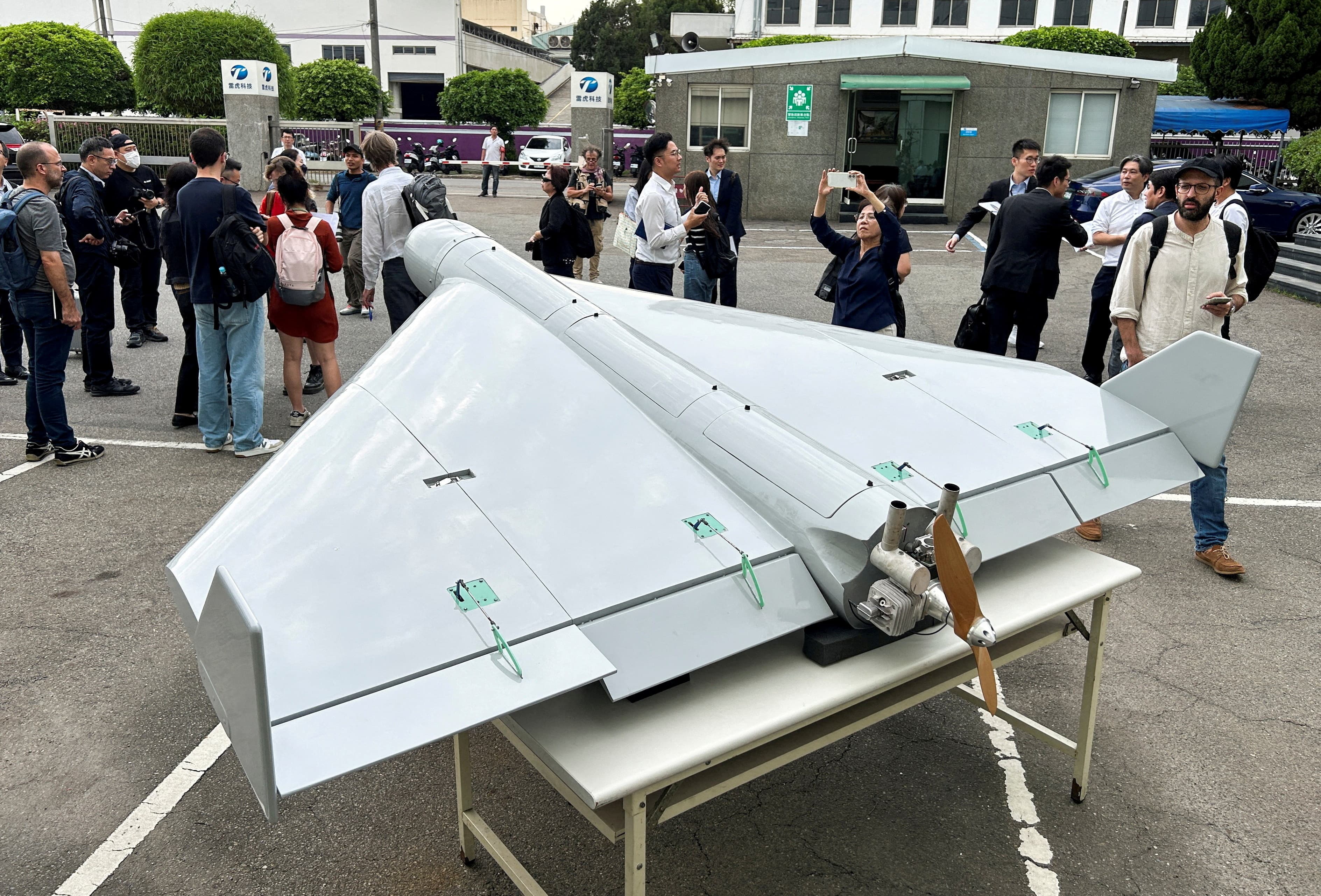
- Taichung, home to firms such as Thunder Tiger and AIDC, serves as Taiwan's primary drone industry hub and hosted the forum where Greene made his remarks.
U.S. Envoy to Taiwan: Island Must Build 'Hornet's Nest' Drone Defense Network
American Institute in Taiwan (AIT) Director Raymond Greene told a drone industry forum in Taichung on Thursday that Taiwan should build a 'hornet's nest' defense system comprising aerial, surface, and underwater drones to effectively deter conflict and preserve regional peace.
Greene serves as the de facto U.S. ambassador to Taiwan. Despite the absence of formal diplomatic ties, the United States remains Taiwan's most important international backer and arms supplier. He described drones as a 'game-changing opportunity' that could significantly enhance Taiwan's security and reinforce the collective deterrence posture of the broader free world.
'Fortunately for Taiwan, drones have greatly strengthened the defender's capabilities, even against overwhelming odds,' Greene said, citing the example of the war in Ukraine.
'Nothing would deter conflict more than turning Taiwan into a hornet's nest full of aerial, surface, and underwater drones.'
He added that the United States and Taiwan could jointly strengthen a 'democratic' drone production ecosystem to bolster the collective deterrence stance of the free world.
The Drone Budget Battle
Although Taiwan's government has designated drones and other asymmetric warfare systems as defense priorities, the Legislative Yuan in May approved only two-thirds of President Lai Ching-te's proposed NT$1.25 trillion (approx. US$40 billion) supplemental defense budget — and restricted the approved funds solely to the procurement of U.S.-made weapons.
In response, the government separately put forward a new budget proposal worth NT$210 billion (approx. US$6.59 billion), covering surveillance drones, coastal attack drones, and small surface unmanned vessels, with a deadline of the end of 2031.
Taiwan's main opposition party, the Kuomintang (KMT), also introduced its own drone legislation this week, setting a six-year ceiling of NT$240 billion with an annual spending cap of NT$40 billion. The KMT also argues that drone expenditure should be incorporated into the general government budget rather than a special budget — a position that puts it at odds with the ruling party.
Taichung Mayor Lu Shiow-yen, a senior KMT figure widely regarded in political circles as a future presidential candidate, also attended the forum. She called on the Legislative Yuan to 'work together' to advance the drone industry, stating: 'From Ukraine to Iran, drones and unmanned vehicles have transformed the nature of modern warfare.'
Taichung: Taiwan's Drone Industry Hub
Taichung is a key cluster for Taiwan's drone industry, home to several flagship enterprises including Thunder Tiger Corporation and the Aerospace Industrial Development Corporation (AIDC), a major defense contractor and predecessor institution to AIDC (漢翔航空工業).
President Lai Ching-te also emphasized the urgency of building up drone capabilities at a Democratic Progressive Party (DPP) internal meeting on Wednesday: 'In the face of shifting geopolitical conditions and the evolution of modern warfare, building asymmetric combat capabilities is a race against time.'
Lai has rejected Beijing's sovereignty claims, insisting that Taiwan's future can only be determined by the Taiwanese people themselves.
原文來源: 查看原文
FAQ
Newsletter
Subscribe to our Low-Altitude Industry Newsletter
Daily curated news on low-altitude economy and drone industry, delivered to your inbox.
Reviewed and published by the LAETimes editorial desk ·