Norway Develops Resident Underwater Robot to Autonomously Guard Critical Subsea Infrastructure
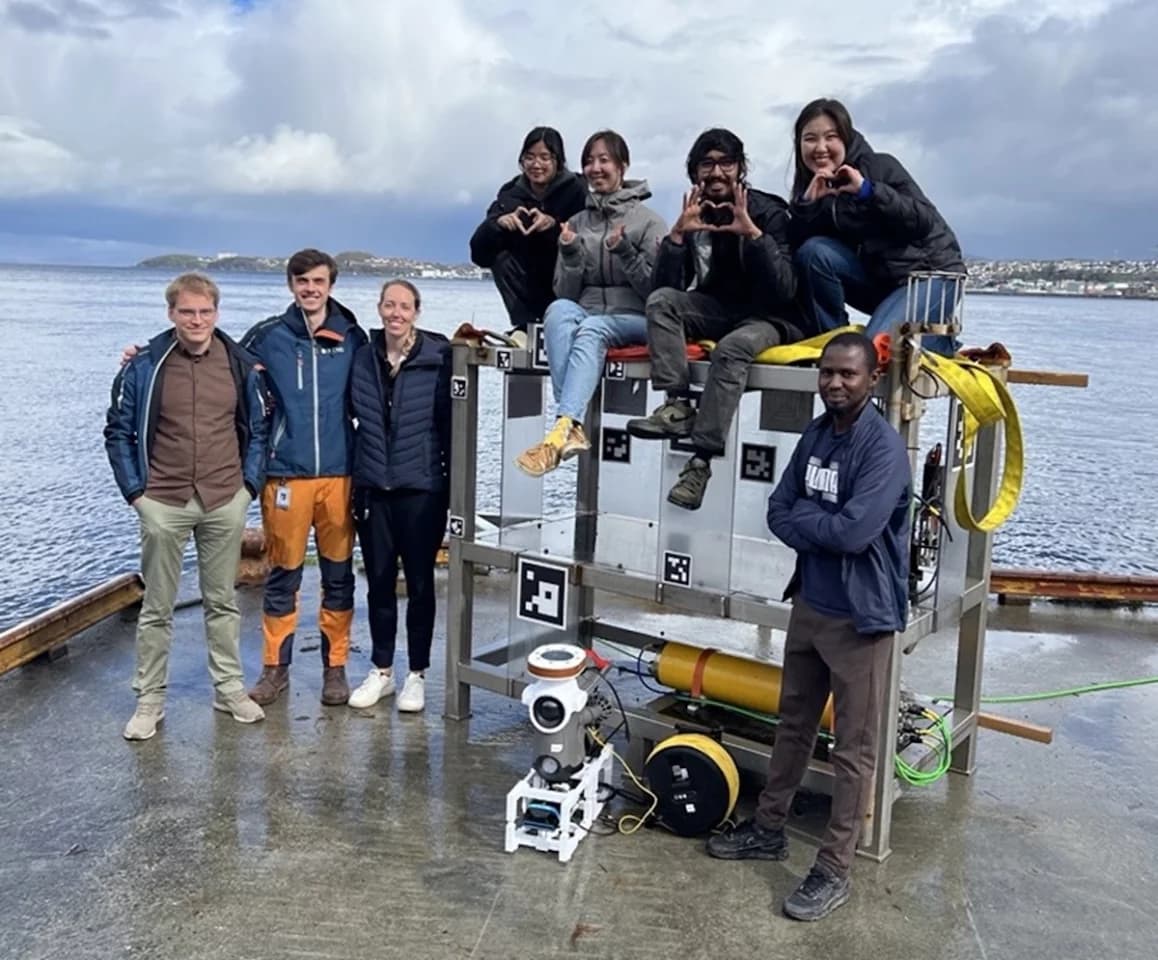
Researchers at the Norwegian University of Science and Technology (NTNU) are developing an autonomous underwater vehicle (AUV) designed to permanently reside on the seabed. The robot autonomously departs its docking station to inspect pipelines and other critical infrastructure, then returns to recharge and upload data — all without human intervention — providing near-continuous subsea surveillance.
Highlights
- NTNU researchers are developing a resident AUV that permanently docks on the seabed and autonomously conducts subsea infrastructure inspections without human intervention.
- The AUV uses a seabed-anchored docking station for wireless recharging and data upload after each inspection mission, eliminating the need for surface vessel recovery.
- The system targets a wide range of industries including offshore oil and gas, offshore wind energy, transoceanic communications cables, and marine environmental monitoring.
- Current subsea inspection methods rely on costly ROVs and crewed dive operations, which NTNU's resident AUV technology aims to replace with continuous, low-cost autonomous monitoring.
- Successful development of this AUV class could deliver near-round-the-clock surveillance of critical deep-sea infrastructure, addressing a major gap in current maritime monitoring capabilities.
The tombs of ancient Egyptian pharaohs were guarded around the clock, yet many of today's most critical assets — oil and gas pipelines, power cables, and transoceanic fiber-optic links — lie silently on the ocean floor with minimal monitoring, largely because the technology to do otherwise has long been out of reach.
NTNU's Vision: A Permanent Subsea Sentinel
Researchers at the Norwegian University of Science and Technology (NTNU) are developing an autonomous underwater vehicle (AUV) designed to serve as a near-permanent guardian of the seabed. The system's core concept is as follows:
- Long-term residency: The AUV docks at a charging station anchored to the seafloor, eliminating the need for frequent surface recovery operations.
- Autonomous inspection: The robot periodically departs the docking station to conduct routine checks of nearby critical infrastructure.
- Automatic return: Upon completing a mission, the AUV navigates back to its docking station without human guidance.
- Wireless charging and data upload: Once docked, the vehicle recharges wirelessly and transmits collected inspection data — entirely without human intervention.
Closing the Gap in Subsea Monitoring
Routine inspection of deep-sea infrastructure currently relies heavily on costly crewed dive operations or remotely operated vehicles (ROVs). These approaches are time-consuming, expensive, and ill-suited to high-frequency, continuous monitoring. NTNU's research aims to overcome these constraints by having the robot "live" on the seabed, dramatically reducing the logistical cost of each deployment and enabling near-round-the-clock infrastructure surveillance.
Wide-Ranging Potential Applications
Once mature, this class of resident AUV could be deployed across a broad range of sectors:
- Offshore oil and gas: Monitoring the structural integrity of subsea pipelines and production facilities.
- Renewable energy: Inspecting the subsea cables and foundations of offshore wind farms.
- Communications infrastructure: Conducting periodic checks on transoceanic submarine cable systems.
- Environmental monitoring: Continuously tracking changes in marine ecosystems.
As global dependence on subsea infrastructure deepens, NTNU's research has the potential to deliver a transformative autonomous monitoring solution for the maritime industry — ensuring that the deep ocean is no longer a blind spot for surveillance.
原文來源: 查看原文
FAQ
Newsletter
Subscribe to our Low-Altitude Industry Newsletter
Daily curated news on low-altitude economy and drone industry, delivered to your inbox.
Reviewed and published by the LAETimes editorial desk ·