China's Tianwen-2 Reaches Earth's 'Quasi-Moon' Asteroid, Prepares for Sample Return Mission
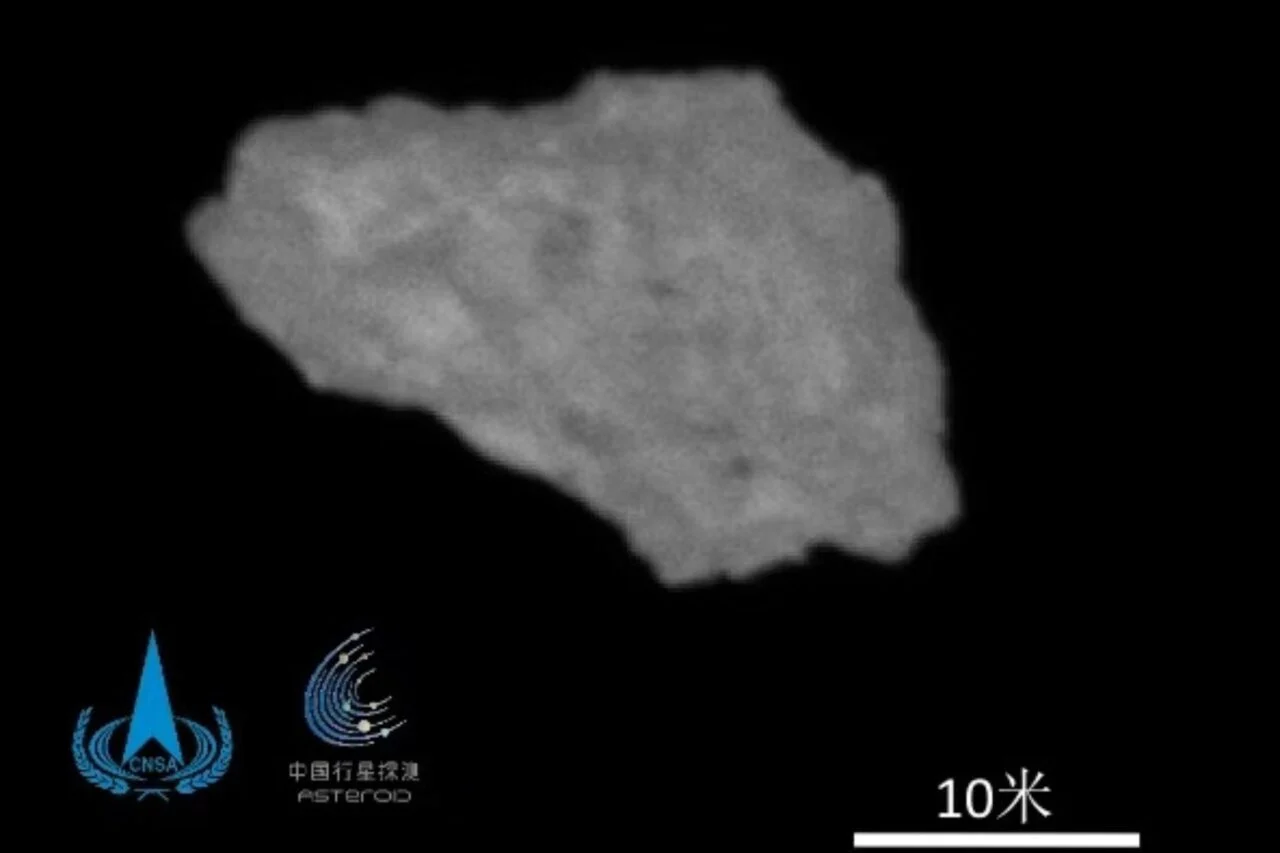
China's deep-space probe Tianwen-2 has successfully reached the 'quasi-moon' asteroid that shares Earth's orbital path. The spacecraft will conduct detailed scientific surveys of the body's terrain, mineral composition, and physical properties before collecting surface and subsurface samples for return to Earth — marking a major milestone in China's deep-space exploration program.
Highlights
- China's Tianwen-2 probe has successfully arrived at a quasi-moon asteroid sharing Earth's orbital path, marking the start of on-site scientific operations.
- The mission will survey the asteroid's topography and mineral composition and collect surface and subsurface samples for return to Earth.
- Quasi-moon asteroids maintain a long-term orbital resonance with Earth without being true satellites, making them scientifically valuable and relatively accessible targets.
- Asteroid sample analysis is expected to provide insights into early solar system formation and potential clues about the origins of life on Earth.
- Tianwen-2 extends China's deep-space exploration program beyond the Tianwen-1 Mars mission into small-body exploration for the first time.
China's deep-space probe Tianwen-2 has successfully arrived at an asteroid classified as Earth's "quasi-moon," and is now preparing to conduct a comprehensive scientific investigation of the body before collecting samples for return to Earth, where scientists will carry out in-depth laboratory analysis.
What Is a 'Quasi-Moon'?
A quasi-moon (also known as a quasi-satellite) is a type of asteroid that maintains a relatively stable orbital resonance with Earth. Although it does not technically orbit Earth as a true satellite, its unique orbital characteristics cause it to accompany our planet over an extended period — hence the designation "quasi-moon" or "Earth companion asteroid."
Mission Objectives
According to mission planners, Tianwen-2 will carry out the following operations at the target asteroid:
- Detailed scientific survey: A comprehensive investigation of the asteroid's topography, mineral composition, and physical properties
- Sample collection: Retrieval of surface and subsurface material using a dedicated sampling mechanism
- Sample return: Sealing and transporting the collected samples back to Earth for laboratory analysis
Scientific Significance
Analysis of asteroid samples carries enormous scientific value for understanding the early formation of the solar system. Researchers hope that these pristine primitive materials will provide clues about the origins of the solar system and, potentially, the emergence of life on Earth.
The successful progress of the Tianwen-2 mission marks another significant advance in China's deep-space exploration capabilities. Following the Tianwen-1 Mars mission, China is now extending its reach into small-body exploration, demonstrating the country's rapidly growing prowess in space science and technology.
原文來源: 查看原文
FAQ
Reviewed and published by the LAETimes editorial desk ·