UK and Netherlands Sign £2.4 Billion Deal to Build Eight Next-Generation Amphibious Vessels with Drone Combat Capabilities
The UK and Netherlands signed a £2.4 billion agreement at the NATO Ankara Summit on 7 July 2026 to jointly build eight next-generation amphibious transport ships — four per nation. The 160-metre, 15,000-tonne vessels will be Dutch-designed and UK-built, featuring flight decks capable of operating current and future long-range drones and autonomous systems, supporting the Royal Navy's transition to a Hybrid Navy model while creating hundreds of high-skilled UK jobs.
Highlights
- UK and Netherlands signed a £2.4 billion agreement at the NATO Ankara Summit on 7 July 2026 to jointly build eight amphibious transport ships, four per nation.
- Each vessel measures 160 metres in length with a 15,000-tonne displacement, featuring flight decks specifically designed for long-range drones and autonomous systems.
- The programme supports the Royal Navy's transition to a Hybrid Navy model and accelerates UK-Netherlands bilateral cooperation in uncrewed vehicle technologies.
- Navantia UK's Harland & Wolff Belfast shipyard, backed by over £98.5 million in capital investment, is positioned to lead UK construction and sustain hundreds of high-skilled jobs.
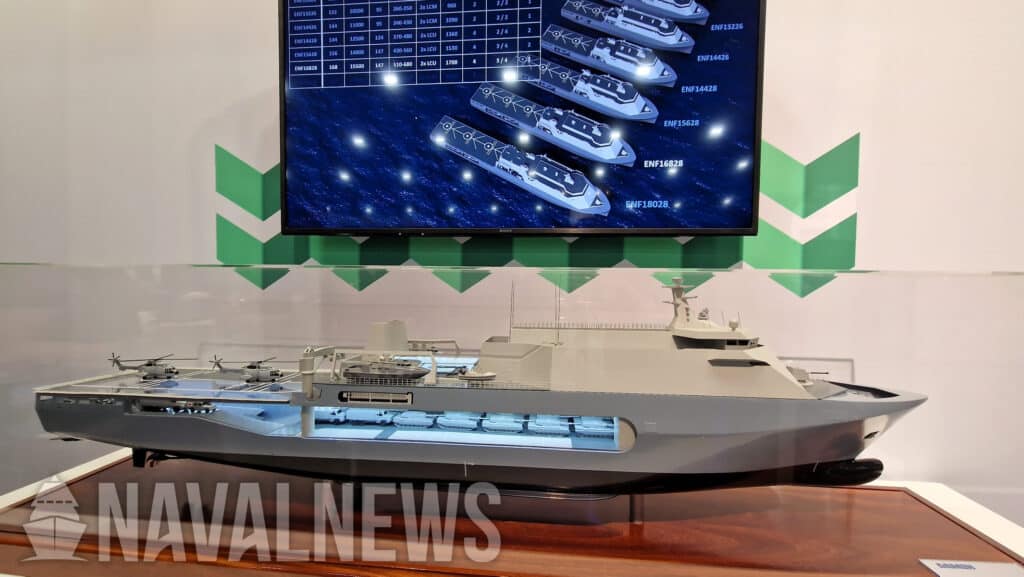
- Dutch shipbuilder Damen Naval's Enforcer amphibious ship family (120–180 metre LPD designs) is being watched by industry as a potential shared design basis for the programme.
UK and Netherlands Sign £2.4 Billion Deal for Next-Generation Amphibious Vessels
The United Kingdom and the Netherlands formally signed a landmark £2.4 billion agreement at the NATO Ankara Leaders' Summit on 7 July 2026, committing to jointly build eight next-generation amphibious transport ships — four allocated to each nation.
Vessel Specifications and Drone Combat Design
The new ships will be Dutch-designed and constructed through a collaborative effort between UK shipyards and Dutch industry. Each vessel will measure 160 metres in length with a displacement of 15,000 tonnes, capable of transporting troops, vehicles, and equipment — including various drone systems.
The vessels' flight decks are specifically designed to operate both current and future long-range drones and autonomous systems, making them a central platform in the Royal Navy's transition to a "Hybrid Navy" model. The partnership is also expected to accelerate bilateral industrial and military cooperation in autonomous and uncrewed vehicle technologies.
Government Statements
UK Prime Minister Keir Starmer said:
"This partnership is not just about building ships — it is about providing long-term security for both the UK and the Netherlands, ensuring we can respond to future threats. Combining British industrial expertise with Dutch design and maritime experience, this partnership will strengthen NATO as a whole. I am very proud that UK shipyards will carry out the construction, creating and sustaining high-quality jobs at home."
Minister for Defence Dan Jarvis MBE MP added:
"We are building stronger amphibious forces alongside the Netherlands — as NATO allies and Joint Expeditionary Force (JEF) partners — enhancing defence and deterrence. Our forces will use the same equipment, train together, and when necessary, fight and win side by side."
Over 50 Years of Maritime Cooperation
The deepened partnership builds on more than 50 years of UK-Netherlands amphibious force cooperation, representing Europe's longest-standing integrated joint military formation. The Royal Navy and the Royal Netherlands Navy will train, deploy, and operate more closely together, strengthening NATO's rapid crisis-response capability.
As close NATO and JEF allies — and firm supporters of Ukraine — both nations will work jointly to protect critical underwater infrastructure in the North Atlantic and High North regions, while deterring potential threats.
Industrial Impact and Employment
The programme is expected to support hundreds of high-skilled jobs in the UK. British shipbuilder Navantia UK — owner of the Harland & Wolff Belfast shipyard — has expressed strong support for the initiative. Chief Executive Donato Martinez stated:
"The amphibious transport ships will be a vital component of the UK's sovereign naval defence capability and a necessary replacement for the Albion-class assault ships. Harland & Wolff has received over £98.5 million in capital investment and is now one of the most advanced shipbuilding facilities in Europe. Navantia UK fully supports this programme and is ready to work with both the UK and Dutch governments and other partners to deliver this 21st-century naval capability."
The agreement echoes a recent UK deal with Norway for the construction of five Type 26 frigates, a programme projected to sustain 4,000 UK jobs.
Industry Watch
Industry observers note that Dutch shipbuilder Damen Naval had been actively promoting its Enforcer amphibious ship family — a range of landing platform dock designs spanning 120 to 180 metres — as a potential shared design basis for the joint UK-Netherlands procurement programme. Whether this collaboration will adopt the Enforcer design remains a point of close industry attention.
原文來源: 查看原文
FAQ
Reviewed and published by the LAETimes editorial desk ·


