U.S. Army Tests Autonomous Large-Scale Mine-Laying System
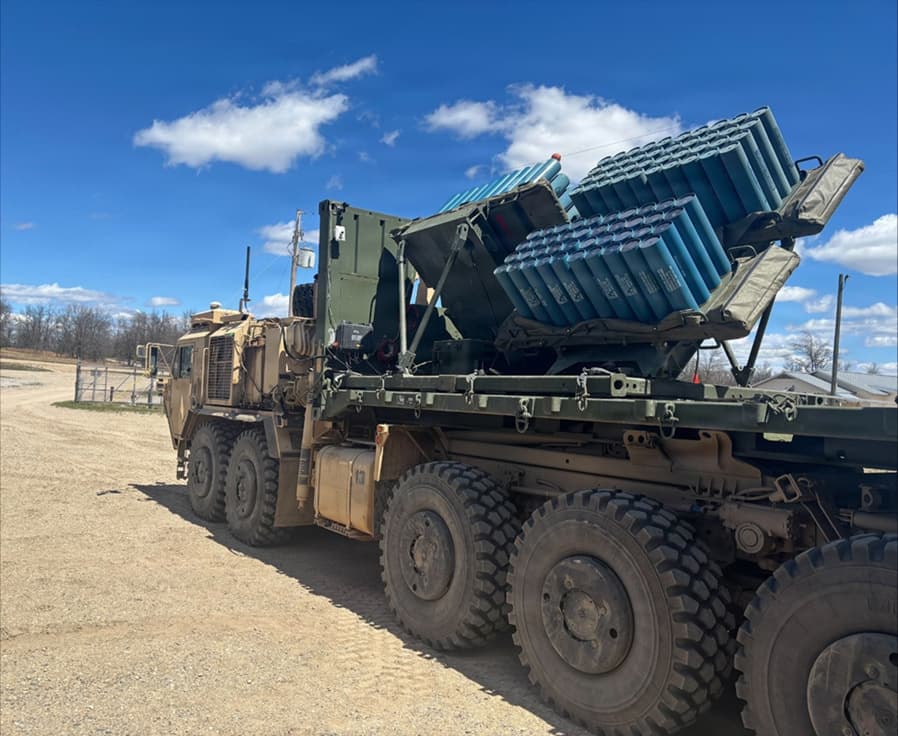
The U.S. Army has successfully tested the Autonomous Volcano mine-laying system at Camp Grayling, Michigan, autonomously deploying two separate minefields without a human driver. The system integrates the decades-old M139 Volcano dispenser with an unmanned Palletized Load System truck, capable of laying up to 960 mines across approximately 32 acres. Developed jointly with the UK and integrated by defense contractor Forterra, the system represents the Army's latest effort to modernize legacy equipment using emerging technologies.
Highlights
- The U.S. Army's Autonomous Volcano system successfully laid two separate minefields autonomously at Camp Grayling, Michigan in May 2025, without any human driver onboard.
- The system integrates the decades-old M139 Volcano dispenser with an unmanned Palletized Load System (PLS) truck, capable of covering approximately 32 acres with up to 960 mines.
- Defense contractor Forterra integrated the Volcano dispenser onto the autonomous vehicle platform as part of a joint U.S.–UK development program.
- The system automatically records and uploads minefield locations to the Army's Common Operating Picture, improving battlefield awareness.
- The Army plans additional testing later in May 2025 across realistic battlefield scenarios, as part of a wider push to modernize combat engineering with autonomous technologies.
U.S. Army Tests Autonomous Large-Scale Mine-Laying System
The U.S. Army's Volcano mine dispenser, when mounted on a vehicle, can lay up to 960 mines across approximately 32 acres (about 13 hectares) of terrain. Now, the Army is testing an autonomous version of the system capable of completing the same mission without a human driver.
Picatinny Arsenal announced on Tuesday that during a demonstration held in May at Camp Grayling, Michigan, soldiers remotely fired the Autonomous Volcano system for the first time — after which the system autonomously laid two separate minefields without any human assistance.
Modernizing Legacy Equipment
The demonstration represents the Army's latest effort to upgrade traditional equipment, tactical systems, and munitions using emerging technologies. In the combat engineering domain, the Army is also experimenting with drone-deployed grappling hooks and is exploring the use of unmanned systems — rather than soldiers — to breach obstacles. Additionally, the Army has tested autonomous vehicles for mortar resupply and autonomous vessels for intelligence gathering.
System Design: Keeping Combat Engineers Out of Harm's Way
The Autonomous Volcano system integrates the decades-old M139 Volcano dispenser with an unmanned Palletized Load System (PLS) truck. The upgrade is designed to keep combat engineers away from danger. The system can also automatically record minefield locations and upload the data to the Army's Common Operating Picture.
In the first live-fire scenario of the demonstration, soldiers from the 4th Engineer Battalion remotely fired inert mine canisters from the dispenser. The system then autonomously and simultaneously completed the laying of both minefields.
Col. Vinson Morris, who oversees the Army's Close Combat Systems Project Office, said in a statement: "Autonomous Volcano transforms a legacy platform into a high-performance autonomous asset through low-cost modernization, ensuring asymmetric advantage and filling a critical area-denial capability gap."
U.S.–UK Joint Development
According to the announcement, the project was developed jointly by the United States and the United Kingdom, with defense contractor Forterra responsible for integrating the existing Volcano dispenser onto the autonomous vehicle.
The Army plans to conduct further testing of the system later this month across a series of realistic battlefield scenarios.
原文來源: 查看原文
FAQ
Newsletter
Subscribe to our Low-Altitude Industry Newsletter
Daily curated news on low-altitude economy and drone industry, delivered to your inbox.
Reviewed and published by the LAETimes editorial desk ·