Russia's Zircon and Iskander Salvo Exposes Ukraine's Patriot Missile Crisis
A large-scale Russian missile strike on Ukraine killed at least seven people, with all six Zircon hypersonic missiles and 23 Iskander ballistic missiles penetrating Ukrainian air defenses. President Zelensky acknowledged a critical shortage of Patriot interceptors at the NATO summit in Ankara, while President Trump pledged to authorize Ukraine to manufacture Patriot systems — though production timelines mean relief remains distant.
Highlights
- All 6 Zircon hypersonic missiles and all 23 Iskander ballistic missiles launched by Russia in this strike successfully penetrated Ukraine's air defense network, killing at least 7 people.
- President Zelensky publicly acknowledged a severe shortage of Patriot interceptor missiles, stating Ukrainian forces were powerless against Russian ballistic missiles due to insufficient supplies.
- President Trump pledged on the sidelines of the NATO Ankara summit to grant Ukraine a license to manufacture Patriot air defense systems, but provided no specific timeline.
- The U.S. has expended an estimated 1,060–1,430 Patriot interceptors from a pre-war stockpile of approximately 2,500, according to CSIS, while a Lockheed Martin deal aims to triple PAC-3 MSE production to 2,000 units per year by 2030.
- Poland's government secretly transferred Patriot interceptors to Ukraine in March 2026, triggering domestic political controversy and prompting the defense minister to order full public disclosure of all military aid to Ukraine.
A Russian air strike on Ukraine has killed at least seven people. Just hours before U.S. President Donald Trump was set to meet Ukrainian President Volodymyr Zelensky in Ankara, Kyiv announced it had struck several Russian oil tankers in retaliation.
Over the past week, Russia has subjected Kyiv to relentless bombardment with ballistic missiles and drones, killing more than 50 people this month alone.
Air Defenses Overwhelmed — Zircon and Iskander Missiles All Hit Targets
Zelensky had previously stated that Ukrainian air defense forces were unable to intercept Russia's Zircon hypersonic missiles and Iskander ballistic missiles. While air defenses successfully downed a number of drones and cruise missiles, every precision missile fired by Russia reached its target, causing extensive damage and civilian casualties.
"Our warriors performed well today in shooting down drones and cruise missiles, but unfortunately there was nothing they could do against Russia's ballistic missiles. The reason is a severe shortage of interceptor missiles," Zelensky wrote on X.
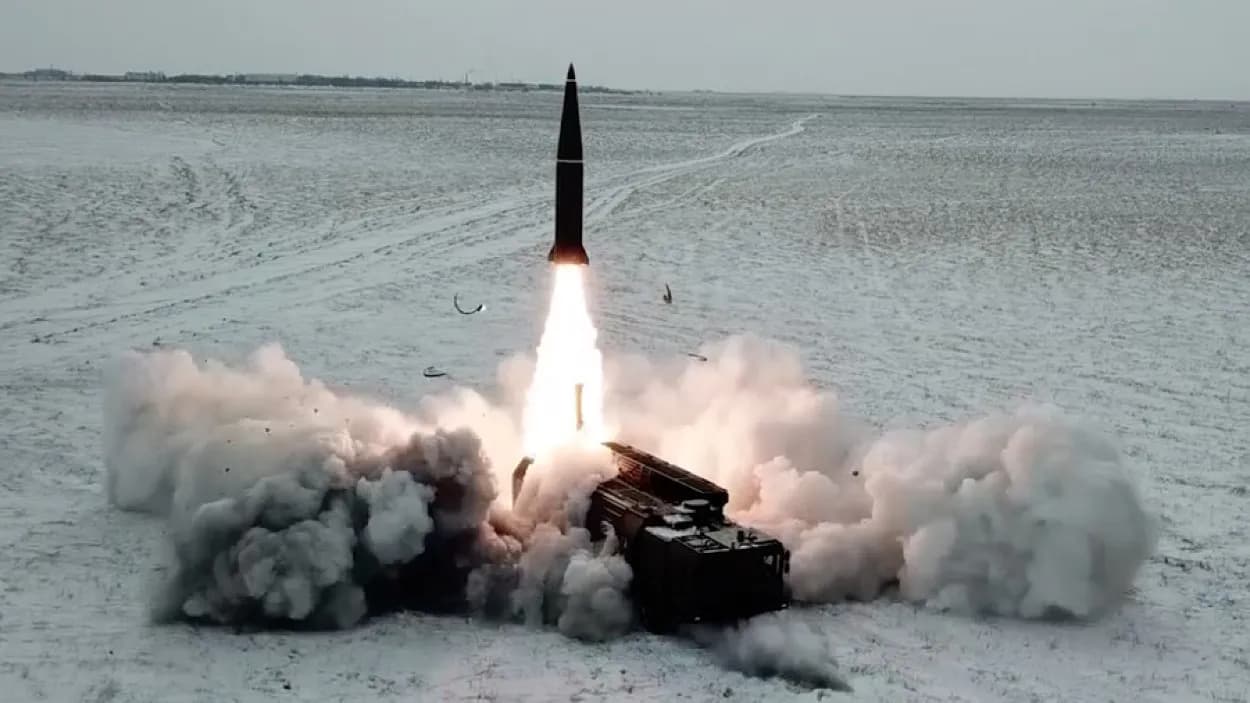
According to Ukrainian Air Force data, all six Zircon hypersonic cruise missiles and all 23 Iskander short-range ballistic missiles broke through Ukraine's air defense network.
The 3M22 Zircon is a scramjet-powered hypersonic cruise missile capable of exceeding Mach 8 while executing high-agility maneuvers, making it extremely difficult for most air defense systems to track and intercept. The Iskander-M, meanwhile, is a quasi-ballistic missile that performs evasive maneuvers during its terminal phase. The system has been upgraded with a new 9B899 module that deploys decoys, chaff, and flares during the terminal phase to further complicate interception.
Patriot Interceptor Shortage — Russia Deliberately Exploiting the Gap
The Patriot interceptor missile remains Ukraine's primary reliable weapon against these threats, meaning any shortage leaves the country dangerously exposed to Russia's intensified offensive.
Ukrainian Air Force spokesman Yuriy Ignat accused the Russian military of "deliberately exploiting Ukraine's shortage of Patriot interceptors by relying heavily on ballistic weapons, which are far harder to intercept than cruise missiles or drones."
The United States has supplied Ukraine with Patriot missiles through several channels, including the Priority Ukraine Requirements List (PURL) — a new mechanism under which NATO member states fund weapon transfers from U.S. stocks. However, Zelensky has repeatedly warned that PURL deliveries are nowhere near fast enough to keep pace with Russia's rate of attack.
In May 2026, Zelensky wrote to the White House and Capitol Hill urging the urgent delivery of additional Patriot systems as Russia intensified its ballistic missile campaign, and expressed Ukraine's desire to obtain a licensed production agreement to manufacture Patriot systems domestically in response to global shortages and capacity constraints.
Those appeals have largely gone unanswered. The United States itself has drawn down critical interceptor stockpiles following high-intensity operations against Iran, while allies facing their own regional security threats have been reluctant to draw on their own reserves.
According to a report by the Center for Strategic and International Studies (CSIS), the United States has expended approximately 1,060 to 1,430 Patriot interceptors from a pre-war stockpile of around 2,500. Other NATO allies remain hesitant to transfer their own stocks given regional security pressures.
U.S. Production Ramp-Up Underway, But Too Slow to Help Now
Earlier this year, the Pentagon signed a landmark seven-year framework agreement with Lockheed Martin to more than triple annual production of PAC-3 Missile Segment Enhancement (MSE) interceptors — from approximately 600 per year to 2,000 per year by 2030. Boeing is also tripling production of the PAC-3 MSE's critical active radar seeker.
Nevertheless, scaling up missile production takes time, and the relief will not arrive soon enough for Ukraine's current needs.
Ukraine Develops Domestic 'Freya' Air Defense System
Ukraine has recognized that relying solely on donations and purchases from the United States and NATO allies is unsustainable. Reports indicate that Ukraine is co-developing with European partners a new air defense system called Freya, positioned as a low-cost alternative to the U.S. MIM-104 Patriot.
"If everything goes to plan, we will conduct our first intercept by the end of the year," said Fire Point, the Ukrainian defense company developing Freya.
Trump Pledges to Authorize Ukraine to Produce Patriot Missiles
President Trump announced on Wednesday that Washington would grant Kyiv the right to manufacture Patriot air defense systems to defend against Russia's lethal strikes, though no specific timeline was provided.
"One of the things we're going to talk about is that we're going to give you a license to make Patriot missiles. That's pretty good, right?" Trump told Zelensky on the sidelines of the NATO summit in Ankara.
"We haven't told the companies yet, but it'll all work out," he added, without elaborating further.
Given the lengthy production timelines involved, granting a manufacturing license for the Patriot — one of the world's most sophisticated air defense missiles — may not provide the immediate relief Ukraine urgently needs. According to the Foreign Policy Research Institute, producing the interceptor missile requires up to 24 months, while its rocket motor takes 30 months to manufacture.
The Trump–Zelensky meeting struck a noticeably warmer tone than their acrimonious encounter in the Oval Office last year. "Incredible — from the Oval Office to now, we've developed a very good relationship," Trump remarked.
Poland's Secret Patriot Transfer Sparks Political Controversy
Even as Zelensky criticized NATO allies for failing to draw on their stockpiles, a domestic political controversy erupted in Poland over an alleged covert transfer of Patriot missiles to Ukraine.
Krzysztof Bosak, Deputy Speaker of the Polish parliament and co-leader of the far-right, anti-Ukraine Confederation Liberty and Independence party, asserted on July 4 that the Polish government had secretly transferred Patriot interceptors to Ukraine in March 2026.
He claimed these were the only weapons in the Polish Armed Forces capable of intercepting Russian Iskander missiles, noting that "Poland purchased these missiles from the United States to build a layered air defense system."
On July 6, Polish Defense Minister Władysław Kosiniak-Kamysz pushed back against claims that arming Ukraine had jeopardized Poland's own security, arguing that the transfer represented "only a certain percentage of Poland's defense capabilities" and "would not affect Poland's air defense."
Kosiniak-Kamysz stated that the transfer was carried out at the request of NATO allies — particularly U.S. European Command and the NATO Secretary General. On the question of transparency, he confirmed that both the National Security Bureau and the Polish Presidential Office had received relevant briefings. The controversy has since prompted Kosiniak-Kamysz to order the public disclosure of all information related to Poland's military donations to Ukraine.
This article is based on reporting originally published by The Eurasian Times.
原文來源: 查看原文
FAQ
Newsletter
Subscribe to our Low-Altitude Industry Newsletter
Daily curated news on low-altitude economy and drone industry, delivered to your inbox.
Reviewed and published by the LAETimes editorial desk ·