UK Royal Navy Completes World-First Airdrop of Unmanned Surface Vessel from Military Transport Aircraft
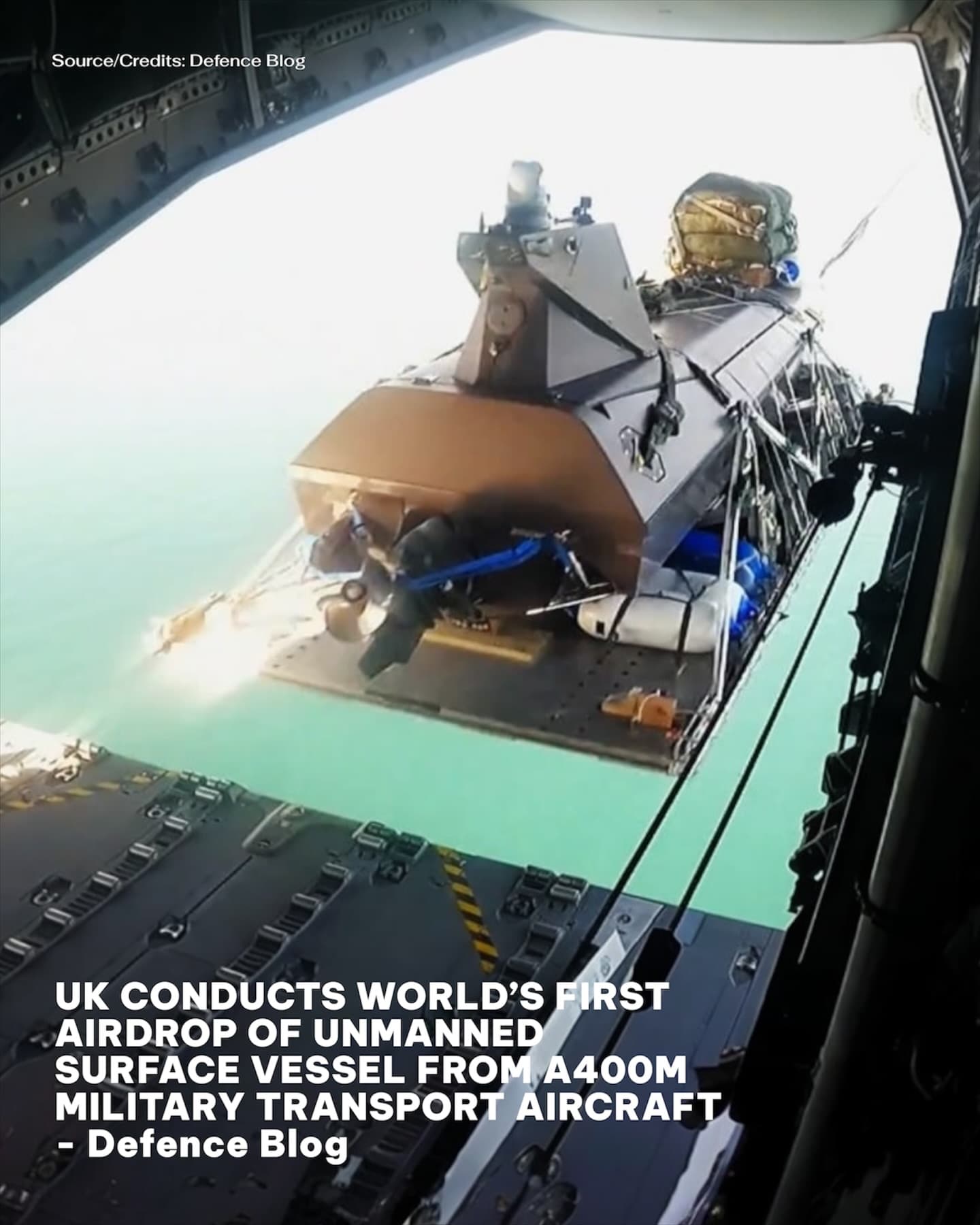
The UK Royal Navy, under Project Beehive, has achieved a world first by airdropping an unmanned surface vessel (USV) from a military transport aircraft using an extracted-load delivery method. Conducted by Kraken Technology Group and Capewell, the trial deployed the Kraken K3 SCOUT autonomous craft from an Airbus A400M at approximately 1,300 feet. The Royal Navy has ordered 20 K3 SCOUT vessels under a contract worth approximately $16.5 million.
Highlights
- The UK Royal Navy completed the world's first extracted-load airdrop of an unmanned surface vessel (USV) from a military transport aircraft under Project Beehive.
- The Kraken K3 SCOUT, an 8.4-metre autonomous craft with a top speed of 55 knots and up to 30-day endurance, was the vessel used in the trial.
- The K3 SCOUT was dropped from an Airbus A400M at approximately 1,300 feet using Capewell's UMCADS parachute system, achieving combat-ready status shortly after water entry.
- The Royal Navy has ordered 20 K3 SCOUT vessels under a contract valued at approximately $16.5 million, with delivery scheduled for 2026.
- Project Beehive forms the core of the Royal Navy's Hybrid Navy strategy, integrating crewed warships with autonomous platforms to enhance fleet agility.
UK Completes Historic World-First Airdrop of Unmanned Surface Vessel from Military Transport Aircraft
The UK Royal Navy has achieved a historic milestone under Project Beehive, successfully completing the world's first extracted-load airdrop of an unmanned surface vessel (USV) from a military transport aircraft. The trial was jointly executed by Kraken Technology Group and Capewell, and marks a significant advancement in naval autonomous warfare capability.
The Vessel: Kraken K3 SCOUT
The vessel used in the trial was the Kraken K3 SCOUT, co-developed by Rheinmetall Kraken GmbH and Kraken Technology Group. The K3 SCOUT is an 8.4-metre composite-hull autonomous craft designed for a range of missions including surveillance and reconnaissance, intelligence gathering, and casualty evacuation.
The vessel is capable of reaching a top speed of 55 knots and, depending on its configuration, can sustain operations at sea for up to 30 days, demonstrating exceptional autonomous endurance.
Delivery System and Trial Procedure
During the trial, the K3 SCOUT was airdropped multiple times from an Airbus A400M military transport aircraft at an altitude of approximately 1,300 feet (around 396 metres). The system employed Capewell's Universal Maritime Craft Aerial Delivery System (UMCADS) parachute platform, paired with an IN-Release release mechanism to ensure safe separation from the aircraft and controlled water entry.
According to trial reports, the system enables the vessel to safely land on seas up to Sea State 4 and transition to combat-ready status within a short time after water entry, significantly reducing deployment response times.
Project Beehive and Naval Procurement Context
Project Beehive is a flagship programme within the Royal Navy's Hybrid Navy strategy, which aims to deeply integrate crewed warships with autonomous platforms to enhance overall fleet agility and operational effectiveness.
The Royal Navy has placed an order for 20 K3 SCOUT vessels under a contract valued at approximately $16.5 million (around NT$530 million), with delivery expected in 2026. The procurement underscores the UK's strong commitment to advancing autonomous maritime warfare capabilities.
Significance and Outlook
The successful trial signals a new era in USV deployment — vessels are no longer constrained to harbour departures, but can instead be rapidly inserted by air into any maritime area of operation, dramatically enhancing operational flexibility and response speed. As Project Beehive progresses, the Royal Navy is poised to establish a global lead in autonomous maritime operations.
Sources: Defence Blog, Kraken Technology Group, Capewell, Rheinmetall Kraken GmbH
原文來源: 查看原文
FAQ
Reviewed and published by the LAETimes editorial desk ·


