Ukraine Pursues EU Drone Agreements as Kamikaze UAVs Continue Striking Russian Supply Lines
Ukrainian President Volodymyr Zelenskyy is actively negotiating drone cooperation agreements with the EU and several European nations, even as a US-Ukraine deal remains unsigned. Meanwhile, Ukraine continues deploying long-range one-way attack drones against Russian infrastructure, including the $5,000 Hornet kamikaze UAV, which can fly silently during its terminal phase to evade jamming and strike targets over 150 miles away via Starlink.
Highlights
- Zelenskyy stated at the EU Council in Dublin that a US–Ukraine drone agreement still lacks President Trump's approval to move forward.
- The $5,000 Hornet kamikaze drone, built by Perennial Autonomy, uses Starlink to strike Russian targets over 150 miles away while flying silently to evade jamming.
- Ukraine has signed drone agreements with Latvia, Norway, the Netherlands, and Germany, and is in active negotiations with the EU, Finland, Denmark, Ireland, and Bulgaria.
- The US Air Force conducted over 13,000 strikes against Iran since February 28, losing at least 24 MQ-9A Reapers, and is now evaluating lower-cost successor platforms.
- The bipartisan Strategic Unmanned Systems Partnership Act has been introduced in both the US House and Senate to formalize drone cooperation with Ukraine.
Ukrainian President Volodymyr Zelenskyy is actively pursuing drone cooperation agreements with EU member states, even as a bilateral deal with the United States remains elusive. At the same time, Ukraine is increasingly deploying long-range kamikaze "one-way attack" drones to strike Russian infrastructure and supply lines.
Zelenskyy Urges EU to Accelerate Cooperation
Speaking at the EU Council in Dublin on Tuesday, Zelenskyy called on European partners to deepen collaboration: "Every country now needs modern means to at least monitor and protect its own airspace and maritime borders. Without Ukraine, without the combat experience and security expertise Ukraine has accumulated in modern warfare, security cannot be guaranteed today — especially in air defense and maritime security."
US Lawmakers Push Ukraine–US Drone Partnership Bill
On the American side, a bipartisan group of six House members has introduced the Strategic Unmanned Systems Partnership Act, aimed at formalizing drone cooperation between the United States and Ukraine.
The bill is co-sponsored by Rep. Michael McCaul (R-TX), the ranking Republican on the House Foreign Affairs Committee, and Rep. Marcy Kaptur (D-OH), the ranking Democrat on the House Appropriations Defense Subcommittee and co-founder and co-chair of the Congressional Ukraine Caucus.
A companion bill, S. 4711, was introduced in the Senate on June 9 by Sen. Mike Rounds (R-SD) and Sen. Jacky Rosen (D-NV), both members of the Senate Armed Services Committee.
Zelenskyy: Trump's Endorsement Is the Missing Piece
In a May 31 interview on Face the Nation, Zelenskyy said Ukraine "wants to sign the first drone agreement with the United States."
"The American side wants to test all our types of drones," he said. "We agreed to the ways in which they want to test, train, and use our systems — in the air, on land, and at sea. But we still have not concluded a bilateral drone agreement — a full framework document. American companies have advanced AI capabilities that we don't have; and we, with our extensive frontline experience, have a great deal that they don't have."
"We need negotiation, not just discussion," Zelenskyy stressed. "We need to take the necessary steps and complete them as soon as possible. For that, we need President Trump to give his approval."
European Drone Deals Moving Forward
This month, Ukraine signed a drone agreement with Latvia and is currently in talks with the EU as a whole, as well as with Finland, Denmark, Ireland, and Bulgaria. Beyond Latvia, Ukraine has already signed drone agreements with Norway, the Netherlands, and Germany.
US Drone Dominance Program Advances
The United States is pursuing its Drone Dominance Program (DDP), with a goal of fielding drones at a unit cost below $10,000. Ukrainian Defense Drones has been selected to participate in the DDP to manufacture expendable small UAVs.
On May 20, Gen. Kenneth Wilsbach, Chief of Staff of the US Air Force, testified before the House Armed Services Committee that General Atomics' MQ-9A Reaper was by far the most utilized strike platform during operations against Iran.
"In Operation Midnight Hammer, perhaps the most valuable platform was the drone — the MQ-9," Wilsbach said. "We conducted a very, very large number of strikes. The specific number is classified, but no other platform came close to the MQ-9. We derived enormous value from it."
The Pentagon has reported that US forces have conducted more than 13,000 strikes against Iran since February 28. At least 24 MQ-9A Reapers have been lost during Iran operations, and the Air Force is evaluating successor platforms with the goal of significantly reducing the current per-unit cost of $30–50 million.
Hornet Kamikaze Drone: $5,000 Per Unit
Existing US–Ukraine co-production efforts include the MEROPS (Multi-spectral Extended Range Optical Sight) interceptor drone developed by Perennial Autonomy (formerly Swift Beat LLC, a US company founded by Eric Schmidt, former CEO of Alphabet, Google's parent company), priced at approximately $15,000 per unit.
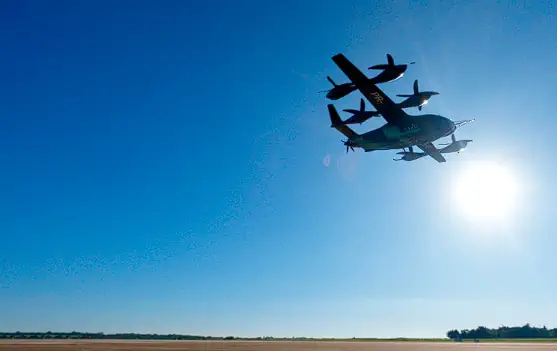
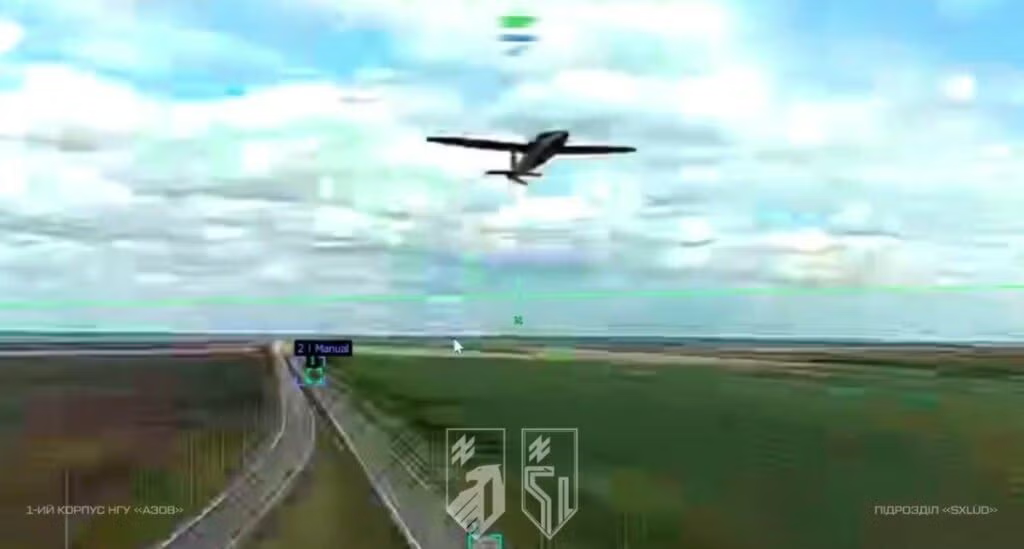
Perennial Autonomy's Hornet — another drone already combat-proven in Ukraine — costs just $5,000 per unit. Classified as a Group 2 kamikaze UAV, the Hornet flies silently during its terminal attack phase to evade electronic jamming, and uses SpaceX's Starlink communications terminals to conduct precision strikes against Russian supply lines — including truck convoys — at ranges exceeding 150 miles.
Some content in this article originally appeared in sister publication Defense Daily.
原文來源: 查看原文
FAQ
Reviewed and published by the LAETimes editorial desk ·