World First: Scientists Directly Observe Ocean Crust Formation in Real Time
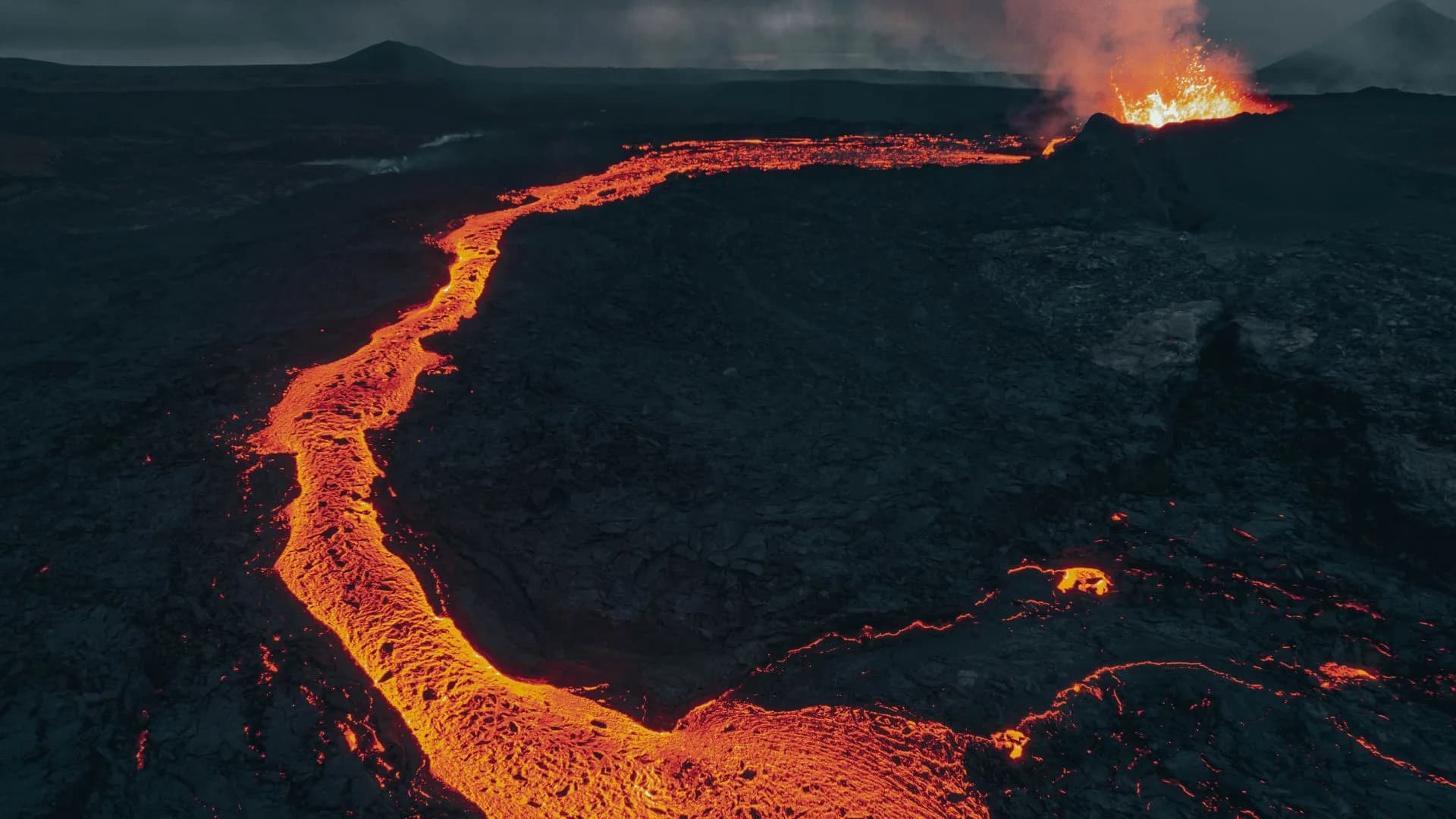
A research team from France's CNRS has become the first in history to directly observe the formation of oceanic crust. In April 2024, scientists recorded a massive event on the Southeast Indian Ridge: approximately 1.5 billion cubic metres of magma intruded into the oceanic crust within just two hours, causing the seafloor to subside by 4.2 metres. The findings have been published in Nature.
Highlights
- CNRS geophysicist Jean-Yves Royer led the first-ever direct observation of oceanic crust formation, recorded on the Southeast Indian Ridge in April 2024.
- Approximately 1.5 billion cubic metres of magma intruded into the oceanic crust in the form of dikes within roughly two hours, causing the seafloor to subside by 4.2 metres.
- At peak spreading, the ridge pulled apart at 5 cm per minute — nearly 500,000 times the long-term average rate of 6.3 cm per year.
- The OHA-GEODAMS observatory, deployed in February 2024 near Amsterdam Island, used five autonomous hydrophones to monitor the Saint Paul–Amsterdam volcanic plateau.
- Most of the displacement occurred aseismically, revealing a significant gap between actual fault movement and seismic-based estimates, as published in Nature.
A research team from France's National Centre for Scientific Research (CNRS) has become the first ever to directly observe the formation of Earth's oceanic crust from within the ocean itself. This geological process — unfolding deep beneath the sea surface and never before witnessed by humans — has now been fully documented by a team of geophysicists led by Jean-Yves Royer.
Interestingly, the researchers' original goal was not to capture an entire crust-forming event. They had set out to measure the slow extensional stress that accumulates along a mid-ocean ridge between major episodes of crustal formation. This extension amounts to only a few centimetres — but, like a compressed spring, it can be released in a sudden and dramatic event.
Along thousands of miles of ocean floor, Earth's tectonic plates meet at mid-ocean ridges. Magma periodically erupts through rifts in the seafloor, cooling to form new crust. Because these plate boundaries lie in deep-sea zones inaccessible to human explorers, the research relied entirely on scientific instruments.
Establishing the Underwater Observatory
In February 2024, Royer and his CNRS colleagues deployed the OHA-GEODAMS (Océano-Hydroacoustique et Géodésie — Observatoire des Dorsales et des Archipels de la zone Sub-antarctique) acoustic and geodetic observatory near Amsterdam Island on the Southeast Indian Ridge, located between Australia and Antarctica. The project had been years in the making, designed to capture small precursor movements before a major event.
Scientists refer to these small-scale movements as "quantum" events — discrete, subtle motions that stand in contrast to the dramatic, decades-in-the-making ruptures of full rifting episodes.
The OHA-GEODAMS experiment comprised five autonomous underwater hydrophones, strategically positioned to provide complete coverage of the Saint Paul–Amsterdam volcanic plateau, ensuring no quantum event would go undetected. After several months of monitoring, a major event finally arrived.
How New Oceanic Crust Is Formed
According to Royer, over the final 16 days of April 2024, the ridge axis ruptured and magma intruded into the oceanic crust. Within approximately two hours, an estimated 5.3 billion cubic feet (roughly 1.5 billion cubic metres) of magma tore through the seafloor crust in the form of dikes.
As the dikes propagated outward, earthquakes struck the region, reactivating long-dormant faults and draining the magma reservoir beneath the ridge. This caused the seafloor to collapse rapidly. When the dikes reached the surface of the seafloor, lava erupted onto the ocean bottom, further emptying the magma chamber and driving additional subsidence. Researchers told ScienceAlert that the seafloor valley dropped a total of 13.8 feet (4.2 metres), slipping below the surrounding fault blocks.
Remarkably, human observers were able to continuously document the entire sequence on an hourly basis.
At mid-ocean ridges where seafloor spreading is a continuous process, the long-term average rate is estimated at roughly 2.5 inches (6.3 cm) per year. Yet at the peak of this event, the ridge was pulling apart at 5 centimetres per minute — nearly 500,000 times the long-term average. This demonstrates that seafloor spreading is not a gradual, steady process, but occurs in enormous episodic jumps.
Although the event was accompanied by earthquakes, the researchers also found that the majority of the displacement occurred aseismically — that is, without generating strong seismic waves. This helps explain the discrepancy between the actual fault displacement measured and the displacement inferred from seismic data alone, opening an entirely new field of inquiry for marine geophysicists.
The findings have been published in the international journal Nature.
原文來源: 查看原文
FAQ
Newsletter
Subscribe to our Low-Altitude Industry Newsletter
Daily curated news on low-altitude economy and drone industry, delivered to your inbox.
Reviewed and published by the LAETimes editorial desk ·