Royal Navy Tests Air-Dropped Uncrewed Surface Vessel Technology in North Sea Trials
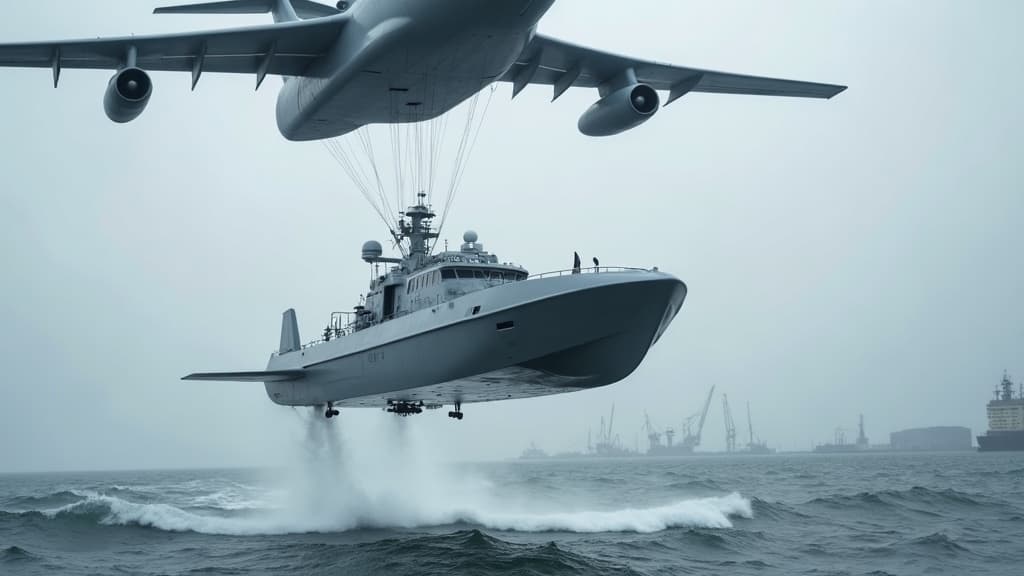
The Royal Navy has successfully completed its first air-drop of an Uncrewed Surface Vessel (USV) from a military transport aircraft during trials in the North Sea. The milestone test marks a significant breakthrough in air-launched USV technology, advancing the Navy's unmanned maritime warfare capabilities and enabling rapid deployment of surface drones without exposing crewed vessels to risk.
Highlights
- The Royal Navy completed its first-ever air-drop of a USV from a military transport aircraft during trials conducted in the North Sea.
- The air-launched USV capability allows rapid deployment of surface drones without exposing crewed vessels to hostile environments.
- Air-dropped USVs can perform reconnaissance, intelligence gathering, anti-submarine warfare, and logistical supply missions.
- The Royal Navy confirmed it will continue R&D and testing with the aim of formally integrating air-dropped USV technology into its operational inventory.
- The trial aligns with a broader global trend of leading navies developing unmanned systems for air, land, and maritime domains.
The Royal Navy has announced the successful completion of its first-ever air-drop of an Uncrewed Surface Vessel (USV) from a military transport aircraft, with the historic trial conducted over the North Sea.
A Breakthrough Technology Demonstration
The trial marks a significant milestone in the Royal Navy's development of air-launched USV technology. By deploying an uncrewed surface vessel directly from a transport aircraft, the Navy demonstrated an ability to rapidly insert maritime drones into a target area without requiring a crewed vessel to approach — substantially enhancing both operational flexibility and personnel safety.
Strategic Significance
If formally integrated into service, this capability would provide the Royal Navy with several key advantages:
- Rapid Deployment: USVs can be delivered to designated sea areas far from the parent vessel within a short timeframe.
- Reduced Risk: Personnel exposure to hazardous environments is significantly minimised.
- Multi-Mission Versatility: Air-dropped USVs can be tasked with reconnaissance, intelligence gathering, anti-submarine warfare, or logistical support roles.
- Operational Flexibility: Forces are no longer constrained by traditional vessel-based deployment limitations, broadening the overall operational reach.
The Broader Trend Toward Unmanned Naval Warfare
The trial reflects a global trend among leading navies to accelerate the development of unmanned systems across air, land, and maritime domains. Integrating USVs with airborne delivery platforms is increasingly viewed as a critical direction for future naval operations, as unmanned technology continues to evolve rapidly.
The Royal Navy has confirmed it will continue to advance research and testing in this area, with the goal of formally incorporating air-dropped USV technology into its operational inventory.
Source: Naval Technology
原文來源: 查看原文
FAQ
Reviewed and published by the LAETimes editorial desk ·