Multi-Robot Joint Demonstration Validates New Underwater Test Facility in Plymouth, UK
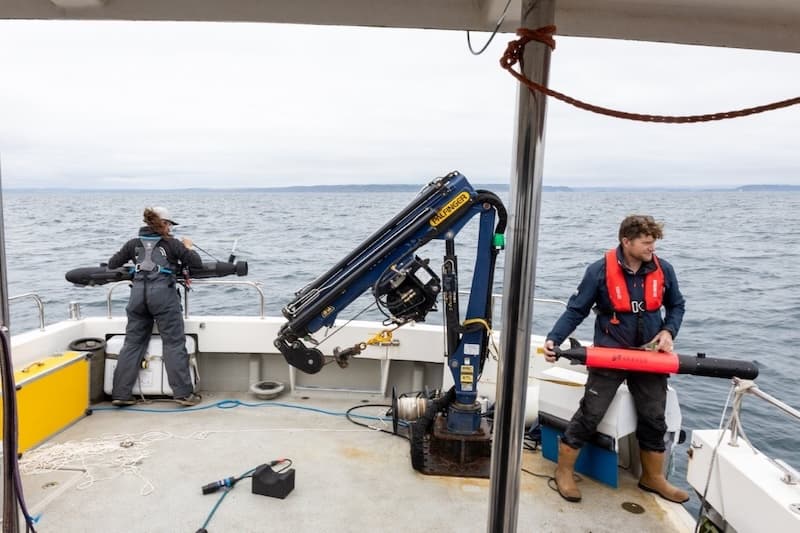
The Smart Sound Connect Subsurface (SSCS) project, led by the University of Plymouth in partnership with Plymouth Marine Laboratory, has completed its first large-scale multi-platform field demonstration. The exercise brought together unmanned surface vehicles (USVs) and autonomous underwater vehicles (AUVs), marking a significant milestone for UK marine autonomy and ocean sensing capabilities.
Highlights
- The University of Plymouth and Plymouth Marine Laboratory completed the first large-scale multi-platform trial at the new SSCS underwater test facility in Plymouth.
- The demonstration coordinated unmanned surface vehicles (USVs) and autonomous underwater vehicles (AUVs) simultaneously within a single real-world marine test area.
- Smart Sound Plymouth is one of the UK's largest maritime autonomous systems test ranges, supporting academic, industrial, and defence applications.
- Successful validation of the SSCS infrastructure is expected to attract domestic and international organisations to conduct subsea technology testing at the facility.
- The SSCS project exemplifies a collaborative academic model between a university and a marine research laboratory to accelerate deployment of advanced autonomous technologies.
A new underwater test facility established to advance marine autonomy and ocean sensing capabilities in the UK has completed its inaugural large-scale trial through a joint field demonstration involving multiple surface and subsurface robotic platforms.
About the SSCS Project
The Smart Sound Connect Subsurface (SSCS) project operates under the broader Smart Sound Plymouth initiative, led by the University of Plymouth in close collaboration with Plymouth Marine Laboratory (PML).
Smart Sound Plymouth is one of the UK's largest test and evaluation ranges for maritime autonomous systems, providing integrated testing infrastructure within a real-world ocean environment to support academic research, industrial development, and defence applications.
Significance of the First Large-Scale Trial
The joint demonstration served as a critical validation milestone for the SSCS project, showcasing the coordinated operation of multiple robotic platform types — including unmanned surface vehicles (USVs) and autonomous underwater vehicles (AUVs) — within a single test area. The results confirmed the reliability of the facility's infrastructure and lay the groundwork for future commercial and research users to conduct operations at the site.
Advancing UK Marine Autonomy
The UK government and academic institutions have continued to invest in the development of marine autonomous technologies. The successful SSCS demonstration is regarded as an important step in strengthening the UK's competitiveness in the global marine robotics sector. The collaborative model between the University of Plymouth and PML also highlights the role academic institutions can play in accelerating the real-world deployment of advanced technologies.
With the SSCS facility now operational, it is expected to attract a growing number of domestic and international companies and research organisations seeking to validate subsea technologies, further cementing the UK's position as a leader in maritime autonomous systems.
原文來源: 查看原文
FAQ
Newsletter
Subscribe to our Low-Altitude Industry Newsletter
Daily curated news on low-altitude economy and drone industry, delivered to your inbox.
Reviewed and published by the LAETimes editorial desk ·