Rebuilding the Arsenal Demands Hyperscale Manufacturing: Shorten the Build Chain, Close the Kill Chain
As geopolitical tensions mount, the defense industry faces a critical imperative: rebuild and expand weapons stockpiles faster than modern conflicts consume them. The answer lies in hyperscale manufacturing—dramatically scaling production speed and volume—while simultaneously shortening the build chain and closing the kill chain through AI, autonomous systems, and real-time data links.
Highlights
- Defense analysts argue that rebuilding modern weapons arsenals requires hyperscale manufacturing—producing systems at a scale and speed that matches the consumption rate of contemporary armed conflict.
- Shortening the build chain means eliminating intermediary supply chain steps from raw material procurement to final system delivery, enabling rapid mass production and faster battlefield deployment.
- Closing the kill chain involves integrating AI, autonomous drones, and real-time data links to reduce the time between target detection and strike to a minimum.
- Modular drone design and localized supply chains have become central priorities in defense procurement policy across multiple countries in response to this strategic framework.
- The military drone sector is expected to attract significantly greater investment and policy support as governments prioritize manufacturing efficiency and operational integration.
Against a backdrop of sustained geopolitical tension, the defense industry is confronting a defining challenge: how to rebuild and expand weapons inventories at maximum speed and efficiency.
The central argument is unambiguous. Achieving that goal requires hyperscale manufacturing—a dramatic expansion in production scale and tempo that allows weapons systems to be manufactured at a pace commensurate with the consumption rates of modern conflict.
Shorten the Build Chain
The "build chain" encompasses the end-to-end supply chain process: raw material procurement, component manufacturing, and final system integration and delivery. The current imperative is to compress that chain in both time and complexity—eliminating unnecessary intermediary steps to enable rapid mass production and deployment.
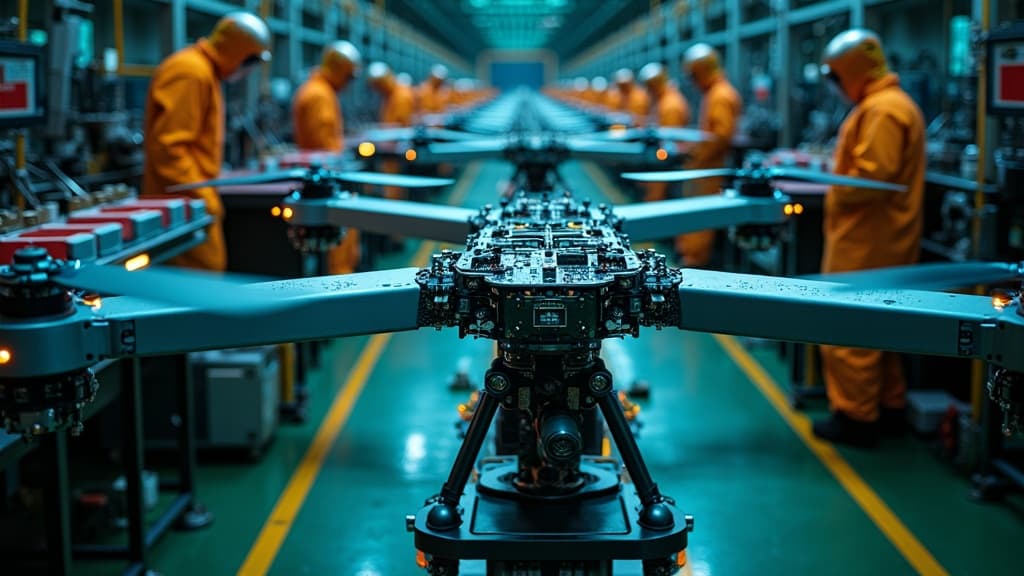
For the drone industry in particular, this translates into pressure toward modular design, domesticated supply chains, and vertically integrated production facilities capable of surging output on short notice.
Close the Kill Chain
The "kill chain" covers the complete engagement sequence: target detection, identification, tracking, and terminal strike. By integrating artificial intelligence, autonomous unmanned systems, and real-time data links, the goal is to collapse the time between decision and action—a principle that sits at the very heart of modern drone and defense technology development.
This strategic framework carries direct implications for the unmanned systems sector, particularly regarding the rapid mass production of military drones, modular platform design, and the localization of supply chains. These issues have already become central considerations in defense procurement policy across multiple nations.
"To rebuild the arsenal, you must manufacture at hyperscale. Shorten the build chain. Close the kill chain."
This thesis reflects the defense technology community's intense focus on manufacturing efficiency and operational integration—and signals that the drone industry's military segment is poised for significantly greater investment and policy support in the years ahead.
原文來源: 查看原文
FAQ
Newsletter
Subscribe to our Low-Altitude Industry Newsletter
Daily curated news on low-altitude economy and drone industry, delivered to your inbox.
Reviewed and published by the LAETimes editorial desk ·