Ukraine Claims Sea of Azov Drone Campaign Has Struck Nearly 80 Russian Vessels
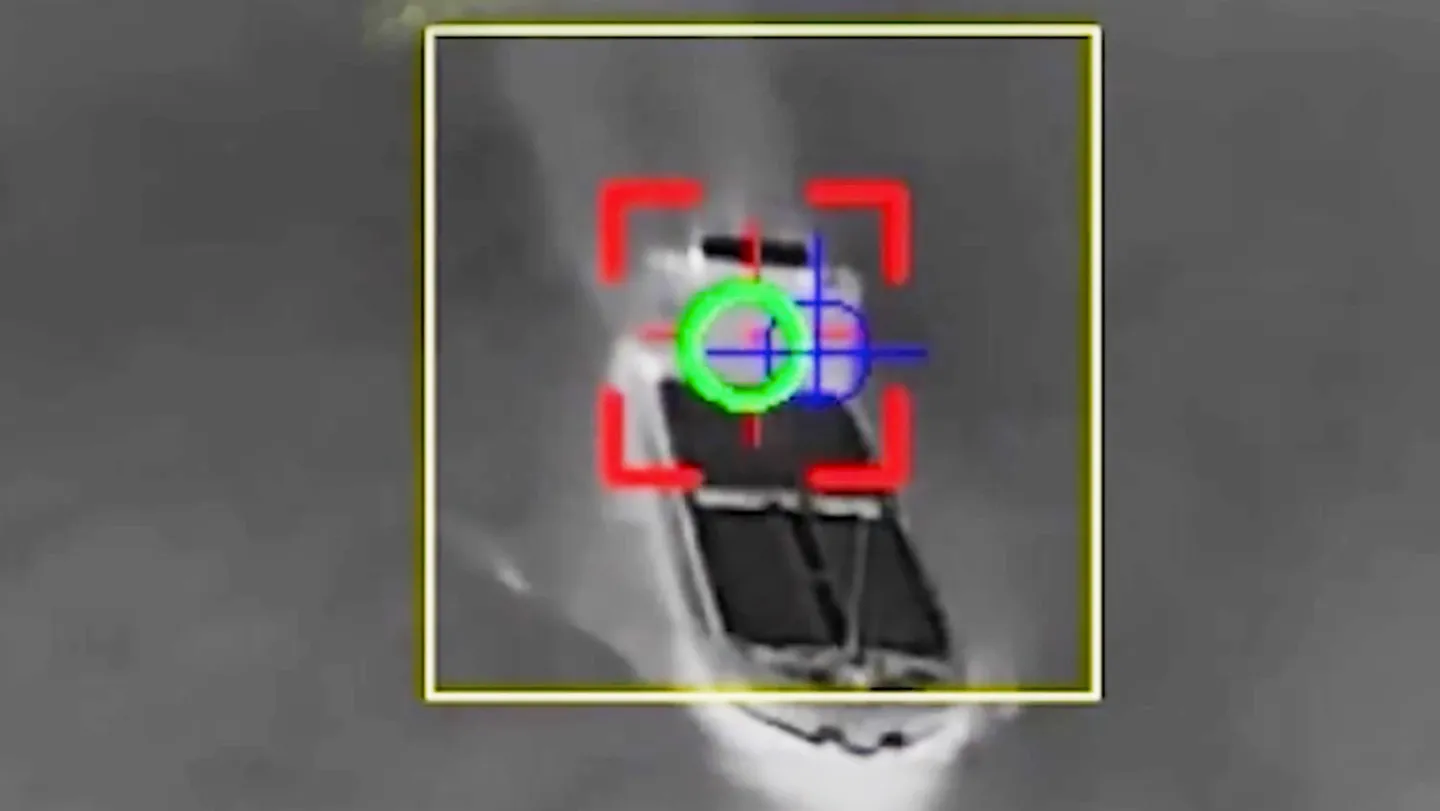
Ukraine's 'Magyar's Birds' drone brigade claims to have struck nearly 80 Russian vessels—primarily shadow-fleet tankers—in the Sea of Azov since July 6, with 28 ships hit on July 12 alone. The campaign has forced Russia to suspend shipping on the Don-Azov Canal and pushed Russian gasoline production down to roughly 65% of seasonal average consumption, while also targeting energy infrastructure across Crimea and occupied southern Ukraine.
Highlights
- Magyar's Birds (Ukraine's 414th Drone Brigade) claims to have struck nearly 80 Russian vessels in the Sea of Azov since July 6, 2025, including 28 ships on July 12 alone.
- The strikes have forced Russia to suspend shipping on the Don-Azov Canal, a critical waterway carrying approximately 25% of Russia's wheat exports.
- Fire Point's FP-2 drone — upgraded to carry a 200 kg warhead across a 370 km range — is assessed as the primary weapon used in the campaign.
- Ukrainian drone strikes on refineries have cut Russian gasoline production to roughly 65% of seasonal average consumption, forcing Russia to import fuel from Belarus and India.
- Trump pledged at the NATO summit in Ankara to grant Ukraine a manufacturing license for Patriot missile interceptors, a long-sought Ukrainian objective.
Ukraine claims that 28 Russian vessels were struck by aerial drones in the Sea of Azov on Saturday, July 12 — the latest salvo in what Ukrainian officials describe as a daily campaign that began on July 6. To date, nearly 80 Russian ships, predominantly so-called "shadow fleet" tankers, have been targeted in the waterway.
Reuters, citing three grain-export industry sources, reported that the strikes have prompted Russia to suspend shipping on the Don-Azov Canal — the critical navigation channel linking the Don River to the Sea of Azov.
The day prior, 13 Russian vessels including 10 tankers were struck in the same area. Market analysts told Reuters that roughly 25% of Russia's wheat exports — the country is the world's largest wheat exporter — transit the Sea of Azov.
Magyar's Birds Brigade Scales Up Operations
Ukraine's 414th Independent Unmanned Strike Aviation Systems Brigade — known as "Magyar's Birds" — posted on X: "In the early hours of July 11, drone units struck 21 tankers, 4 tugboats, 2 cargo vessels, and 1 special-purpose ship in the Sea of Azov." The brigade is named after Ukrainian drone forces commander Robert Brovdi, call sign Magyar.
Beyond the naval strikes, Magyar's Birds also claimed to have struck "53 legitimate military targets, including fleet assets and energy infrastructure," deep in the rear of Crimea and the temporarily occupied southern territories. The unit declared that its "Crimean Switch Off" operation has no end date.
"The technological humiliation of the empire continues," Magyar's Birds stated. "It will collapse because of Crimea."
Drone Systems Used in the Campaign
Magyar's Birds has not publicly identified the specific drone models deployed, but footage indicates the systems are manufactured by Fire Point, a Ukrainian company that produces several kamikaze drone variants and the FP-5 Flamingo cruise missile.
Roy Gardiner — a former Canadian military officer, member of the Ukraine Defense Tech collective, and expert on Ukraine's drone warfare — assessed that the FP-2 drone is most likely being used.
"It's the only drone available in sufficient numbers, with the range to carry a substantial warhead — aside from the more expensive long-range AN-196 Liutyi, which would be illogical to use for this type of mission," said Gardiner, who posts on X as @GrandpaRoy2.
Fire Point co-founder Denis Shtilerman recently told Ukrainian broadcaster TSN that the company has upgraded the FP-2 strike drone's warhead to 200 kilograms. Improvements to the wing design allow the drone to travel up to 370 kilometers while carrying a payload of that weight.
That range gives Ukrainian forces effective coverage of virtually the entire Sea of Azov. Footage shows that high-speed satellite data links enable operators to maintain man-in-the-loop control at extended distances — a capability whose miniaturization has made it viable for large-scale deployment on one-way attack munitions.
Impact on Russian Energy Sector
Reuters reported on Friday, citing two industry sources and its own calculations, that Ukrainian drone strikes on major refineries have pushed Russian gasoline production down to approximately 65% of the country's seasonal average consumption.
Russia — long a major petroleum exporter — has been forced to turn to imports to cover the shortfall. Reuters noted that Belarusian gasoline and diesel deliveries to Russia hit a monthly record in June, while Russia has also begun seaborne imports from India. Traders say up to 6,000 tonnes of gasoline per day are moving overland from neighboring Belarus, and national strategic reserves are being drawn down.
Russia is even said to be considering emergency export bans on diesel, gasoline, and aviation fuel.
President Vladimir Putin has publicly addressed the fuel shortage on state television, acknowledging that Ukraine's attacks "clearly created problems" while insisting the situation is "not serious," according to the BBC.
Strategic Significance of the Azov Campaign
The Sea of Azov operation forms part of Ukraine's broader strategy to blockade the Crimean Peninsula and degrade Russian energy infrastructure, with the aim of undermining both Russia's economic capacity and its military logistics.
Some Russian military bloggers have criticized Moscow's failure to adequately protect the tankers. The BBC recently cited the "Военный осведомитель" (Military Informant) Telegram channel, which described the unprotected tankers as "a shooting range for Ukrainian drone operators," with the Black Sea Fleet barely able to defend itself, let alone provide meaningful escort cover.
On the diplomatic front, Ukraine's demonstrated effectiveness in striking Russian energy assets and isolating Crimea may be influencing U.S. President Donald Trump. Earlier this week, Trump held an unusually warm bilateral meeting with Ukrainian President Volodymyr Zelensky on the sidelines of the NATO summit in Ankara, Turkey, and pledged to grant Ukraine a manufacturing license for Patriot missile interceptors — a concession Zelensky had long sought.
Although Ukraine remains outgunned on the front lines — where the situation is largely stalemated — Kyiv is effectively offsetting Moscow's conventional advantages through asymmetric tactics such as the Sea of Azov drone campaign.
The claims in this article cannot be independently verified; however, significant footage purportedly showing the results of the strikes has circulated on social media, and Magyar's Birds has released six video compilations documenting the operations.
Source: The War Zone (TWZ) | Contact the author: howard@twz.com
原文來源: 查看原文
FAQ
Newsletter
Subscribe to our Low-Altitude Industry Newsletter
Daily curated news on low-altitude economy and drone industry, delivered to your inbox.
Reviewed and published by the LAETimes editorial desk ·