World's First Bird-Sized Aquatic-Aerial Robot Swims, Dives, and Autonomously Returns to Flight
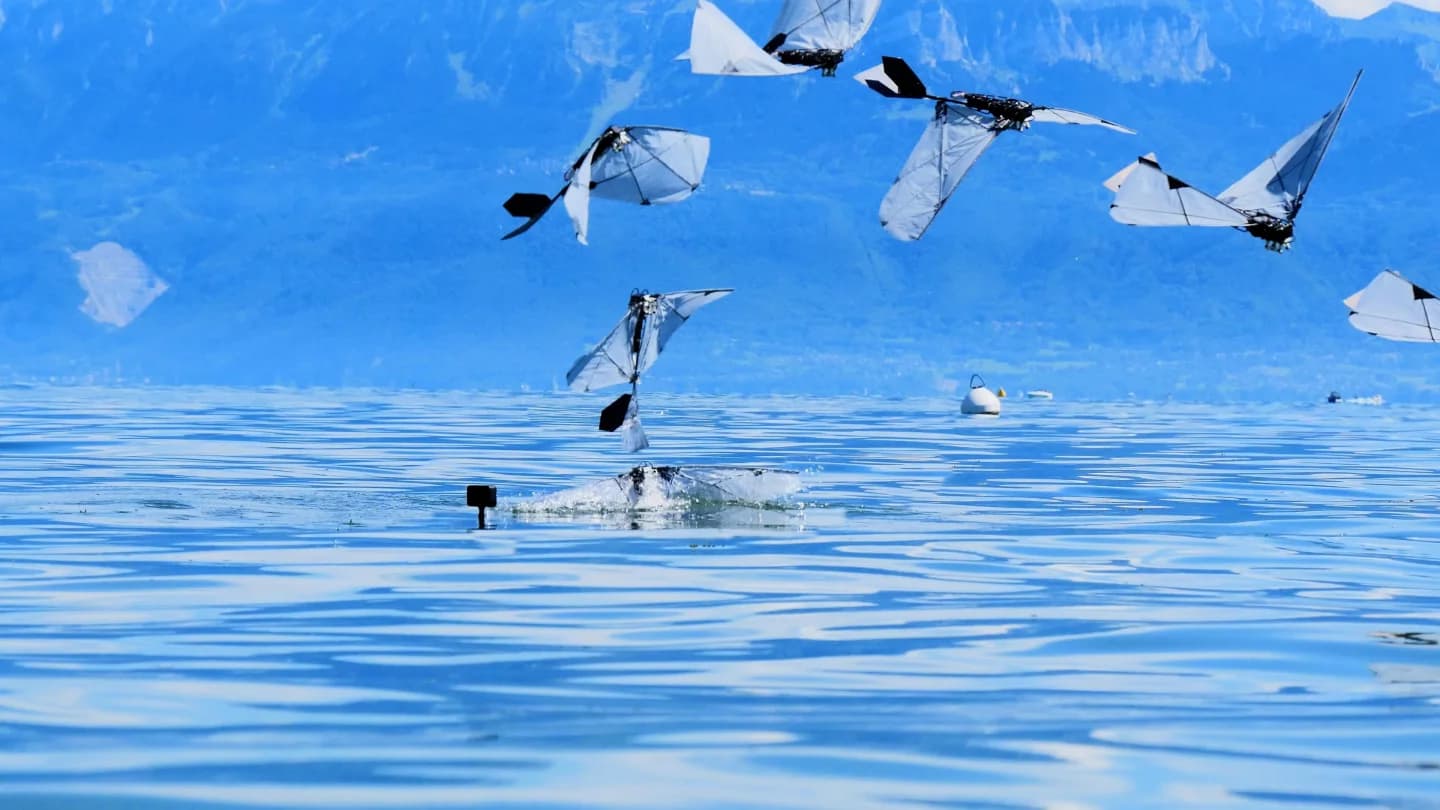
Researchers from MIT and EPFL have developed the world's first bird-sized biomimetic robot capable of swimming, diving, and flying using a single pair of wings — with no propellers, legs, or folding mechanisms. Inspired by aquatic birds such as loons and cormorants, the robot represents a major breakthrough in cross-medium locomotion and biomimicry robotics.
Highlights
- MIT and EPFL jointly developed the world's first bird-sized biomimetic robot capable of swimming, diving, and flying using only a single pair of wings.
- The robot eliminates the need for propellers, leg structures, or folding mechanisms — a significant departure from conventional aquatic-aerial hybrid vehicle designs.
- Design inspiration comes from aquatic birds such as loons and cormorants, which naturally transition between underwater diving and powered flight.
- Potential applications include environmental monitoring, search and rescue, infrastructure inspection of dams and offshore wind farms, and low-disturbance wildlife research.
- Research findings are expected to be submitted to international academic journals, with implications spanning robotics, aeronautical engineering, and bioinspired design.
A robot that swims like a diving bird and flies like one too might sound like two machines awkwardly bolted together. But researchers from MIT (Massachusetts Institute of Technology) and EPFL (École Polytechnique Fédérale de Lausanne) have successfully built a biomimetic robot that achieves both feats using a single pair of wings.
Breakthrough Design: One Pair of Wings, Three Modes
The robot draws inspiration from birds in nature that are capable of operating both in the air and underwater — species such as loons and cormorants, which can plunge-dive into water and then beat their wings back into flight. The research team broke from conventional approaches by deliberately avoiding the following common engineering solutions:
- Propellers: the go-to propulsion device for traditional air-water hybrid vehicles
- Leg structures: appendages used for paddling through water
- Folding mechanisms: complex mechanical structures that reshape the wing profile during mode transitions, akin to origami
In their place, the team developed a highly integrated single-wing system capable of adaptively generating thrust and lift across different media — both air and water.
A New Milestone in Biomimicry Robotics
This research marks a significant advance in the field of biomimicry robotics. Historically, air-water hybrid robots have required major structural compromises — sacrificing flight efficiency for underwater mobility, or vice versa. The collaborative work between MIT and EPFL demonstrates that, through deep study of avian biomechanics and rigorous engineering translation, cross-medium locomotion is achievable within a far simpler mechanical architecture.
Potential Applications
Aquatic-aerial biomimetic robots of this type hold promise for a wide range of real-world applications, including:
- Ocean and lake environmental monitoring: aerial reconnaissance followed by direct water entry for sample collection
- Search and rescue missions: rapid deployment at maritime disasters or flood sites, with combined aerial and surface search capability
- Infrastructure inspection: composite air-and-water inspection of bridges, dams, offshore wind installations, and other structures
- Ecological research: wildlife monitoring in forms that closely mimic natural animals, minimizing disturbance to target species
The MIT and EPFL research teams are continuing to refine the robot's performance. Their findings are expected to be published in international academic journals, drawing significant attention across the fields of robotics, aeronautical engineering, and bioinspired design.
原文來源: 查看原文
FAQ
Reviewed and published by the LAETimes editorial desk ·