Scientists Discover the Brain Makes Decisions Far Earlier Than Previously Thought
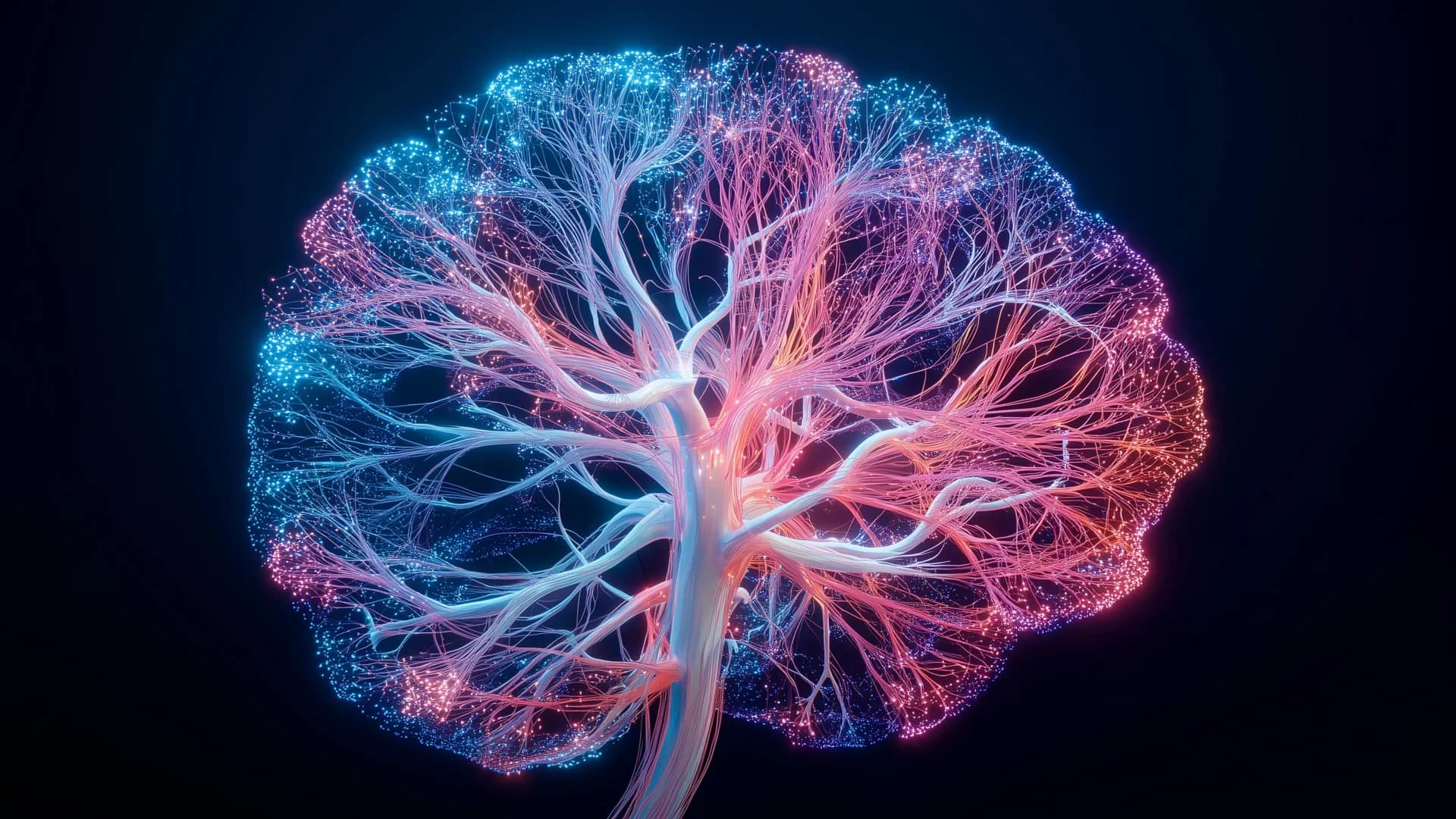
New research overturns long-held neuroscience assumptions, revealing that the brain begins making decisions much earlier than scientists believed. Even primary sensory regions are influenced by higher-order brain areas via rapid feedback loops, rather than simply passing information linearly up the hierarchy. This more dynamic view of brain function could help engineers design future AI systems that mimic biological thinking while significantly reducing energy consumption.
Highlights
- New research shows the brain begins decision-making far earlier than previously believed, challenging decades of neuroscience consensus.
- Even primary sensory regions are actively modulated by higher-order brain areas via rapid feedback loops, disproving the purely linear information-processing model.
- The study's dynamic model of brain function could guide engineers in designing next-generation AI architectures that more closely replicate biological cognition.
- Current deep learning models consume substantial power; feedback loop-inspired AI designs could enable more efficient decision-making at significantly lower energy costs.
New research has revealed that the brain begins making decisions far earlier than scientists previously believed, overturning a long-standing view in neuroscience.
Rapid Feedback Loops Challenge Conventional Wisdom
The prevailing scientific consensus held that the brain processes information in a linear fashion — stimuli received by the sensory organs travel step-by-step up to higher-order brain regions, which then carry out judgment and decision-making. The new findings, however, suggest the actual mechanism is considerably more complex.
Researchers found that even primary sensory regions — those responsible for receiving external stimuli — are modulated by higher-order brain areas through rapid feedback loops, rather than simply passing information passively forward. In other words, the brain begins engaging in decision-making at a very early stage after receiving input, with the entire system operating in a highly dynamic and deeply interconnected manner.
Implications for AI System Design
Beyond deepening our understanding of the human brain, the study carries significant implications for the field of artificial intelligence. The researchers noted that this more dynamic view of brain function could help engineers develop architectures for future AI systems that more closely mirror the way biological brains think — while dramatically reducing energy consumption.
Current mainstream deep learning models require substantial electrical power during computation. By emulating the brain's feedback loop mechanisms, AI systems may be able to achieve more flexible and efficient decision-making under far lower power constraints.
Outlook
This research opens new avenues for cross-disciplinary applications spanning neuroscience and artificial intelligence. Should follow-up studies continue to build on these findings, they could bring about fundamental changes in the design of next-generation intelligent systems.
原文來源: 查看原文
FAQ
Reviewed and published by the LAETimes editorial desk ·