New Jets and Drones Set to Make Fort Hood the U.S. Army's Airborne Intelligence Hub
The U.S. Army has announced that the future ME-11B High Accuracy Detection and Exploitation System (HADES) aircraft fleet will be based at Fort Hood, Texas, alongside the establishment of the Army's first drone operations battalion. The 116th Military Intelligence Brigade will also relocate from Fort Gordon, Georgia, consolidating airborne ISR capabilities at a single installation.
Highlights
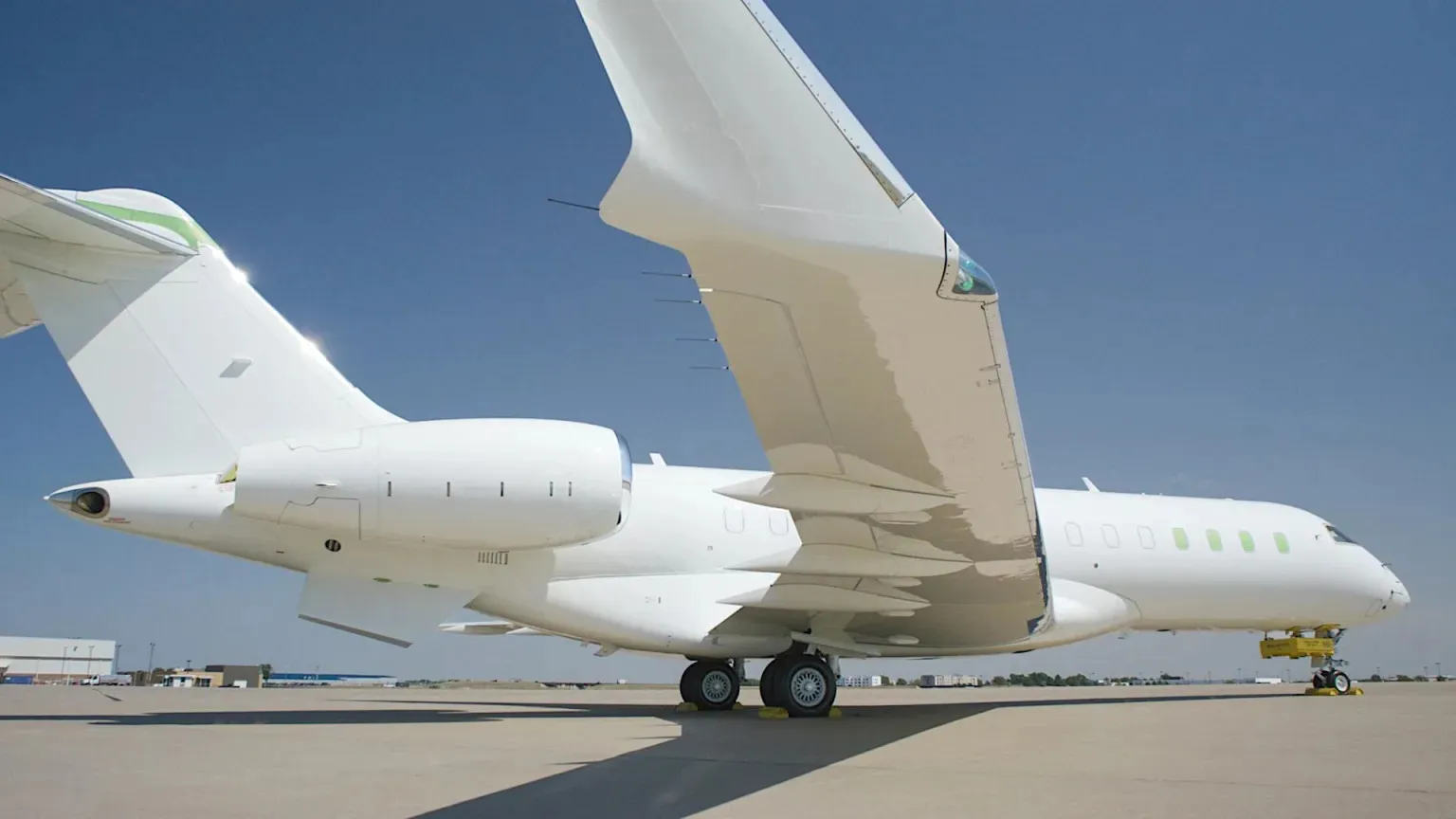
- The U.S. Army will base the ME-11B HADES ISR jet fleet — modified from the Bombardier Global 6500 — at Fort Hood, Texas, with the first prototype expected before end of 2026.
- The Army will establish its first drone operations battalion at Fort Hood, built around the 224th Military Intelligence Battalion and equipped with MQ-1C Gray Eagle companies.
- The 116th Military Intelligence Brigade will relocate from Fort Gordon, Georgia, to Fort Hood, with 1,228 additional personnel expected to transfer by FY2028.
- HADES aircraft will carry two underwing hardpoints and launch drones with a reach of approximately 620 miles (1,000 km), enabling deep sensing into denied areas while remaining in international airspace.
- The Army currently plans only six production-model HADES jets beyond three prototypes, raising concerns about filling the capability gap left by dozens of retired turboprop ISR aircraft.
The U.S. Army has announced that its future ME-11B High Accuracy Detection and Exploitation System (HADES) aircraft fleet will be based primarily at Fort Hood, Texas. The Army simultaneously confirmed plans to establish its first-ever drone operations battalion at the installation as part of a broader effort to consolidate airborne intelligence, surveillance, and reconnaissance (ISR) assets. The move follows the Army's formal retirement last year of its final fleet of turboprop ISR aircraft.
Relocation of the 116th Military Intelligence Brigade
Alongside the HADES basing announcement, the Army confirmed that the 116th Military Intelligence Brigade (116th MI Brigade) will relocate from Fort Gordon, Georgia, to Fort Hood, with the process already underway. Since 2014, the 116th has served as the Army's primary airborne ISR formation, overseeing subordinate units across multiple installations nationwide over the past 12 years — including units already stationed at Fort Hood.
The Army expects to receive its first ME-11B prototype before the end of the year and is procuring two additional prototypes. At least six production-model aircraft are planned, with the total potentially growing further. The HADES jet is based on the Bombardier Global 6500 business aircraft.
Modernization Significance
According to an Army statement released today: "The relocation, approved by then-Army Chief of Staff General Randy George on March 3, 2026, will position the brigade to lead the fielding of HADES, marking a critical step in modernizing U.S. global Airborne Intelligence, Reconnaissance, and Surveillance (AISR) capabilities. The integration will redesign the Army's only fixed-wing AISR brigade to better support multi-domain and large-scale combat operations."
Fort Hood is one of the largest Army installations in the world and shares Robert Gray Army Airfield with Killeen Regional Airport. Signs that the ME-11B would be stationed there emerged last month, when a procurement notice revealed that hangars at the airfield would be modified specifically to accommodate the new jets.
Tactical Advantages of HADES
The Army views HADES as central to a paradigm shift in airborne ISR support. The ME-11B flies higher, faster, and farther than any of the retired turboprop platforms. As a result, HADES can reach and depart operational areas more rapidly and loiter over target areas for extended periods. Operating at high altitude also gives onboard sensors and data links improved lines of sight compared to predecessor aircraft, while the jet's higher ceiling enables it to look deep into denied areas at oblique angles while remaining in international airspace and well away from potential threats.
Under the Army's publicly described concept of operations, HADES aircraft will also launch very long-range drones with a reach of approximately 620 miles (1,000 kilometers) or more. These drones will significantly extend the mothership's sensing range while keeping it at a greater standoff distance from enemy air defenses.
Andrew Evans, Director of Strategy and Transformation in the Office of the Deputy Chief of Staff G-2, told reporters including The War Zone at the Army Aviation Association of America (AAAA) 2026 Warfighting Summit in April: "For 99.9 percent of a 70-to-80-year lifecycle, this system can perform ISR. We are building a system that works 99.9 percent of its useful life."
He added: "Combined with the range of HADES and the things that can be launched from it, there is no place in the world we can't reach. From a sensing perspective, no one will be able to hide in the future."
Evans also noted that each jet features two underwing hardpoints for carrying additional sensor pods or other systems, hinting that further advanced capabilities are planned.
Capability Gaps and the Broader ISR Ecosystem
Nevertheless, significant questions remain around the Army's HADES program — chief among them how the service will fill the capability gap left by the retirement of dozens of turboprop ISR aircraft. The Army currently plans to procure only six production-model HADES beyond the three prototypes, well below the already-modest original expectation of twelve aircraft.
The Army's envisioned future airborne ISR ecosystem will also include other platforms such as high-altitude balloons, which can carry out ISR missions and even deploy drone swarms. The Army is also at least experimenting with high-altitude long-endurance drones, while space-based ISR assets are expected to play an increasingly important role across U.S. military operations.
The First Drone Operations Battalion
On the drone battalion initiative, the Army's statement noted: "The companies that make up the drone battalion are currently executing global missions, and their integration will strengthen the brigade's agility, deployability, and lethality. The 116th MI Brigade (AI) remains the Army's only formation capable of remotely operating drones from a home station while deploying small, streamlined forward elements for drone missions, significantly reducing logistics and mobility costs."
The 224th Military Intelligence Battalion, currently based at Hunter Army Airfield at Fort Stewart, Georgia, is expected to form at least the core of the new drone formation.
According to the 224th Battalion's official website: "After divesting its manned aircraft fleet, the 224th MI Battalion strategically refocused entirely on unmanned aerial intelligence. This transformation aligns with the U.S. Army's new force structure, and the 224th has been designated as the Army's first drone systems operations battalion." "The new battalion will consist of a Headquarters and Headquarters Company, two MQ-1C Gray Eagle companies, and one Processing, Exploitation, and Dissemination (PED) company."
The relocation from Hunter Army Airfield to Fort Hood is expected to be completed by 2027, bringing all 116th MI Brigade elements under one roof. Overall, the consolidation effort is projected to move an additional 1,228 personnel to Fort Hood from Fort Gordon, Fort Stewart, and Fort Bliss (also in Texas) between now and FY2028.
Questions Over the MQ-1C Gray Eagle's Future
Notably, the Army's current leadership has been clear about its desire to move away from the MQ-1C Gray Eagle. The platform, which has its roots in the Global War on Terror era, faces questions about its survivability and relevance in future high-end conflicts, and has encountered resistance in Congress. The Gray Eagle has seen active operational use in strikes against Iran this year, as has the related MQ-9 Reaper.
The U.S. Air Force had previously sought to retire the MQ-9 due to doubts about its value beyond low-intensity conflict, but authorities recently described it as a standout performer during operations against Iran — despite absorbing significant combat losses — sparking intense debate about the Reaper's future. The Air Force has also launched a next-generation MQ-9 replacement program in partnership with the Defense Innovation Unit (DIU), emphasizing modularity and lower cost.
Fort Hood: The Center of Gravity for the Army's Airborne Intelligence Future
Major General Timothy Brown, Commander of the Army Intelligence and Security Command (INSCOM), stated: "The key to the future of airborne ISR is integrating the powerful 116th Brigade at Fort Hood!"
The centerpiece of this consolidation — and of the Army's broader airborne ISR future — will be the arrival of the new HADES jets at the Texas installation. The Army's airborne reconnaissance capabilities are genuinely at an inflection point, and HADES is only one piece of a much larger equation.
原文來源: 查看原文
FAQ
Newsletter
Subscribe to our Low-Altitude Industry Newsletter
Daily curated news on low-altitude economy and drone industry, delivered to your inbox.
Reviewed and published by the LAETimes editorial desk ·


