U.S. Navy Seeks Next-Generation Carrier-Based Drone Family Covering Eight Mission Sets
The U.S. Navy issued a Request for Information (RFI) on July 14 seeking a next-generation family of carrier-based unmanned systems capable of operating from Ford-class and Nimitz-class aircraft carriers. The RFI covers eight mission areas — including surface strike, land attack, anti-submarine warfare, air-to-air combat, electronic warfare, ISR, aerial refueling, and logistics — with a minimum strike mission range of 1,000 nautical miles. Industry responses are due August 13.
Highlights
- The U.S. Navy issued an RFI on July 14 seeking a next-generation carrier-based drone family of systems for Ford-class and Nimitz-class aircraft carriers, with industry responses due August 13.
- The RFI mandates eight mission capabilities: anti-surface warfare, land attack, ASW, air-to-air combat, electronic warfare, ISR, aerial refueling, and logistics flights.
- A minimum strike mission range of 1,000 nautical miles is required, along with mature flight and mission autonomy including automated aerial refueling.
- The Navy also seeks VTOL-capable drones operable from destroyers (DDG) and Expeditionary Sea Bases (ESB), not just aircraft carriers.
- The program is part of the Trump administration's Golden Fleet initiative and the broader Air Wing of the Future, which also includes the MQ-25A Stingray and Collaborative Combat Aircraft (CCA) programs.
U.S. Navy Seeks Next-Generation Carrier-Based Drone Family of Systems
The U.S. Navy issued a Request for Information (RFI) on July 14 actively seeking a family of carrier-based unmanned systems capable of executing diverse missions to strengthen future carrier air wing combat power.
Exploring Industry Capability
The Navy stated that the solicitation aims to "explore the defense industry's ability to provide highly autonomous platforms optimized to operate aboard Ford-class and Nimitz-class nuclear-powered aircraft carriers." Industry responses are due by August 13.
The unmanned systems solicited are part of the Air Wing of the Future Family of Systems and may be designed as "single-mission platforms, multi-mission platforms, or a modular family of systems."
Eight Core Mission Requirements
Regardless of the solution architecture chosen, the Navy requires platforms capable of performing the following eight mission sets:
- Anti-Surface Warfare (ASuW): Attacking surface vessels
- Strike: Engaging land-based targets
- Anti-Submarine Warfare (ASW)
- Air-to-Air Combat: Countering enemy aircraft and missiles
- Electronic Warfare (EW)
- Intelligence, Surveillance, and Reconnaissance (ISR)
- Aerial Refueling
- Logistics Flights: Supporting naval task forces
The Navy emphasized that the solicitation seeks to "combine industry expertise to identify combinations of platforms that can deliver large quantities of attritable systems at affordable cost to address current and emerging threats."
Specific Technical Requirements
The RFI sets out several concrete specifications, including:
- Minimum strike mission range: 1,000 nautical miles
- Demonstrated maturity in "flight autonomy (e.g., carrier launch and recovery modes, taxiing) and mission autonomy (e.g., dynamic mission assignment and reassignment, threat avoidance, automated aerial refueling)"
- Compatibility with existing unmanned carrier-based aircraft control systems
Expansion to Other Ship Classes
Notably, while the RFI primarily focuses on carrier-based drones, the Navy also expressed interest in vertical take-off and landing (VTOL) unmanned systems capable of operating from other vessel types, including destroyers (DDG) and Expeditionary Sea Bases (ESB).
"The Navy is highly interested in innovative concepts employing vertical take-off and landing technology that can operate from any aviation-capable vessel, including those other than aircraft carriers," the RFI states.
Toward a Fifth- and Sixth-Generation Air Wing
The RFI reflects the Navy's strategic intent to transition from its current fourth-generation carrier air wing to a future air wing composed of both fifth- and sixth-generation manned and unmanned aircraft.
The new unmanned systems "must demonstrate improved combat effectiveness over current fourth-generation platforms within defined spot factor constraints."
The Air Wing of the Future concept appears modeled on a high-volume attrition warfare framework, replacing a small number of high-cost platforms with large quantities of affordable, attritable drones for combat missions.
Requirements for Industry Respondents
Companies responding to the RFI must address:
- How their production approach supports "rapid scaling and flexible allocation in surge production scenarios"
- How they will keep "Unit Recurring Flyaway (URF) costs and sustainment costs within sustainable ranges"
- How they will minimize maintenance requirements and integrate into existing Navy supply chains
- "Capital expenditure (CAPEX) or Independent Research and Development (IRAD) investment plans"
Policy Context
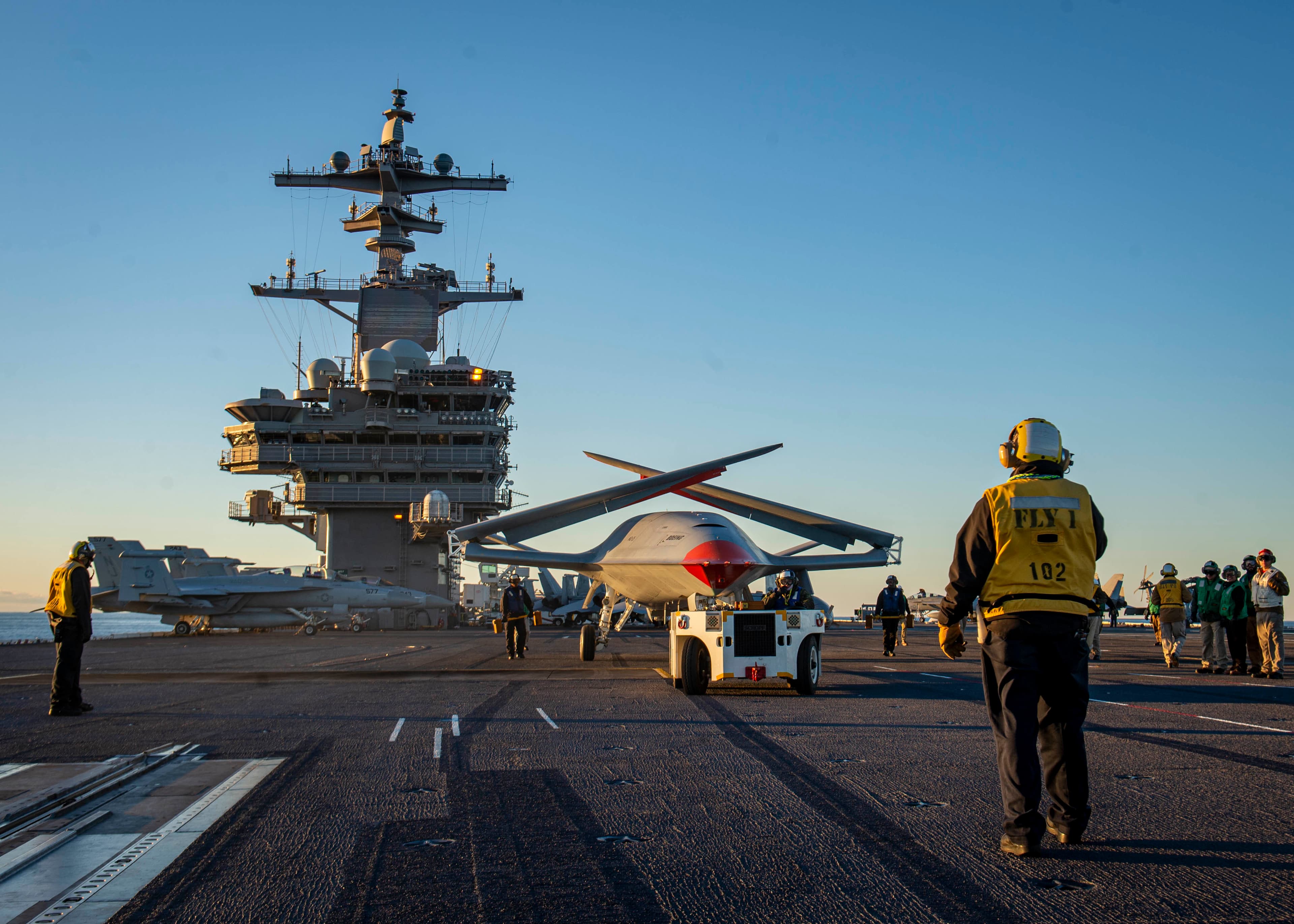
The Air Wing of the Future Family of Systems is part of the Trump administration's Navy "Golden Fleet" expansion initiative. Existing family-of-systems unmanned programs include the MQ-25A Stingray aerial refueling tanker and the Collaborative Combat Aircraft (CCA) program.
原文來源: 查看原文
FAQ
Reviewed and published by the LAETimes editorial desk ·