China's H-20 Stealth Bomber Has a Fatal Flaw Nobody Is Talking About — One the U.S. Air Force Solved Decades Ago
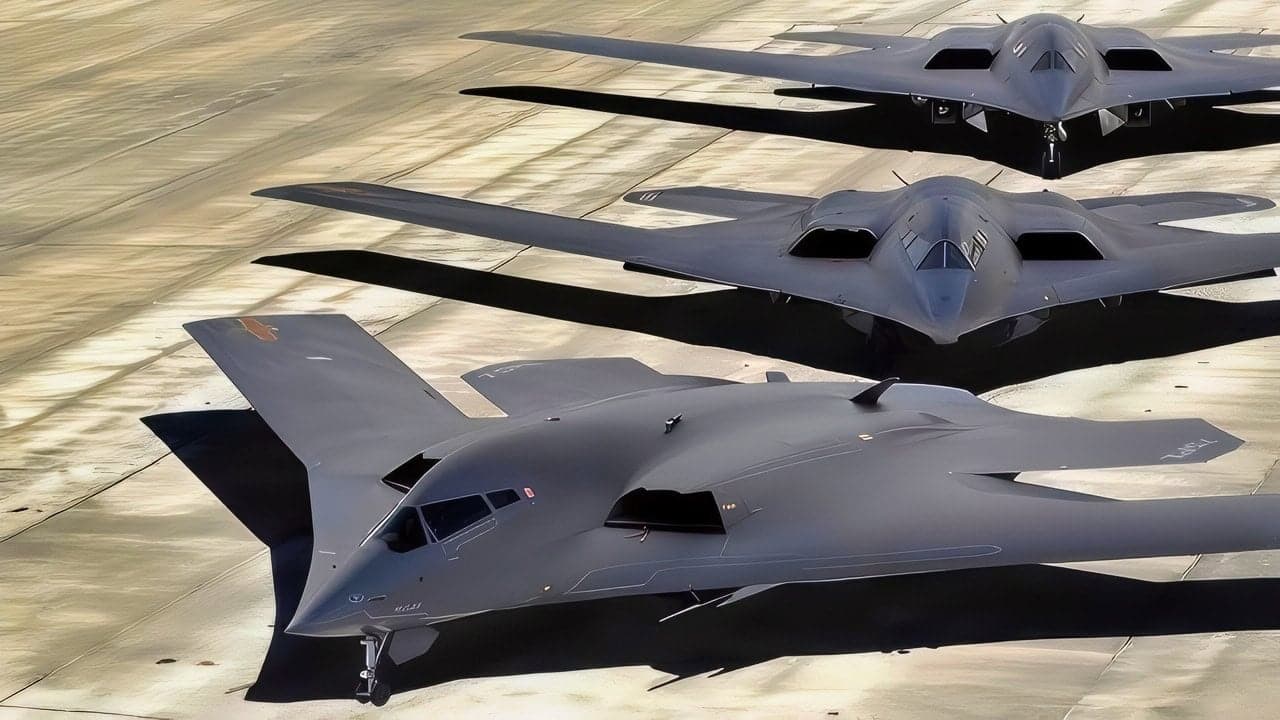
The real bottleneck for China's H-20 stealth bomber is not engineering but aerial refueling capacity. China operates only around 35 tankers, all hose-and-drogue equipped, incapable of the high-flow boom refueling that heavy bombers require. By contrast, U.S. law mandates a fleet of over 500 tankers. Without solving this refueling gap, the H-20's advertised intercontinental strike capability exists only on paper.
Highlights
- China operates only ~35 aerial tankers versus a U.S. legally mandated fleet of 502+, creating a 14-to-1 disadvantage relative to fleet size.
- All Chinese tankers use hose-and-drogue systems; none are equipped with the flying boom required for high-flow refueling of heavy bombers like the H-20.
- The H-20's estimated unrefueled range of 8,500 km covers Guam and the First Island Chain but falls short of Hawaii and the U.S. mainland without aerial refueling.
- The Pentagon's annual China Military Power Report explicitly links YY-20A tanker availability to the PLA Air Force's ability to operate beyond the First Island Chain.
- The U.S. Air Force is developing a stealthy next-generation tanker for the mid-2030s due to the vulnerability of non-stealthy tankers in contested Pacific airspace — a vulnerability China's 35-tanker fleet shares in far greater measure.
Every debate about China's H-20 stealth bomber circles the same questions: When will it fly? Can Xi'an Aircraft Industrial Corporation actually build it? Those are the wrong questions — or at least not the most important ones. A penetrating strategic bomber is less an aircraft than a system. And the most unglamorous link in that system — the tanker fleet that transforms a regional aircraft into an intercontinental strike weapon — is precisely where China's numbers are most embarrassing. U.S. law mandates more than 500 tankers; China operates roughly 35, and not one is equipped with the high-flow flying boom that heavy bombers require. Until that changes, the H-20's most impressive range figures will remain exactly what they are: numbers on a page, with a map in that rendering far larger than anything China can actually reach.
The Fleet Behind the Fleet
Start with the raw numbers, because the gap is staggering. The U.S. Congress has codified tanker fleet size into law: the FY2026 National Defense Authorization Act requires a minimum of 502 tankers to be maintained by 2028. The roughly 376 KC-135 Stratotankers currently in service, combined with a growing fleet of over 100 KC-46s, already surpass that baseline. Lawmakers guard these figures jealously — recent legislation has barred KC-135 retirements and required mothballed KC-10s to be kept airworthy. Washington treats tankers as an irreplaceable pillar of global airpower projection, because that is exactly what they are.
China's entire aerial refueling capability amounts to approximately 35 aircraft: three aging Il-78 tankers acquired from Ukraine, a limited number of H-6U and H-6DU bomber-conversion variants, and the more modern YY-20A, derived from the Y-20 transport. Within that limited number, the quality gap is equally stark. The H-6U conversion, based on the 1950s Tu-16 airframe, can transfer only 18.6 tonnes of fuel; the YY-20A can carry roughly 90 tonnes — more than four times as much. The YY-20A is a genuinely modern tanker, but it remains extremely scarce: according to Jane's Defence, just one was in service in early 2022, rising to four by year's end, then at least eight a few months later, with open-source estimates today ranging from the low teens to several dozen. Even on the most generous count, China's tanker fleet is a fraction of America's — yet it must support an air force of more than 3,000 aircraft. That ratio is 14-to-1, and the advantage belongs to the country that already has stealth bombers.
The Problem with the Hose
The issue goes beyond numbers and into the plumbing of refueling itself. Every Chinese tanker uses the same transfer method — a trailing hose-and-drogue basket that the receiver aircraft probes into. The YY-20A carries two underwing hose-and-drogue pods and a centerline drogue; the H-6U and Il-78 are likewise probe-and-drogue machines. What China has never publicly demonstrated is the flying boom — a rigid, operator-guided telescoping tube inserted into the receiver's receptacle, delivering fuel at several times the flow rate of any drogue. This distinction is not a technicality; it is precisely why every large U.S. aircraft — from the B-52 to the C-17 to the B-2 stealth bomber — uses a boom receptacle. Drogue-refueling a bomber is simply too slow; the geometry of a combat mission does not work.
This places H-20's designers in a genuine bind. Installing a fixed refueling probe on a flying-wing airframe compromises the radar-absorbing stealth characteristics the entire aircraft was designed to achieve. A retractable probe adds doors, mechanisms, and maintenance burden, creates breaks in the stealth skin, and still delivers fuel slowly. The American solution — a boom receptacle — demands flying-boom tankers that China does not possess, and whichever path Beijing chooses requires a flight-test and certification program for each tanker type. The casual assumption that China can simply top up its new bomber with its existing tankers skips over all of this. "Having tankers" and "being able to refuel a stealth flying wing" are two distinct capabilities, and China has only validated the first.
The Geography of the Pacific
The map must be read carefully here, because the tanker problem is not equally lethal in all directions. The U.S. Department of Defense has assessed the H-20's unrefueled range at approximately 8,500 km, with some analysts projecting over 10,000 km; even the conservative figure covers targets Beijing cares most about. Guam sits roughly 3,000 km from the Chinese coast; the First Island Chain — Japan, the Philippines, and every node capable of reshaping the Indo-Pacific balance — falls well within 8,500 km of an aircraft launching from an interior base, with no tanker required. Any honest assessment must acknowledge that this is probably why China chose a large flying-wing design in the first place.
The tanker problem begins where the advertising copy does. Hawaii is roughly 8,500 km from the Chinese mainland — meaning, on optimistic range estimates, a one-way trip; the continental United States lies far beyond that. "Sustained campaign capability" — the ability to threaten targets day after day rather than in a single spectacular sortie — multiplies fuel requirements further.
Every mission profile that justifies the word "intercontinental" — the word that distinguishes the H-20 from the missile forces China already has in the thousands — must cross a bridge made of 35 aircraft. The Pentagon itself draws this connection explicitly in its annual China Military Power Report, linking the Y-20U tanker directly to the PLA Air Force's ability to operate beyond the First Island Chain and to support China's nascent nuclear triad air leg, including the H-20. Analysts in Washington already fold tankers into the bomber equation; commentators covering the bomber rarely do.
Tankers Are Targets
There is a second dimension that the United States has already war-gamed for us. American Pacific conflict tabletop exercises consistently flag the vulnerability of large tankers concentrated at a handful of airfields — strikes on hubs like Andersen Air Force Base and Kadena Air Base would push tanking orbits hundreds or thousands of miles further from the fight. The U.S. Air Force is sufficiently worried that it has begun developing a next-generation, high-survivability tanker for the mid-2030s, described in Congressional Research Service reports as "a stealthy, self-defending aircraft able to operate in contested airspace."
Read that description carefully: the nation with 500 tankers, hardened bases, and seven decades of tanking experience has concluded that its non-stealthy tankers are too vulnerable for a modern Pacific war.
Now apply the same logic in reverse. To strike targets beyond Guam, a Chinese tanker — a large, high-radar-cross-section, defenseless aircraft — must fly east, across the First Island Chain, into airspace patrolled by U.S. and allied fighters and covered by long-range missiles, to orbit predictably while the bomber refuels. The stealth bomber may be difficult to detect, but the aircraft extending its range most certainly is not. Destroy the tanker and you have reduced an intercontinental bomber back to a regional one without ever finding the bomber itself. Any U.S. military planner assessing a future H-20 penetration mission will see the same vulnerability they have already identified in their own forces — except the Chinese version of that vulnerability consists of 35 aircraft with no survivable replacement even on paper.
Beijing Knows
None of this is a secret in China, and an honest counter-argument must acknowledge: the gap is narrowing from the demand side.
The YY-20A fleet is growing alongside the Y-20 hot production line, and the latest variant — the Y-20B with domestically produced WS-20 engines — is assessed by analysts as a multi-role tanker-transport, signaling Beijing's intent to scale tanking capacity from a boutique capability into genuine mass. Some projections hold that the PLA Air Force could field several dozen tankers by the early 2030s, coinciding neatly with the H-20's repeatedly delayed service timeline. China is building this supporting fleet; it simply has not built it yet. And a flying-boom-equipped variant — the one a stealth bomber with a boom receptacle would actually need — has yet to appear.
That returns the story to its proper proportions. The H-20, whenever it appears, will be a real regional strike aircraft capable of genuine threats against the First Island Chain and Guam from the day it enters service; it needs no tankers at all for those targets.
But it will not, for years after its debut, be the intercontinental bomber that can threaten Hawaii and strike the continental United States — the one that exists in the promotional imagination — because that aircraft requires a tanker fleet China has barely begun to assemble, and a refueling method China has never demonstrated.
The H-20 question everyone is asking is when it will fly. The question that will actually determine what it can do is considerably quieter: watch the tanker production line in Xi'an, not the bomber's first rollout — because striking power is a system, and the middle link of that system is still missing.
About the Author: Harry J. Kazianis
Harry J. Kazianis (@Grecianformula) is the former Senior Director of National Security Affairs at the Center for the National Interest (CFTNI), a Washington, D.C.-based foreign policy think tank founded by Richard Nixon, with more than a decade of experience in think tanks and national security publishing. His analysis has appeared in The New York Times, The Washington Post, The Wall Street Journal, CNN, and numerous other outlets. He has held positions at CSIS, the Heritage Foundation, and the University of Nottingham, and has served as Executive Editor of The National Interest and The Diplomat. He holds a master's degree in international affairs from Harvard University.
原文來源: 查看原文
FAQ
Reviewed and published by the LAETimes editorial desk ·