US Defense Startup Vatn Systems Unveils SIGURD, an End-to-End Autonomous Mine Countermeasure System
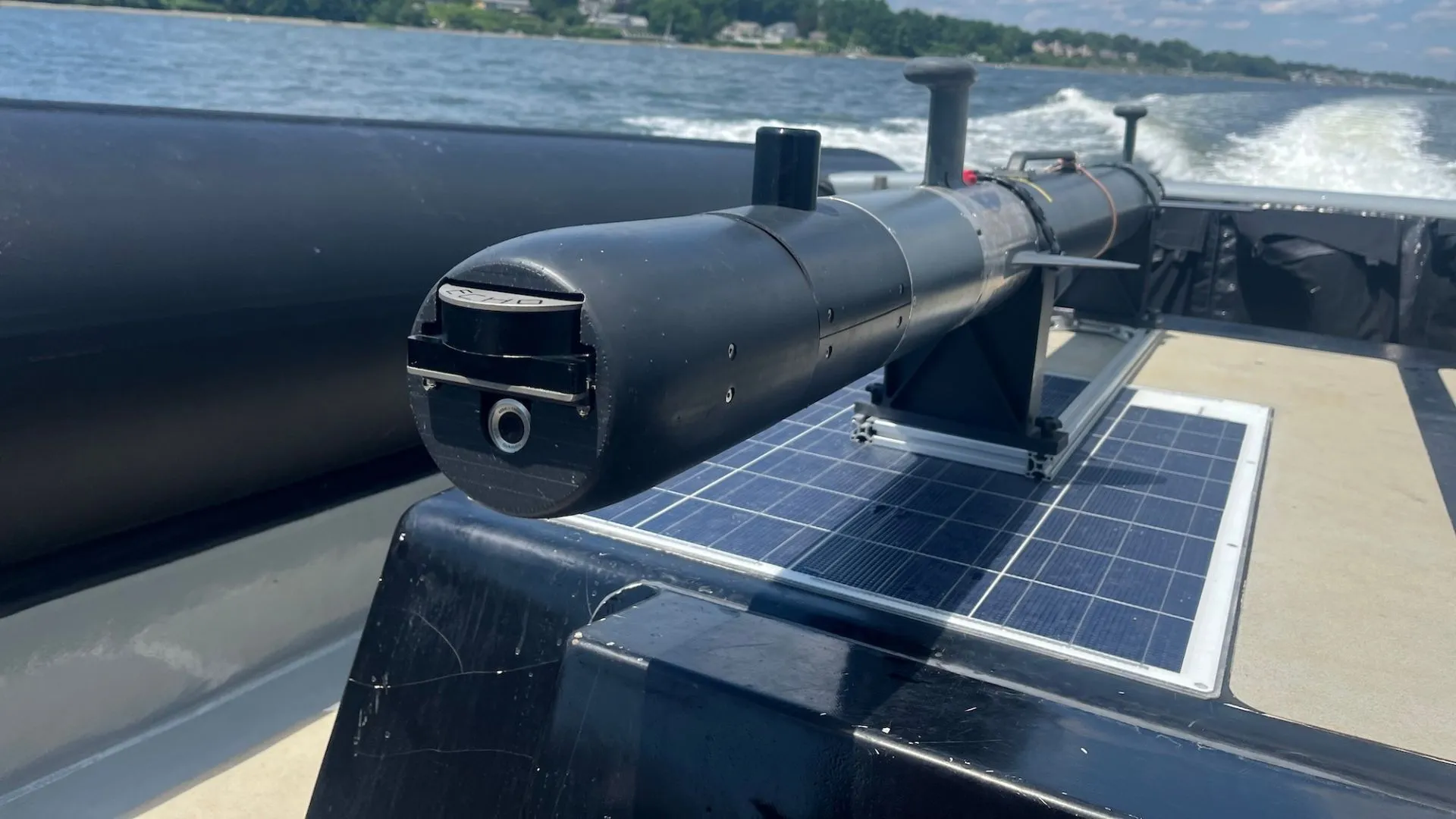
Vatn Systems, a US defense startup, has introduced SIGURD, a compact autonomous underwater system built on its Skelmir S6 AUV and designed to detect and neutralize naval mines. Offered in two mission configurations—search and neutralization—SIGURD can be deployed by a single operator without dedicated minesweeper vessels. Government customers are already testing the system, with operational deployment expected later this year.
Highlights
- Vatn Systems launched SIGURD, a man-portable autonomous mine countermeasure system built on its Skelmir S6 AUV, targeting military customers in the US and allied nations.
- SIGURD's search configuration detects naval mines at depths up to 100 meters, with a 6-hour endurance and a 30-nautical-mile operational range per sortie.
- The system offers two mission configurations—search and neutralization—that can be deployed independently or combined in a complete MCM mission.
- Former US Navy EOD technicians participated in SIGURD's development; testing against inert mines has validated both detection and intercept performance.
- Retired Vice Admiral Phil Sawyer, former US Seventh Fleet commander, said cost-effective autonomous MCM systems like SIGURD address a long-standing capability gap in naval operations.
US Defense Startup Vatn Systems Unveils SIGURD Autonomous Mine Countermeasure System
As naval mines continue to pose a growing threat to critical global waterways, US defense startup Vatn Systems has officially introduced a compact autonomous system purpose-built to address the challenge. The new platform, called SIGURD, enables military operators to detect and destroy underwater mines in a man-portable package, without reliance on large dedicated minesweeper vessels.
The system is built around Vatn's own Skelmir S6 Autonomous Underwater Vehicle (AUV) and targets one of the most resource-intensive tasks in naval warfare—clearing a single minefield can require significant time, personnel, and equipment. Vatn says government customers have already begun testing SIGURD, with operational deployment capability expected later this year.
Addressing the Underwater Mine Threat
Naval mines remain one of the most cost-effective weapons in maritime conflict. A single relatively low-cost mine can paralyze commercial shipping or delay naval operations for days.
Yet neutralizing these threats is typically far more difficult than laying them. Traditional mine countermeasure (MCM) missions rely on specialized vessels and highly trained explosive ordnance disposal (EOD) teams, and clearing a minefield can take considerable time before a waterway is deemed safe.
Vatn believes autonomous underwater vehicles can meaningfully compress that timeline. SIGURD is designed to be carried and deployed by a single operator directly into contested waters. CEO Nelson Mills noted that demand is growing as military planners increasingly prioritize securing critical maritime chokepoints.
Two Mission Configurations
Vatn offers SIGURD in two distinct configurations that can be deployed independently or used together as part of a complete MCM mission.
The first configuration focuses on mine search. It carries a side-scan sonar payload capable of detecting threats at depths of up to 100 meters. According to Vatn, the vehicle can operate for approximately 6 hours per mission sortie, covering a range of roughly 30 nautical miles.
The second configuration is designed for mine neutralization. Once a target has been identified and confirmed, the vehicle uses forward-looking sensors to guide its approach during the terminal phase. Operators can choose to allow the system to operate fully autonomously or retain the option for human intervention before the final action is executed.
Both variants are integrated with Vatn's command-and-control software, built on the Tactical Assault Kit (TAK) architecture—the same interface framework used across the company's broader autonomous underwater vehicle product line.
Designed for Real-World Operations
Former US Navy EOD technicians were involved throughout SIGURD's development, and their operational experience directly shaped the vehicle's design and mission workflow. Vatn reports that testing against inert mines has successfully validated both detection and intercept capabilities, and the company is scaling up production capacity to support US military customers as well as allied nations seeking to enhance their autonomous MCM capabilities.
Retired Vice Admiral Phil Sawyer, former commander of the US Seventh Fleet, noted that mine countermeasures represent one of the most demanding mission areas in naval operations. He said cost-effective systems like SIGURD could help close a long-standing capability gap.
With tensions rising across the Indo-Pacific and other strategically vital maritime corridors, interest in autonomous mine countermeasure systems is accelerating. Smaller underwater vehicles have the potential to allow naval forces to clear hazardous waters more rapidly while reducing the need to expose large surface vessels and personnel to dangerous environments.
原文來源: 查看原文
FAQ
Newsletter
Subscribe to our Low-Altitude Industry Newsletter
Daily curated news on low-altitude economy and drone industry, delivered to your inbox.
Reviewed and published by the LAETimes editorial desk ·