Five Key Technologies Iran Uses to Protect Its Ballistic Missiles from Enemy Strikes
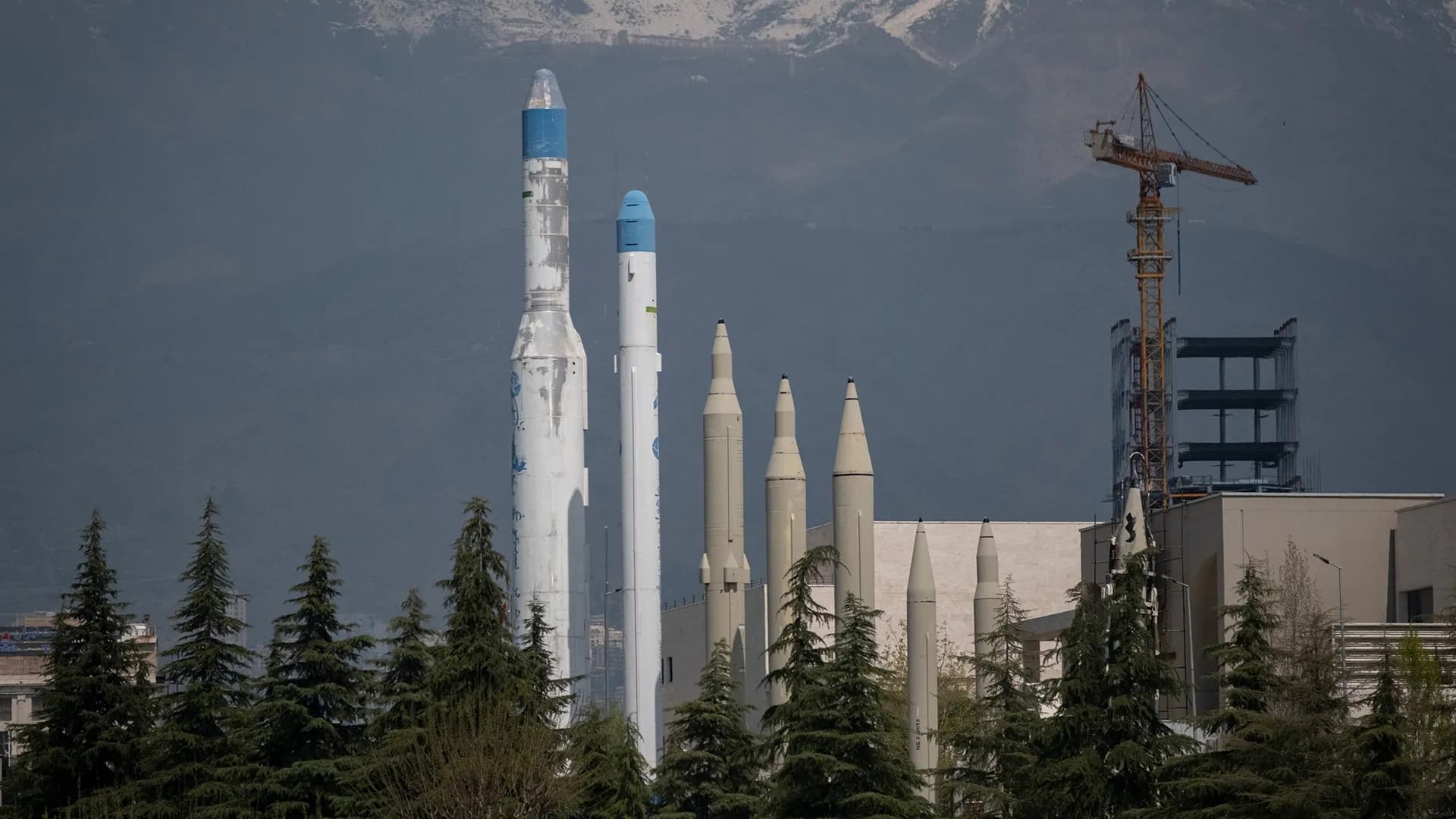
Iran has built a multi-layered ballistic missile survivability system encompassing deep underground 'Missile Cities,' hardened silos, mobile transporter-erector-launchers (TELs), camouflage and deception measures, and layered air defenses. The strategy is designed to ensure a meaningful retaliatory strike capability survives even a large-scale attack, underpinning Tehran's claimed deterrence posture.
Highlights
- Iran operates a network of deep underground 'Missile Cities' beneath mountains, used to store ballistic missiles and launch equipment in facilities resistant to conventional air strikes.
- Hardened launch silos with reinforced entrances and blast-resistant doors significantly increase the number of specialized munitions required to neutralize them.
- Mobile TEL vehicles allow Iran to disperse and reposition missiles continuously, making real-time targeting extremely difficult for adversaries.
- Camouflage, decoy launchers, and tunnel-based concealment create uncertainty about which sites hold live missiles, complicating enemy strike planning.
- Multi-layered air defenses — including surface-to-air missiles and radar networks — force adversaries to use standoff weapons or dedicate additional resources to suppressing Iranian air defenses before striking.
Iran's ballistic missile program is not just about developing weapons — it is equally focused on ensuring those weapons survive an enemy attack and remain operationally viable.
Over decades, Tehran has assembled a network of hardened bases, underground storage facilities, mobile launch systems, and layered defenses designed to make its missile forces difficult to locate and destroy.
These measures underpin Iran's stated deterrence and retaliatory capabilities.
Because many details about these facilities remain classified, available information is drawn primarily from satellite imagery, footage released by Iranian state media, and assessments by outside analysts. Nevertheless, five technical and engineering approaches are widely regarded as the core pillars of Iran's overall strategy.
1. Deep Underground Missile Complexes
The most visible element of Iran's survivability strategy is its network of underground facilities — referred to by Iranian officials as "Missile Cities."
These complexes are reportedly located beneath mountain ranges or deep soil and rock strata, and are used to store missiles, launch equipment, fuel, and supporting infrastructure. Footage that has been made public shows tunnels lined with missiles and transporter-erector-launchers.
Moving critical assets underground serves two purposes: it denies adversary reconnaissance a clear view, and it significantly reduces the effectiveness of conventional air strikes. Neutralizing such hardened facilities typically requires specialized bunker-busting munitions and multiple strike sorties — and even then, accurately assessing damage from the surface is extremely difficult.
2. Hardened Launch Silos and Reinforced Entrances
Iran has also developed hardened underground launch silos and reinforced structures for storing or launching ballistic missiles.
Unlike exposed surface launchers, silos protect missiles with thick concrete, earth overburden, and blast-resistant doors. Tunnel entrances can be reinforced, deeply recessed, or fitted with blast baffles to reduce damage from nearby detonations.
Satellite imagery analysis in recent years has revealed Iran continuing to strengthen sensitive underground facilities, adding physical protective layers around entrances and main structures. While these measures do not make facilities impervious to attack, they significantly increase the number and yield of weapons an adversary would need to neutralize them.
3. Mobile Transporter-Erector-Launchers (TELs)
Mobility provides yet another layer of protection.
Iran fields transporter-erector-launchers capable of carrying, erecting, and firing ballistic missiles from a variety of locations. Rather than being tied to known fixed bases, TELs can move between underground shelters, pre-surveyed launch sites, and concealed positions.
This greatly complicates targeting for adversaries: intelligence gathered at one moment can become obsolete as soon as a vehicle moves. Attackers must continuously locate, identify, and track individual vehicles across a large geographic area.
Mobile launchers also allow Iran to disperse its forces, reducing the probability that a single strike package can eliminate a large portion of its missile inventory.
4. Camouflage, Concealment, and Deception
Protecting missile infrastructure also depends on denying adversaries the ability to build an accurate target list.
Iran can employ camouflage netting, covered storage areas, underground movement routes, and deceptive activity to obscure the number and location of operational systems. Decoy launchers, dummy sites, and false equipment can force an attacker to expend reconnaissance assets or weapons against targets of little military value.
The extensive use of tunnels further supports this approach. Missiles and launch vehicles can remain hidden until the moment they are needed, dramatically narrowing the window during which they are exposed to satellite, aircraft, or drone surveillance.
This creates significant uncertainty about which locations contain live systems and which are simply intended to confuse adversary planners.
5. Multi-Layered Air Defense Systems
Iran complements its physical fortifications with air defense coverage around key military and industrial sites.
Surface-to-air missiles, radar networks, and anti-aircraft artillery are intended to detect and intercept enemy aircraft, drones, and certain incoming munitions.
Even when these systems cannot intercept every attack, they can force adversary aircraft to adopt more cautious tactics, resort to standoff weapons, or commit additional resources to suppressing air defenses before striking.
Conclusion: A Multi-Layered Survivability Strategy
Taken together, these elements form a layered survivability strategy.
Underground facilities shield missiles from view; mobile deployment prevents them from becoming fixed targets; deception disrupts reconnaissance; and air defense systems raise the cost of approach.
The five technical approaches work in combination, with the goal of ensuring that even after a large-scale attack, Iran retains at least a portion of its ballistic missile strike capability.
原文來源: 查看原文
FAQ
Newsletter
Subscribe to our Low-Altitude Industry Newsletter
Daily curated news on low-altitude economy and drone industry, delivered to your inbox.
Reviewed and published by the LAETimes editorial desk ·