British Army Tests New Counter-Drone Combat Marksmanship Training Programme
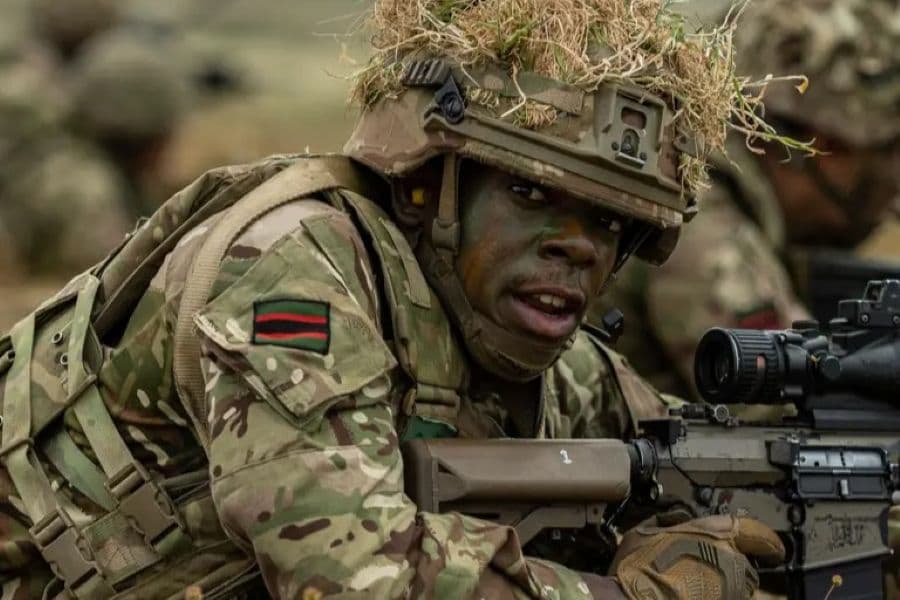
The British Army's 1st Battalion The Rifles (1 RIFLES) has completed an experimental counter-UAS exercise at the Sennybridge Training Area in Wales, trialling a proposed Counter UAS Annual Combat Marksmanship Test (ACMT) that integrates electronic warfare with live-fire engagements. The exercise aims to train infantry soldiers to detect, track, and destroy enemy drones on the battlefield, drawing directly on lessons learned from the conflict in Ukraine.
Highlights
- 1 RIFLES completed an experimental Counter UAS Annual Combat Marksmanship Test (ACMT) at Sennybridge Training Area, Wales, combining live-fire and electronic warfare in a first-of-its-kind British Army C-UAS range.
- Soldiers trained to engage FPV drones at 25 metres with shotguns and ISR drones at long range with precision rifles, reflecting a layered, multi-option counter-drone approach.
- The training design was directly informed by battlefield lessons from Ukraine, where reconnaissance and attack drones have become a persistent threat to ground forces.
- 1 RIFLES returned to Beachley Barracks, Chepstow, in August 2025 after a two-year Cyprus posting and is transitioning to a mechanised infantry role under the Future Soldier programme within 7 Light Mechanised Brigade.
- The battalion leads cyber and electromagnetic spectrum operations within 7 Brigade and is expanding both UAS and C-UAS capabilities to develop what it describes as 'tech-minded riflemen'.
British Army Tests New Counter-Drone Combat Marksmanship Training Programme
The British Army's 1st Battalion The Rifles (1 RIFLES) has completed an experimental counter-unmanned aerial systems (C-UAS) exercise designed to evaluate new tactics and training methods for dealing with drone threats on the modern battlefield.
The exercise was held at the Sennybridge Training Area in Wales and tested a proposed Counter UAS Annual Combat Marksmanship Test (ACMT) — a new assessment framework that combines electronic warfare (EW) with live-fire shooting, aimed at training infantry soldiers to detect, track, and neutralise enemy drones.
The exercise reflects the British Army's growing focus on counter-drone capabilities. As unmanned systems have become a central element of modern warfare — a reality underscored by lessons from the conflict in Ukraine — the urgency of dedicated C-UAS training has increased significantly.
Multi-Layered Counter-Drone Tactics Put to the Test
The exercise assessed riflemen's ability to identify, track, and jam enemy drones before the application of electronic countermeasures, as well as their marksmanship in engaging intelligence, surveillance, and reconnaissance (ISR) drones at distance using precision rifles.
Soldiers also practised engaging first-person view (FPV) drones at close range — approximately 25 metres — using shotguns.
According to the British Army, this represents the first live-fire range to evaluate a "layered C-UAS approach integrating electronic attack and kinetic fires." The goal is to establish a standardised annual combat marksmanship test specifically tailored to the drone threat.
Drawing on Ukraine Battlefield Experience
The design of the exercise was informed by lessons learned from the war in Ukraine, where reconnaissance and attack drones have emerged as a persistent and difficult-to-counter threat.
Rather than relying on any single method of defeat, the training is intended to equip infantry soldiers with a range of options for engaging enemy drones — encompassing electronic warfare, precision marksmanship, and close-quarter engagement.
Modernising Infantry Capabilities
The counter-drone test exercise forms part of a broader modernisation effort within 1 RIFLES, conducted alongside the maintenance of traditional infantry skills.
The battalion returned to Beachley Barracks in Chepstow in August 2025 following a two-year posting to Cyprus, during which it served as the standing infantry battalion for the Middle East and North Africa region at high readiness.
Since returning to the United Kingdom, the battalion has transitioned into a mechanised infantry role under the 7th Light Mechanised Brigade, in line with the British Army's Future Soldier programme. The unit is also preparing for an operational rehearsal deployment to Kosovo, where it will serve as NATO's strategic reserve force in the region.
Alongside conventional infantry training, 1 RIFLES is expanding its unmanned aerial systems (UAS) and counter-UAS capabilities, and leads cyber and electromagnetic spectrum operations within 7 Brigade.
The battalion states that these efforts are aimed at developing "tech-minded riflemen" capable of adapting to an increasingly technology-driven battlespace.
Image credit: UK Ministry of Defence (UK MoD)
原文來源: 查看原文
FAQ
Reviewed and published by the LAETimes editorial desk ·