UK First to Award Contracts Under European LEAP Joint Air Defence Programme for Low-Cost Interceptors
The UK Ministry of Defence (MOD) has awarded £3.16 million in contracts to three companies — Frankenberg Technologies, Greenjets, and Cambridge Aerospace — to develop low-cost interceptors designed to defeat drones and other aerial threats. The UK becomes the first of five nations in the European LEAP joint air defence programme to complete its national contracting phase.
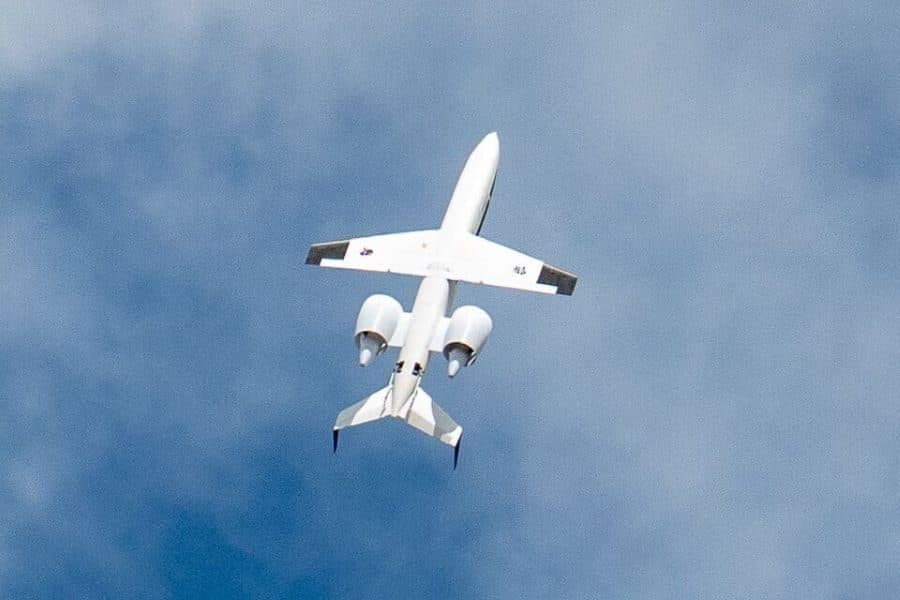
Highlights
- The UK MOD awarded £3.16 million in contracts to Frankenberg Technologies, Greenjets, and Cambridge Aerospace under the LCADE programme to develop low-cost drone interceptors.
- The UK is the first of five LEAP member nations — also including Poland, France, Italy, and Germany — to complete its national contracting phase.
- LCADE is a sub-programme of LEAP (Low-Cost Effectors and Autonomous Platforms), a multinational European initiative targeting affordable counter-drone and autonomous systems.
- Selected companies will develop and test interceptor designs intended to provide a cost-effective alternative to conventional air defence systems facing mass drone attacks.
- The programme reflects a growing military priority: countering low-cost drone threats at scale without the high per-unit costs of traditional air defence munitions.
The UK Ministry of Defence (MOD) has awarded contracts worth £3.16 million to three companies to develop low-cost interceptors designed to defeat drones and other aerial threats, making the UK the first of five European nations to complete its national contracting phase under a joint air defence initiative.
Three Awarded Companies
The contracts were issued under the Low-Cost Air Defence Effectors (LCADE) programme. The three successful companies are:
- Frankenberg Technologies
- Greenjets
- Cambridge Aerospace
LCADE sits within a broader framework known as the Low-Cost Effectors and Autonomous Platforms (LEAP) programme.
LEAP: A Five-Nation European Collaboration
The LEAP programme brings together the United Kingdom, Poland, France, Italy, and Germany to jointly develop affordable interceptors and autonomous systems capable of countering the growing threat posed by low-cost drones and missiles. Under the programme structure, each participating nation first conducts its own national competitive procurement process before entering a multinational joint development phase.
Programme Goal: Driving Down the Cost of Air Defence
According to the MOD, the selected companies will be responsible for developing and testing interceptor designs intended to offer a more cost-effective alternative to traditional air defence systems. Conventional air defence platforms can be prohibitively expensive to procure and replenish — particularly when faced with mass drone attacks. The introduction of low-cost interceptors is expected to lower the threshold for effective defence and enhance each nation's sustained counter-drone operational capability.
The UK's move not only demonstrates its leadership role in European air defence cooperation, but also underscores that the threat posed by low-cost drones has become a top military priority requiring urgent and scalable solutions.
原文來源: 查看原文
FAQ
Reviewed and published by the LAETimes editorial desk ·


