Saudi Arabia Approved to Purchase Up to 20,000 Laser-Guided Rockets for Low-Cost Drone Defense
The U.S. State Department has approved a potential $2 billion arms sale authorizing Saudi Arabia to purchase up to 20,000 APKWS II laser-guided kits — 10,000 air-to-air and 10,000 air-to-ground variants. The deal is seen as a cost-effective countermeasure against mass drone attacks by Yemen's Houthi forces, with each guidance unit costing only $15,000–$20,000 compared to over $1 million for conventional air-to-air missiles.
Highlights
- The U.S. State Department approved a potential $2 billion arms sale of up to 20,000 APKWS II laser-guided kits to Saudi Arabia, split equally between air-to-air and air-to-ground variants.
- The air-to-air FALCO (AGR-20F) variant incorporates a proximity fuze and modified guidance algorithms optimized for intercepting drones and other airborne targets.
- Each APKWS II guidance section costs $15,000–$20,000, roughly 50–65 times cheaper than the AIM-9X ($450,000) and AIM-120 ($1 million) missiles it could replace for counter-drone missions.
- AFCENT Commander Lt. Gen. Derek France confirmed APKWS is the U.S. military's primary weapon against drones, having achieved multiple shoot-downs in operational use.
- Ukraine's F-16s are also currently using APKWS against Russian drones, providing real-world validation of the system's counter-UAS effectiveness.
Saudi Arabia Approved to Purchase 20,000 Laser-Guided Rockets to Bolster Drone Defense
The U.S. State Department has approved a potential $2 billion arms sale authorizing the Kingdom of Saudi Arabia to acquire up to 20,000 Advanced Precision Kill Weapon System (APKWS II) laser-guided kits. The approval comes amid continued Iranian pressure on U.S.-allied nations across the Middle East and renewed tensions with Yemen's Houthi armed forces.
What's Included in the Deal
Saudi Arabia plans to procure 10,000 APKWS II air-to-air guidance sections and up to 10,000 air-to-ground guidance sections. The overall package also includes an undisclosed quantity of LAU-131/A seven-tube 70mm rocket launchers, Mk66 rocket motors, Mk-152 high-explosive warheads, and proximity fuzes.
The APKWS rocket consists of three core components: a laser guidance section that inserts between a choice of warhead and a standard 70mm rocket motor, making the system highly modular and flexible.
The Air-to-Air Counter-UAS Variant: FALCO
The air-to-air optimized variant, officially designated the AGR-20F and known as the Fixed Wing, Air Launched, Counter-Unmanned Aircraft Systems Ordnance (FALCO), incorporates a proximity fuze and modified guidance and sensing algorithms specifically tuned for intercepting airborne targets.
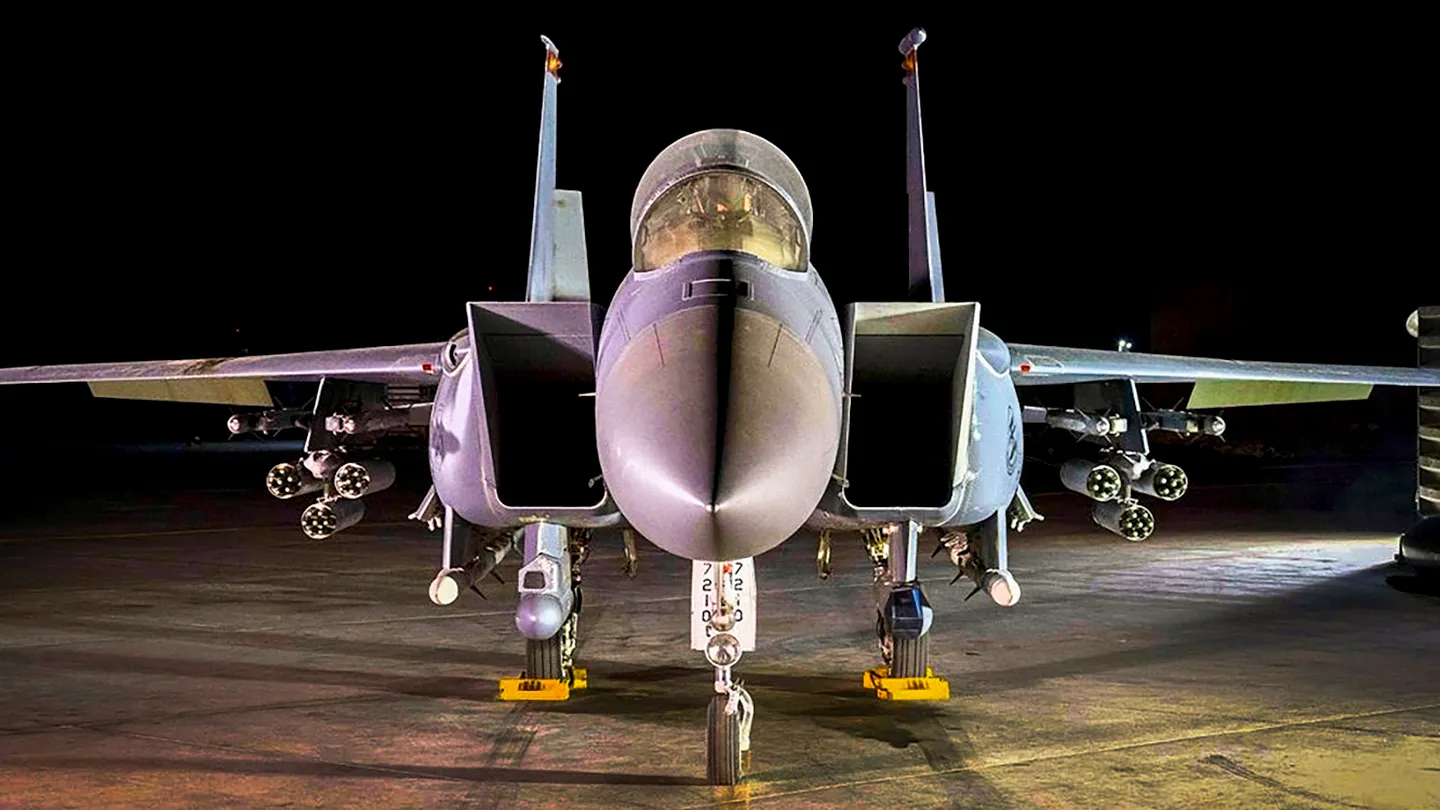
The sale does not include rocket bodies, and the State Department notice did not specify which Royal Saudi Air Force (RSAF) platforms will carry the munitions. The most likely candidates, however, are the RSAF's current fleet of Eurofighter Typhoon and F-15SA fighters. The Typhoon has recently been certified to carry APKWS.
Proven in U.S. Military Operations
APKWS II air-to-air intercept capability is being rapidly integrated across a growing number of U.S. platforms, including the U.S. Air Force's F-15E Strike Eagle, F-16C Viper, and A-10 Warthog, as well as the U.S. Marine Corps' F/A-18 Hornet. Notably, Ukraine's F-16s are also currently employing APKWS against Russian drones.
U.S. Air Forces Central (AFCENT) Commander Lt. Gen. Derek France stated in an interview last year: "This is our primary weapon against drones — we've shot things down with it multiple times."
Cost-Effectiveness Is the Key Advantage
APKWS II guidance sections are priced between $15,000 and $20,000 each. With the addition of a rocket motor and warhead, the total per-round cost remains in the tens of thousands of dollars. By contrast, the AIM-120 air-to-air missile costs approximately $1 million per round, while the AIM-9X runs around $450,000.
Saudi Arabia has learned firsthand, through years of countering Houthi drone attacks with fighter jets, just how costly that approach can be. With APKWS II offering near plug-and-play integration on the F-15SA and Typhoon, Riyadh is clearly positioning itself to defeat large volumes of incoming drones at a fraction of the previous cost.
U.S. State Department Position
The State Department stated: "This proposed sale will support U.S. foreign policy and national security objectives by improving the security of a Major Non-NATO Ally that continues to be an important force for political stability and economic progress in the Gulf region. The proposed sale will improve Saudi Arabia's capability to meet current and future threats, deter aggression, and enhance interoperability with the United States and other allies. The Kingdom of Saudi Arabia will have no difficulty absorbing this equipment and services into its armed forces."
原文來源: 查看原文
FAQ
Reviewed and published by the LAETimes editorial desk ·