The U.S. Can Repel a Taiwan Invasion — But a Blockade Is a Different War
Scholar Andrew Latham argues that Iran's ability to twice force the Pentagon to draw down its scarce interceptor stockpiles has given Beijing a strategic incentive to pursue a naval blockade of Taiwan rather than an amphibious assault. Operating under the guise of 'customs inspections,' China could sustain pressure for months, drain U.S. resources, and avoid triggering a clear American threshold for war — a scenario for which Washington currently has no effective answer.
Highlights
- 2025年「十二天戰爭」中,美國據報發射逾150枚THAAD攔截飛彈,約佔當時已建置庫存的四分之一,2026年衝突再度大幅消耗美國防空彈藥庫。
- 學者Andrew Latham指出,伊朗兩度迫使五角大廈動用稀缺攔截彈,讓北京將「海上封鎖台灣」視為比兩棲登陸更具戰略誘因的選項。
- 中國可能以「海關檢查」或「臨時安全區」為名啟動封鎖,以海警船為前鋒、解放軍保持距離,利用法律模糊性拖延美國介入決策。
- 封鎖戰的核心挑戰在於「數月護航維持航道暢通」而非「數日內殲滅入侵艦隊」,對美國現有以首戰速決為核心的規劃構成根本性挑戰。
- 台灣需建立更大規模燃料與糧食儲備,美國需發展專屬的封鎖應對概念,並要求日本、澳洲等盟友在各自區域內承擔更多責任。
Iran fields no fleet capable of challenging the U.S. Navy, and no air force capable of matching American airpower — yet within thirteen months it twice forced the Pentagon to draw down its most scarce interceptor stockpiles. That conflict has made a slower option look increasingly attractive to Beijing: a naval blockade that ties down U.S. forces, drives commercial shipping away from Taiwan's waters, and deliberately avoids generating the kind of amphibious assault groupings that American war plans are designed to strike.
This matters because Washington went to war with Iran again before the memory of the last exchange had faded. This week the U.S. resumed airstrikes and reimposed a blockade on Iranian ports. During the 2025 "Twelve-Day War," the U.S. reportedly fired more than 150 THAAD interceptors — roughly one-quarter of the then-deployed inventory. The larger 2026 conflict again drew heavily on American air-defense and missile-defense ammunition stocks.
The familiar response has already emerged: Congress will appropriate more funding, contractors will promise higher production rates, and then explain why certain missiles will take years to replenish. Increasing production is necessary but does not resolve the strategic choice Iran's crises have exposed — the United States continues to draw down finite stockpiles in theaters that Washington itself describes as secondary to China.
Iran Demonstrated the Cost of Attrition
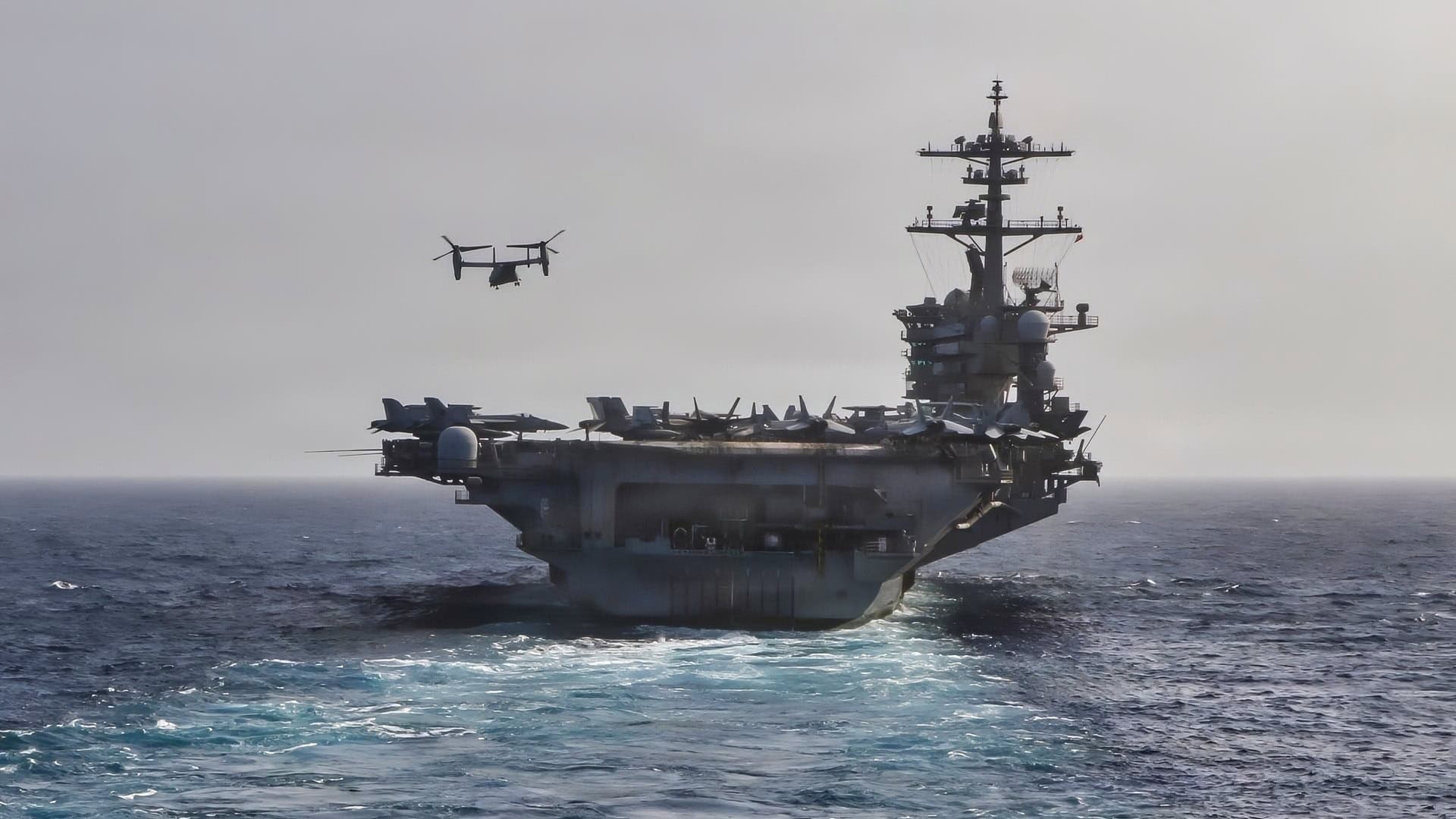
Even though Iran cannot challenge the U.S. Navy in a conventional engagement, Tehran has been able to keep the Persian Gulf persistently dangerous and threaten U.S. bases with repeated missile salvos. Commercial shipping operators conducted their own risk assessments and rerouted accordingly. The U.S. struck Iran far harder than Iran could strike back, yet the campaign still left American forces locked in a costly defensive posture.
The weapons involved are not interchangeable. THAAD and SM-3 interceptors are designed to defeat ballistic missiles; submarines and anti-ship weapons are required to counter an invading fleet. A Pacific war would draw simultaneously on both inventories, as well as on ships and aircraft already committed to other regional demands. American war plans depend on scarce weapons and specialized platforms that cannot all be fully employed at the same time.
Washington has been reluctant to acknowledge this. Its strategic documents list the Indo-Pacific as the top priority, but actual deployments have continued to treat Europe and the Persian Gulf as obligations requiring immediate U.S. reinforcement. When multiple demands arrive at once, that contradiction becomes impossible to conceal.
China does not need to predict the precise moment U.S. ammunition stocks reach zero. Its planners can observe from crises that have almost nothing to do with Taiwan that availability assumptions are being steadily eroded.
A Blockade Would Open a Different Kind of War
An amphibious assault on Taiwan would be a grave act, but it would also generate clear battlefield targets — amphibious vessels must transit the Taiwan Strait, landed Chinese forces depend on vulnerable ammunition and fuel supply lines, the starting point of hostilities is clear, and the political decision to act is difficult to disguise.
A blockade could be initiated under a different name entirely. Beijing might declare "customs inspections" or designate "temporary safety zones," with China Coast Guard vessels serving as the lead element while People's Liberation Army assets remain at a distance. Some ships might be boarded; others delayed. China has already conducted "law enforcement patrols" around Taiwan and claimed authority to inspect shipping. Taiwan's government has recently rehearsed scenarios in which Beijing issues declaration requirements and conducts inspections, followed by forced boardings or vessel seizures.
That ambiguity could persist long enough to be decisive. Would the U.S. fire on a coast guard vessel that turns a tanker around? Would Japan intervene before Chinese missiles strike Japanese territory? Commercial shipping operators and insurers would make their judgments before governments do. Sailings would be cancelled. Taiwan's strategic reserves would begin to decline.
The early weeks might consume relatively few U.S. interceptors. Pressure would accumulate through shipping schedules and Taiwan's dependence on imported energy. If Washington subsequently organized a convoy escort mission, Beijing could raise the stakes with mines or selective missile strikes. At that point, the United States would face a campaign centered on sustaining open sea lanes over months — not on destroying an invasion fleet within days.
For a military that concentrates most of its planning energy on the first battle, that is a far harder competition to fight.
Strategy Must Be in Place Before the Shooting Starts
In this kind of conflict, Taiwan's own staying power is critical. Taipei needs substantially larger reserves of fuel and food, along with medical supplies and spare parts for critical infrastructure. If the island begins to feel desperate within a matter of weeks, Beijing can acquire meaningful leverage before Washington reaches internal consensus on where its red lines lie.
U.S. planning also requires a blockade-breaking concept — not merely an extension of invasion-defense planning across a longer timeline. Mine countermeasures and convoy escort operations are essential; so too are the unglamorous tasks of port repair and merchant vessel coordination. Those capabilities will determine whether Taiwan can remain connected to the outside world while Beijing keeps the crisis below the threshold of full-scale war.
The alliance question is equally pressing. Japan and Australia cannot simply function as basing hubs while the United States alone provides nearly all scarce capabilities. Europe and the Persian Gulf must shoulder more responsibility within their respective regions — otherwise every crisis will continue to draw down the force that Washington claims must be ready for the Pacific.
"Prioritization" carries a concrete meaning here: treating China as the priority means declining certain mission demands elsewhere. The Pentagon can purchase more missiles, but production expansion cannot eliminate the political habit of treating every regional emergency as an American obligation.
China has had years to study the invasion scenarios that dominate U.S. war gaming. It has also watched Washington struggle to respond when maritime pressure unfolds slowly and the legal threshold for action remains deliberately ambiguous. The next Taiwan crisis may open with inspection operations and cancelled sailings rather than a missile salvo against Guam.
By the time Washington confirms that a war has begun, the question may already have become whether Taiwan can hold on for another month — and whether the United States is prepared to keep sea lanes open. Against an invasion fleet, American strategy retains credible answers. Against a protracted campaign that never offers a clean target, the response is far thinner.
About the Author: Dr. Andrew Latham
Andrew Latham is a professor of international relations and political theory at Macalester College in St. Paul, Minnesota. He can be followed on X: @aakatham.
原文來源: 查看原文
FAQ
Reviewed and published by the LAETimes editorial desk ·