US Scientists Develop Miniature Crystal Sensor to Measure Extreme Fusion Magnetic Fields
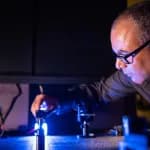
Researchers at Sandia National Laboratories have developed a laser-based miniature rare-earth garnet crystal sensor capable of accurately measuring strong magnetic fields in harsh environments — including intense radiation, electromagnetic interference, and fusion plasma. The technology holds promise for advancing diagnostics in future nuclear fusion power plants, has been patented, and is a finalist for the 2026 R&D 100 Award.
Highlights
- Sandia National Laboratories developed a laser-based rare-earth garnet crystal sensor — roughly pencil-eraser-sized — capable of measuring strong magnetic fields in radiation, EMI, and fusion plasma environments.
- The sensor uses terbium-based crystals (TSAG and TGG) whose optical polarization properties shift in response to magnetic fields, enabling precise field strength measurement.
- Testing at Sandia's HERMES III and SPHINX facilities showed the sensor matched conventional sensor performance while delivering smaller statistical errors in harsh conditions.
- The technology was patented in December 2024, has been licensed to one company, and is a finalist for the 2026 R&D 100 Award.
- Development began in 2021 to improve diagnostics inside the Z Machine, the world's most powerful laboratory radiation source, and is now being evaluated in low-density plasma ahead of commercial fusion system testing.
US Scientists Develop Miniature Crystal Sensor to Measure Extreme Fusion Magnetic Fields
A research team at Sandia National Laboratories has developed a laser-based miniature crystal sensor capable of tracking strong magnetic fields in the most demanding environments, with the potential to significantly enhance diagnostic capabilities in future nuclear fusion power plants.
The sensor uses a rare-earth garnet crystal roughly the size of a pencil eraser and can operate in conditions that defeat conventional magnetic field sensors — including intense radiation, electromagnetic interference, and fusion plasma environments. The technology has been entered into the 2026 R&D 100 Awards, a prestigious annual competition recognizing the world's 100 most innovative technologies.
Sandia physicist and co-inventor of the sensor, Dr. Israel Owens, expressed confidence in the team's progress. "We believe this technology represents a major breakthrough in magnetic field measurement," he said, adding that it would be "an indispensable tool" in nuclear fusion research, high-energy physics, and electric utility applications.
How the Sensor Works
The device consists of a small laser, a rare-earth garnet crystal, two optical filters, and a photodetector. As the laser passes through the crystal, its polarization rotates; when the crystal is exposed to a magnetic field, the degree of rotation changes, allowing the sensor to precisely measure magnetic field strength.
According to Sandia, the crystals are made from rare-earth materials, including terbium scandium aluminum garnet (TSAG) and terbium gallium garnet (TGG). These materials are well suited for magnetic field measurement because their optical properties change in response to electromagnetic forces.
The team began developing the sensor in 2021, originally to improve measurement accuracy inside the Z Machine — the world's most powerful laboratory radiation source — which is used for basic science research, magnetized liner inertial fusion studies, and national security applications.
The sensor was tested at Sandia's High-Energy Radiation Megavolt Electron Source III (HERMES III) and the Short-Pulse High-Intensity Nanosecond X-ray Radiator (SPHINX). Results showed performance comparable to conventional magnetic field sensors, with more consistent readings in harsh environments.
Owens noted the sensor is more precise and functional in environments where traditional sensors fail. "We conducted a considerable amount of testing at SPHINX and observed smaller statistical errors compared to conventional sensors," he said.
A Critical Tool for Fusion Energy
The research team noted that compared to conventional sensors, the garnet-based sensor requires less frequent calibration and maintenance, potentially lowering operational costs. Its material is also an electrical insulator rather than a metal, avoiding problems common to electronic probes in high-radiation environments.
The technology is particularly valuable for fusion energy research, where strong magnetic fields are used to confine ultra-high-temperature plasma. Precisely monitoring those fields is critical for understanding plasma behavior and maintaining stable reactor operation.
Owens said the sensor may eventually be able to operate inside plasma environments, where conventional metal sensors would short-circuit and fiber-optic sensors would degrade under radiation exposure. "Our technology has the unique ability to operate in areas where conventional sensors would short out," he stated.
The technology is still under active development. After successful testing in air and vacuum environments, the Sandia team has begun evaluating the sensor in low-density plasma, with plans to eventually test it under the high-density plasma conditions required by commercial fusion systems.
Bryan Oliver, Director of Sandia's Center for Radiation and Electrical Sciences, underscored the sensor's significance: "This magneto-optical sensor technology is a revolutionary diagnostic tool for measuring changing magnetic fields in difficult radiation and electromagnetic environments."
The team received a patent in December of last year, and one company has already licensed the technology.
原文來源: 查看原文
FAQ
Newsletter
Subscribe to our Low-Altitude Industry Newsletter
Daily curated news on low-altitude economy and drone industry, delivered to your inbox.
Reviewed and published by the LAETimes editorial desk ·