UK Launches 'Storm Fighter' Loyal Wingman Programme, Aims to Build Europe's First Sixth-Generation Air Force
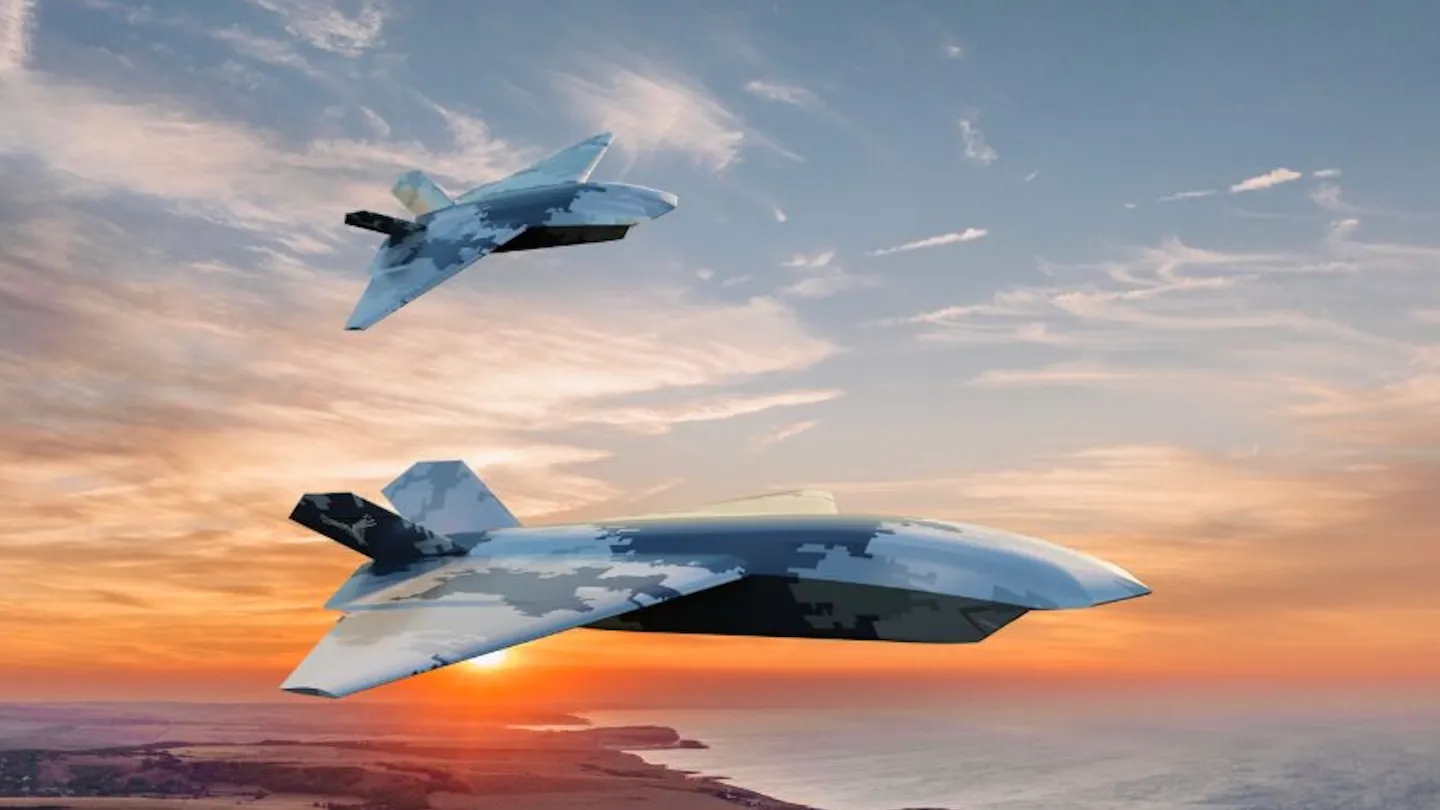
The Royal Air Force has officially unveiled the Storm Fighter Collaborative Combat Aircraft (CCA) programme, designed to develop autonomous loyal wingman drones to operate alongside Typhoon, F-35, and future Tempest fighters. Backed by approximately $406 million in dedicated CCA funding from the UK's Defence Investment Plan, the programme targets both air combat and strike missions, with BAE Systems and Boeing identified as leading prospective contractors.
Highlights
- The UK Royal Air Force launched the Storm Fighter CCA programme with $406 million in dedicated funding from the Defence Investment Plan, targeting loyal wingman drones for Typhoon, F-35, and Tempest fighters.
- Storm Fighter is part of a broader UK commitment of approximately $6.6 billion over four years to unmanned and autonomous systems modernisation across the armed forces.
- BAE Systems and Boeing are the leading prospective contractors, with Boeing's MQ-28 Ghost Bat and BAE/Lockheed Martin's stealth Vectis concept among the front-runner designs.
- Project Vanquish, a separate STOL carrier-launched autonomous platform demonstrator targeting a 2027 Queen Elizabeth-class carrier trial, has been identified as a potential feeder programme for Storm Fighter.
- The Typhoon is scheduled to retire around 2040, meaning Storm Fighter must achieve operational readiness before the sixth-generation Tempest enters service.
The Royal Air Force has officially launched a new Collaborative Combat Aircraft (CCA) programme designated Storm Fighter, rekindling British ambitions in autonomous loyal wingman technology and laying the groundwork for what officials describe as "Europe's first sixth-generation air force." The announcement was made by senior UK government officials at a ceremony in London, marking a significant recommitment to uncrewed combat aircraft following the stalling of an earlier British CCA effort.
Programme Background and Funding
Storm Fighter forms a key element of the UK's broader commitment to invest approximately $6.6 billion over the next four years in the unmanning and autonomous systems modernisation of its armed forces. According to the Defence Investment Plan (DIP) published earlier this month, Storm Fighter will draw on $406 million in dedicated CCA funding.
Minister for Defence Procurement and Industry Luke Pollard announced the programme at the Air and Space Power Association's Global Air and Space Chiefs' Summit in London, stating: "We are maximising our air power in the eye of the storm of the future battlefield — a battlefield that will be filled with drone swarms, sixth-generation fighters, and ever-evolving electronic warfare capabilities. I am delighted to reveal that our new autonomous CCA programme will be named Storm Fighter… flying uncrewed into battle as 'guardian angels' and 'attack dogs' for Typhoon, F-35, and Tempest. Storm Fighter will make the Royal Air Force Europe's first sixth-generation air force."
The 'Storm' Programme Family
The Storm Fighter name extends a growing family of UK 'Storm'-branded air combat initiatives:
- Storm Shroud: A new electronic warfare drone for the RAF, expected to enter service this year.
- Storm Chrome: A new electronic warfare uncrewed aircraft announced simultaneously today.
- Storm Fire: A one-way attack drone (loitering munition) with a range of 1,000 miles.
Project Vanquish: Carrier-Based Demonstrator
Pollard specifically highlighted Project Vanquish as a demonstrator potentially feeding into Storm Fighter. The project aims to demonstrate a fixed-wing, Short Take-Off and Landing (STOL) Autonomous Collaborative Platform (ACP) launched from a Queen Elizabeth-class aircraft carrier by the end of 2027. The Royal Navy has previously tested General Atomics' Mojave STOL drone aboard HMS Prince of Wales and conducted trials launching small jet-powered uncrewed aircraft via catapult.
Predecessor: The Rise and Fall of Project Mosquito
The RAF's earlier attempt at a loyal wingman capability, Project Mosquito — part of the broader Lightweight Affordable Novel Combat Aircraft (LANCA) initiative — was cancelled in 2022. The programme had contracted Spirit AeroSystems in 2021 with the goal of flying an uncrewed combat aircraft prototype by 2023, but received only $41 million over three years, widely seen as insufficient to support its ambitions.
A Royal Air Force official speaking at the summit underscored the commercial imperative: "If what you produce takes 70% of the manufacturing time of an F-35 and costs three-quarters as much, tear up your CCA programme. It needs to be good enough, cheap enough, fast enough, and in sufficient numbers."
Mission Roles: 'Guardian Angel' and 'Attack Dog'
Pollard's twin descriptors — 'guardian angel' and 'attack dog' — signal that Storm Fighter is intended to cover both air-to-air combat and strike missions, encompassing both offensive and defensive counter-air roles. The UK Ministry of Defence has previously described requirements for such drones to target and shoot down enemy aircraft and to survive surface-to-air missile threats.
Notably, Storm Fighter will need to operate alongside the Typhoon, which is due to retire around 2040, meaning the loyal wingman capability must achieve operational readiness before the sixth-generation Tempest enters service.
Prospective Contractors: BAE Systems and Boeing Lead the Field
According to Jane's, multiple contractors have expressed interest, with BAE Systems and Boeing emerging as the most prominent contenders, though no formal requirements have yet been published.
- Boeing's MQ-28 Ghost Bat has attracted official UK interest. In 2023, briefing materials from Royal Navy Development Director Rear Adm. James Parkin featured concept imagery of an MQ-28 carrier variant operating from a Queen Elizabeth-class carrier.
- BAE Systems supplies the autonomous Vehicle Management System (VMS) and elements of the Ground Control Station (GCS) for the MQ-28, and is also collaborating with Lockheed Martin's Skunk Works division on a high-end stealth CCA designated Vectis, considered a highly competitive candidate.
- General Atomics is promoting its carrier-capable Gambit family to the UK and already supplies the RAF with the Protector uncrewed aircraft.
- Northrop Grumman, Kratos, and several European firms are also expected to compete.
Outlook
For now, Storm Fighter remains a programme name attached to an emerging requirement — design concepts, contractors, and procurement timelines are yet to be defined. Nevertheless, today's announcement makes clear that the RAF's pursuit of a loyal wingman capability is back in earnest following the demise of Project Mosquito. As autonomous platforms become central to UK defence strategy and the Tempest programme advances, pressure will mount to translate Storm Fighter from blueprint into operational reality.
原文來源: 查看原文
FAQ
Reviewed and published by the LAETimes editorial desk ·