U.S. Report Warns: PLA Drew Wrong Lessons from J-20 and Other Stealth Programs, Undermining Real-World Combat Effectiveness
A new paper by the U.S. Air Force China Aerospace Studies Institute argues that China fundamentally misunderstands stealth technology, over-relying on hardware solutions while underestimating U.S. adaptive combat capabilities. The report contends that China misread the 1999 F-117 shootdown as proof that stealth can be defeated by low-frequency radar, when U.S. investigations concluded the loss stemmed from mission-planning failures, not aircraft deficiencies. These misconceptions have shaped the development of platforms including the J-20, J-35A, and China's counter-stealth radars.
Highlights
- 美國空軍中國航太研究院少校Derek Ecklebe在新論文中指出,中國對美軍匿蹤技術的理解「往往不完整或存在偏差」,導致過度依賴硬體解決方案。
- 中國將1999年F-117被擊落歸因於匿蹤硬體缺陷,但美軍調查結論是任務規劃失誤(重複航路、威脅壓制不足),而非飛機本身問題。
- 2025年1月,委內瑞拉部署的中國製JY-27A反匿蹤雷達在美軍實際行動中未能偵測到任何匿蹤飛機,印證了硬體優先路線的局限性。
- 殲-35A在設計上深受F-35影響,但報告指出其優先考慮硬體指標,而非整合軟體定義適應能力與現代化戰術技術程序(TTP)。
- 報告結論認為,儘管中國在匿蹤與反匿蹤領域投入龐大資源,以硬體為中心的發展路線可能導致這些系統在真實作戰中的表現大幅低於預期。
U.S. Report Warns: PLA Drew Wrong Lessons from Stealth Programs, Undermining J-20 and J-35A Combat Effectiveness
From the F-117 Nighthawk and B-2 Spirit to the F-22 Raptor and F-35 Lightning II, the United States has long been the pioneer of stealth aviation. As American stealth aircraft entered operational service, other nations—China in particular, and to a lesser extent Russia—watched closely, studying both the technology and its tactical application.
China has invested heavily in both counter-stealth platforms and stealth fighters of its own. Over the past decade, Beijing has claimed the development of multiple counter-stealth radar systems and has fielded two stealth fighters—the J-20 "Mighty Dragon" and the J-35A—while also testing two sixth-generation aircraft designs.
Yet according to the latest U.S. Air Force analysis, Beijing may have been learning the wrong lessons from the very beginning.
Core Argument of the Report
A new paper titled China's Perceptions of Stealth Technology, authored by U.S. Air Force Major Derek Ecklebe, a researcher at the China Aerospace Studies Institute (CASI), argues that China's understanding of U.S. stealth capabilities "is often incomplete or distorted, leading to an overemphasis on hardware solutions, an underestimation of U.S. operational adaptability, and a tendency to treat stealth as a technical rather than an operational problem."
The Origins of Stealth
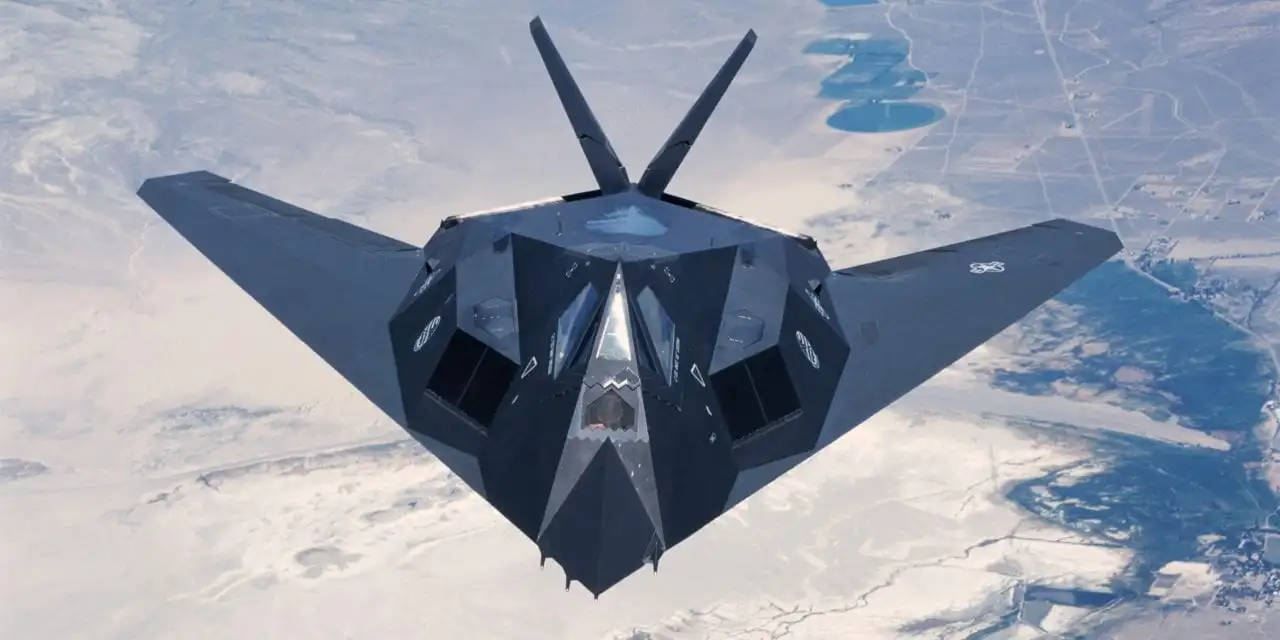
Stealth technology emerged in the final years of the Cold War. Following significant aircraft losses in the Korean and Vietnam Wars, the United States committed to developing more survivable combat aircraft. The F-117 Nighthawk became the world's first operational stealth aircraft, followed by the B-2 Spirit bomber.
In 1999, during NATO's air campaign against Serbia, an F-117 was shot down by a Soviet-era surface-to-air missile system—to this day, the only stealth aircraft ever lost in combat to hostile fire.
Reports indicate that Chinese Embassy personnel in Belgrade collected wreckage fragments from the downed F-117, with the intent to covertly transport them back to China to advance domestic stealth development and counter-stealth research. Notably, some analysts have suggested that the U.S. bombing of the Chinese Embassy in Belgrade in 1999 may have been intended, at least in part, to destroy any F-117 debris that embassy staff might have collected.
The incident illustrates how Beijing viewed stealth simultaneously as a threat and an opportunity.
"In the years that followed, China maintained a dual interest in stealth technology: developing countermeasures against U.S. capabilities while simultaneously advancing its own stealth programs."
The United States subsequently introduced the F-22 Raptor and F-35 Lightning II. Over the following decade, China treated the development of stealth-defeat capabilities as critical preparation for any future conflict with the United States.
In 2017, China unveiled its first stealth fighter, the J-20 "Mighty Dragon," which has since undergone substantial upgrades over nine years of development. In November 2024, the J-35A made its public debut at the Zhuhai Airshow, with a design that bears a clear resemblance to the F-35. Last year, China also began flight-testing two tailless stealth aircraft—tentatively designated J-36 and J-50—and is developing the H-20 stealth bomber.
According to the CASI report, however, China has fundamentally misunderstood stealth technology and its operational application, and those misunderstandings have profoundly shaped Beijing's development of both counter-stealth radars and its own stealth platforms.
China's Fundamental Misreading of Stealth
The report argues that China misread stealth technology, its applications, and its vulnerabilities from the outset.
"PLA literature repeatedly cites the [F-117 shootdown] incident as evidence that stealth is not invulnerable and is particularly susceptible to detection by low-frequency radars."
U.S. investigations, however, reached a markedly different conclusion: the loss resulted from operational complacency—specifically, the repeated use of the same ingress and egress routes and insufficient suppression of known threats—rather than any fundamental flaw in the aircraft itself.
"The aircraft performed as designed; however, inadequate mission planning and pilot inexperience together caused the shootdown. Subsequent missions quickly incorporated the lessons learned, and no further stealth aircraft were lost to hostile fire in combat operations."
In short, Chinese strategists attributed the shootdown to hardware and platform vulnerability, while U.S. investigators emphasized operational failure as the root cause. The PLA drew lessons accordingly, investing heavily in so-called "anti-stealth" radars in hopes of replicating Serbia's success against a stealth aircraft.
"These interpretations shaped subsequent Chinese analysis, leading to an increasing emphasis on technical detection solutions and less focus on operational and adaptive factors. While this analysis drove impressive engineering efforts and significant budget investment, it left gaps that a more comprehensive adversary could exploit."
China has characteristically approached stealth as a technical problem—focused on detection to counter U.S. advantages—rather than as an operational and adaptive challenge.
"China's assessments have over-relied on low-frequency radar, underestimated U.S. operational adaptability, and prioritized hardware over doctrine and organizational development."
For example, Chinese military planners appear to have failed to account for the decades of iterative refinement at the strategic, operational, and tactical levels that have given U.S. forces a reservoir of intangible experience that is difficult to quantify.
"Modern U.S. mission planning employs tools such as the Joint Mission Planning System, which integrates threat databases and dynamic route planning to maximize stealth effectiveness."
For U.S. strategists, stealth is a multidimensional capability that integrates technology with operational tactics to sustain air superiority.
"Stealth technology is expensive, complex, and important—but it is only one part of the overall equation. Without adequate or complete mission planning, the technology is sub-optimally employed, increasing risk to aircrew and airframe."
The Cost of the Hardware Fixation
China treats stealth as a property of the aircraft itself, rather than as one element of a larger, adaptive operational system. By contrast, U.S. doctrine emphasizes that low-observable characteristics are just one component of survivability.
"Equally important are mission planning, real-time route replanning, electronic warfare support, force packaging, and the accumulated operational experience of pilots and ground crews."
China's radars are marketed with names such as YLC-8E and JY-27A, branding that reflects Beijing's optimism about defeating U.S. stealth assets through conventional means. These systems have been promoted by the China Electronics Technology Group Corporation (CETC) as capable of detecting fifth-generation fighters including the F-22 and F-35.
However, their real-world performance proved disappointing. Venezuela deployed Chinese-made JY-27 and JY-27A VHF-band radars, but during U.S. military operations against Venezuela in January 2025, these systems failed to detect any stealth aircraft—a stark demonstration that hardware alone cannot solve the stealth problem.
Chinese planners may also have underestimated the advantage conferred by the U.S. military's software-centric approach to adaptability.
"China's hardware-heavy approach stands in sharp contrast to the U.S. military's increasing emphasis on software-driven adaptability and mission system integration in its development programs—advanced AI, dynamic route planning, and real-time environmental adaptation are designed precisely to neutralize the predictability and rigidity that Chinese planners believe constrain U.S. stealth operations."
Ironically, U.S. military and intelligence communities are frequently criticized for over-relying on technology at the expense of strategy and tactics. Yet the report finds that, in the stealth domain, it is China that has over-emphasized technical hardware.
The J-35A, heavily inspired by the F-35, "replicates the external characteristics of the American F-35 platform but prioritizes hardware metrics over the integrated approach combining software-defined adaptability with modernized tactics, techniques, and procedures (TTPs) that defines the U.S. model."
The report ultimately concludes that, despite China's significant advances in counter-stealth radar and stealth fighter development, its pronounced hardware-centric approach may mean these systems will perform substantially below expectations in actual combat environments.
This article is adapted from a report by Eurasian Times. Author Sumit Ahlawat has more than ten years of journalism experience, with previous roles at the Press Trust of India, Times Now, Zee News, Economic Times, and Microsoft News. He holds a master's degree in International Media and Modern History from the University of Sheffield, UK.
原文來源: 查看原文
FAQ
Reviewed and published by the LAETimes editorial desk ·