Northwestern University Engineers Develop 'Visually Invisible' Drone That Disappears by Spinning Faster Than the Human Eye Can Track
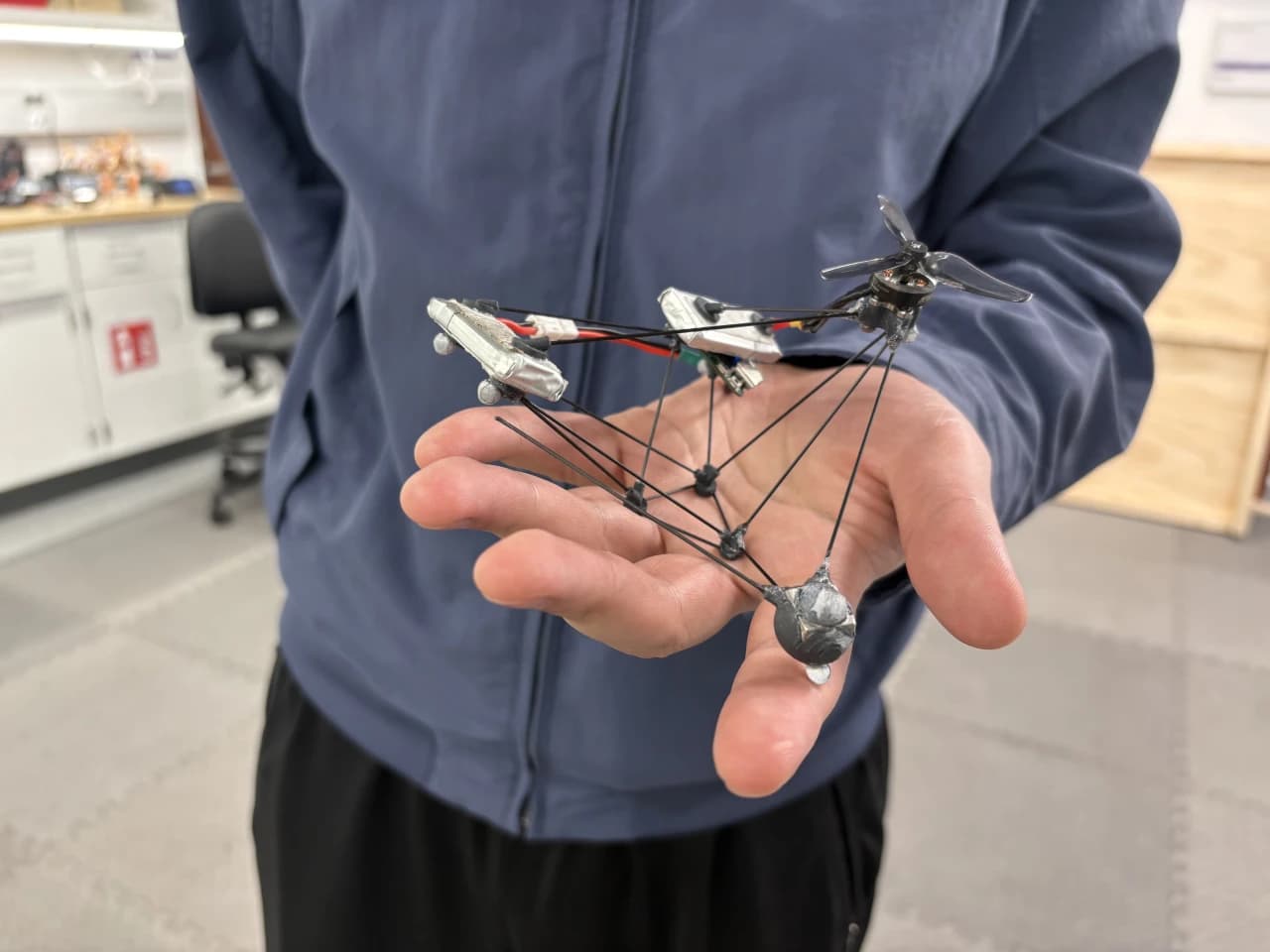
Engineers at Northwestern University have developed a stealth drone that achieves visual invisibility without camouflage paint or transparent materials. Instead, the drone spins at speeds exceeding the human visual system's tracking threshold, causing the brain to stop attempting to focus on the aircraft. The technology has potential applications in surveillance and reconnaissance missions, and researchers say combining it with AI could further enhance autonomous stealth capabilities.
Highlights
- Northwestern University engineers developed a stealth drone that achieves visual invisibility by spinning faster than the human eye's tracking threshold—without any camouflage coatings or transparent materials.
- The invisibility effect is based entirely on motion physics: rotation speed exceeds the point at which the human visual system can focus, causing the brain to stop processing the drone's image.
- The technology eliminates the need for expensive optical metamaterials or active camouflage systems, representing a significant cost and engineering simplification.
- Researchers identify surveillance and reconnaissance as primary application areas, noting the drone could conduct missions with substantially reduced risk of visual detection.
- The project remains in the development stage, with further technical data expected to be published; both commercial and military application potential are drawing strong industry interest.
Northwestern University Engineers Build 'Visually Invisible' Drone That Vanishes Through Spin Alone
A team of engineers at Northwestern University has developed a groundbreaking stealth drone that relies on neither conventional camouflage coatings nor transparent panels to avoid detection. Instead, the aircraft exploits high-speed rotation to confuse the human visual system—effectively vanishing in plain sight.
Spinning Beyond the Human Eye's Tracking Limit
The concept behind the drone is elegantly simple: when the aircraft rotates at a speed that exceeds the threshold at which the human eye can track motion, the visual system fails to achieve focus. The brain, unable to lock onto the moving object, effectively stops trying to process it—causing the drone to appear to disappear entirely.
This approach requires no expensive optical metamaterials or complex active camouflage coatings. The invisibility effect is achieved purely through the physical properties of motion, representing a significant innovation in engineering design.
Potential Applications: Near-Invisible Surveillance
The research team notes that the technology holds considerable promise for surveillance and reconnaissance applications. Because the drone is difficult for the naked eye to detect, aircraft equipped with this capability could conduct intelligence-gathering or aerial monitoring missions with a substantially reduced risk of being spotted by targets on the ground.
Researchers also suggest that integrating artificial intelligence (AI) could further enhance the drone's autonomous flight and mission-execution capabilities, positioning visually stealthy drones as a key tool for covert aerial reconnaissance in the future.
Northwestern Continues to Push Drone Innovation
Northwestern University's engineering team has maintained a strong research presence in drone technology in recent years. This latest work on visual stealth once again demonstrates the university's strength in cross-disciplinary engineering innovation, merging principles of human visual perception with aircraft design to open an entirely new pathway toward aerial invisibility.
The technology remains in the development stage, and further technical details and experimental data are expected to be published. The industry is closely watching its potential for commercial and military applications.
原文來源: 查看原文
FAQ
Reviewed and published by the LAETimes editorial desk ·