Iran Strikes U.S. Forces in Jordan with Ballistic Missiles and Drones, Killing Two American Soldiers
U.S. Central Command announced that two American soldiers were killed and one remains missing following Iranian ballistic missile and drone strikes on Muwaffaq Salti Air Base in Jordan. Four additional personnel were hospitalized and later discharged. The attack triggered a new round of U.S. airstrikes against Iranian military targets, with President Trump stating the broader campaign aims to prevent Iran from acquiring nuclear weapons.
Highlights
- Two U.S. soldiers were killed and one remains missing after Iran struck Muwaffaq Salti Air Base in Azraq, Jordan, with ballistic missiles and drones on July 17.
- Iran carried out at least four separate strikes against U.S. bases in Jordan within five days, also targeting Prince Sultan Air Base in Saudi Arabia and a power plant in Kuwait.
- CENTCOM launched its eighth consecutive night of retaliatory airstrikes against Iranian targets, including IRGC missile and drone storage sites and coastal surveillance facilities.
- President Trump stated the broader U.S. military campaign's core objective is to prevent Iran from acquiring nuclear weapons.
- Iran suspended its commitments under the Islamabad Memorandum of Understanding with Washington amid the escalating conflict.
Iran Strikes U.S. Forces in Jordan with Ballistic Missiles and Drones, Killing Two American Soldiers
U.S. Central Command (CENTCOM) announced on Friday via X (formerly Twitter) that two American soldiers were killed while defending against Iranian ballistic missile and drone strikes in Jordan, with one service member still unaccounted for. CENTCOM added that "four U.S. service members were medically evacuated to a hospital in Jordan and have since been released. Others who were evaluated for minor injuries have returned to duty."
CENTCOM stated: "Out of respect for the families of the fallen, CENTCOM will not release information about the identities of those killed, including the number, until 24 hours after the next of kin have been notified."
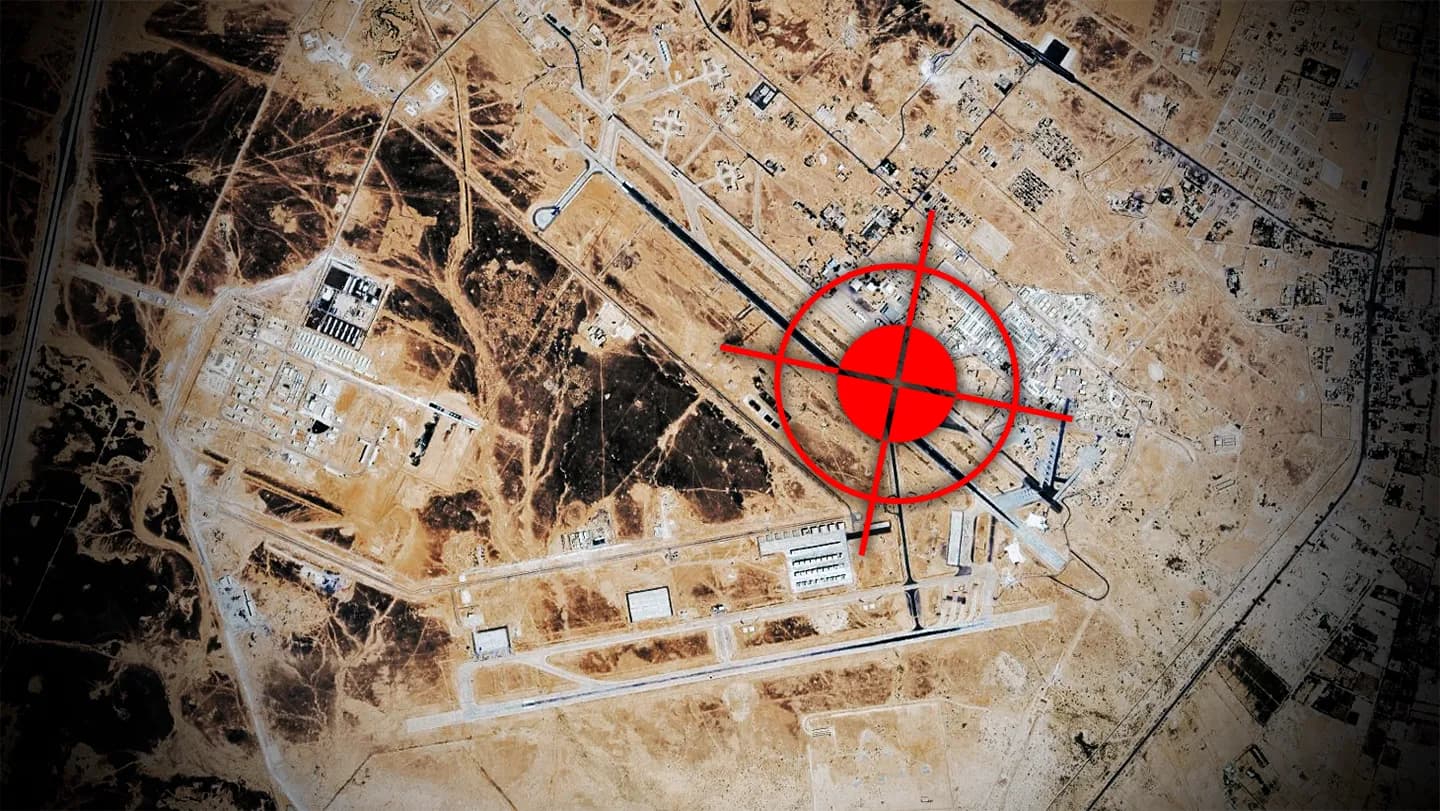
Attack Site: Muwaffaq Salti Air Base
CENTCOM did not publicly confirm the exact location, but CBS News had reported the previous day that "Iran struck at least two bases in Jordan this week, injuring several U.S. soldiers after facilities were hit."
Data from NASA's Fire Information for Resource Management System (FIRMS) showed a fire breaking out near the runway and aircraft parking area at Muwaffaq Salti Air Base in Jordan at 10:59 p.m. EDT. The War Zone (TWZ) was unable to independently verify the extent of damage to the base and reached out to CENTCOM for confirmation.
Video footage purportedly showing the attack on the base also circulated on social media.
Muwaffaq Salti Air Base has been targeted on multiple occasions. In March, CNN obtained Planet Labs satellite imagery showing an AN/TPY-2 radar system damaged — and potentially destroyed — following a previous Iranian strike.
The air base is one of the most strategically important U.S. hubs in the Middle East. It remains in active use throughout the current conflict and hosts the highest concentration of U.S. tactical airpower in the region — a ballistic missile strike on the flight line could simultaneously destroy multiple high-value aircraft and cause significant casualties.
Wider Strike Pattern: Saudi Arabia and Kuwait Also Targeted
Axios journalist Barak Ravid reported on X that Iran also struck Prince Sultan Air Base in Saudi Arabia on the same day.
Kuwaiti officials meanwhile disclosed that a power and water desalination plant in the country had been "attacked as part of the Iranian aggression… causing a fire and damaging facility infrastructure and several generator units." The fire has since been brought under control, with repair work ongoing.
Rapid Escalation in the U.S.–Iran Conflict
The casualties come as the U.S.–Iran conflict escalates sharply, with both sides striking each other's critical infrastructure and Iran intensifying attacks on American military installations across the Middle East.
Iran's state-run Fars News Agency reported that "Iranian Deputy Foreign Minister for Legal and International Affairs Kazem Qaribabadi stated that Tehran has suspended its commitments under the Islamabad Memorandum of Understanding signed with Washington."
Update (6:31 p.m. EDT):
CENTCOM announced a new wave of strikes against Iranian targets.
"At 6:00 p.m. ET today, U.S. forces began a new round of strikes against Iran at the direction of the Commander in Chief," CENTCOM posted on X. "These strikes are intended to further degrade Iran's ability to threaten commercial shipping in the Strait of Hormuz and to swiftly punish the Islamic Revolutionary Guard Corps (IRGC) for last night's attack on U.S. soldiers in Jordan."
President Donald Trump, speaking to NewsNation by phone, called the deaths of the two soldiers "a very sad thing" and reiterated that the central objective of the campaign is to "never let Iran have a nuclear weapon." Asked about Iran's announcement that it would no longer honor the Islamabad MoU, Trump responded: "I couldn't care less."
Update (9:10 p.m. EDT):
U.S. officials provided The New York Times with a detailed account of Iran's attacks on Jordan over the past five days:
- First strike: A residential facility at King Faisal Air Base was hit, injuring up to five U.S. soldiers.
- Second strike: A U.S. base in eastern Jordan used for Black Hawk helicopter operations was struck, causing significant damage to multiple helicopters.
- Third strike (48 hours prior): An Iranian missile hit Muwaffaq Salti Air Base in Azraq, injuring approximately 20 U.S. soldiers who were rushing to shelters. No fatalities were reported.
- Fourth strike (Friday): Iran struck the same base again, killing two U.S. soldiers and wounding four others; personnel with minor injuries were evaluated and returned to duty.
Update (11:53 p.m. EDT):
CENTCOM announced that the eighth consecutive night of strikes conducted at the direction of President Trump had concluded at 11:30 p.m. EDT.
CENTCOM stated that U.S. forces "successfully struck Iranian military coastal surveillance facilities, air defense installations, maritime strike capabilities, and missile and drone storage sites, continuing to degrade Iran's military capacity." The command also noted that the strikes specifically targeted IRGC forces responsible for the July 17 attack on U.S. soldiers in Jordan.
This article is a developing story and will continue to be updated.
原文來源: 查看原文
FAQ
Newsletter
Subscribe to our Low-Altitude Industry Newsletter
Daily curated news on low-altitude economy and drone industry, delivered to your inbox.
Reviewed and published by the LAETimes editorial desk ·