Underwater Drone Locates Pan Am Wreck Tied to the Rise of Preflight Safety Briefings
Pan Am’s Sikorsky S-40 Clipper Endeavor, which ditched shortly after departing San Juan on April 11, 1952, has reportedly been located after 74 years. A hybrid underwater vehicle used side-scan sonar and high-resolution cameras to identify the wreck at a depth of about 610 meters. The accident exposed passengers’ unfamiliarity with emergency equipment and helped prompt Pan Am to introduce preflight safety demonstrations. The discovery also illustrates the growing value of underwater drones for marine archaeology, accident investigation, subsea infrastructure inspection and environmental monitoring.
A sonar-equipped underwater drone has found Pan Am’s Clipper Endeavor at a depth of 610 meters, connecting a 1952 Caribbean ditching with the development of standardized passenger safety briefings.
Key points
- Sonar drone located Clipper Endeavor after 74 years
- The wreck rests 610 meters off Puerto Rico
- Side-scan sonar identified the aircraft within days
- The 1952 ditching reshaped passenger safety procedures
- Deep-sea drones could expand maritime inspection services
Highlights
- Pan Am’s Clipper Endeavor suffered multiple engine failures after departing San Juan, Puerto Rico, on April 11, 1952.
- All passengers and crew survived the initial impact when the Sikorsky S-40 made a forced landing in the Caribbean.
- The accident prompted Pan Am to demonstrate seat belts, life jackets and evacuation routes before departure.
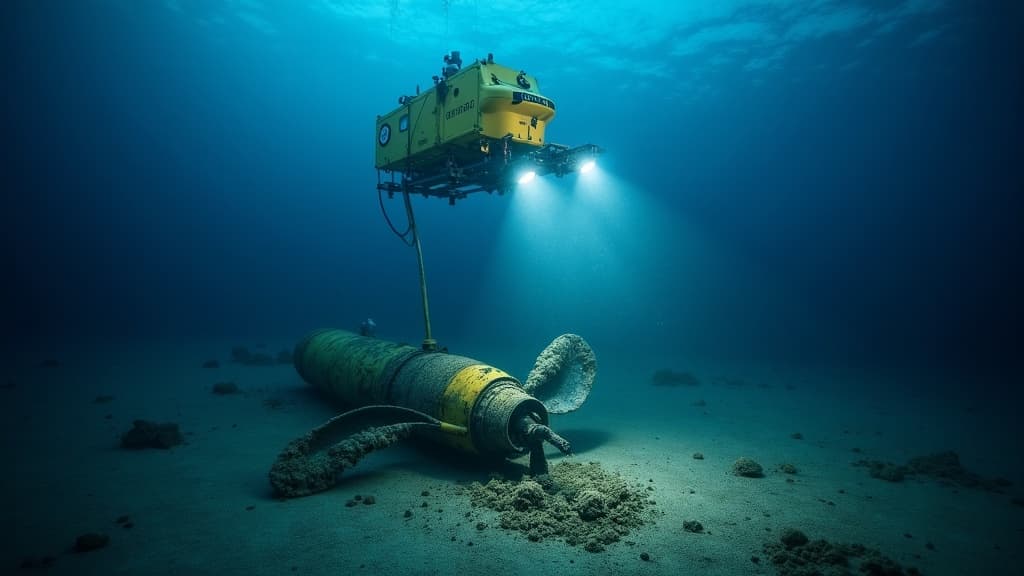
- An underwater drone located the wreck 74 years later at a depth of approximately 610 meters off Puerto Rico.
- The survey team used side-scan sonar to detect the wreck and optical cameras to confirm identifying numbers and aircraft features.
A 1952 accident with a lasting safety legacy
The wreck of Pan American Airways’ Sikorsky S-40 flying boat Clipper Endeavor has reportedly been discovered 74 years after an accident that helped change how airlines prepare passengers for emergencies.
On April 11, 1952, the aircraft departed San Juan, Puerto Rico, before suffering a succession of engine failures. Its crew ultimately carried out a forced landing in the Caribbean. Although every passenger and crew member survived the initial impact, the evacuation exposed a serious operational weakness: many passengers did not understand where the emergency exits were or how to use their life jackets.
Pan Am responded by introducing demonstrations before departure covering seat belts, flotation equipment and evacuation routes. Other airlines subsequently adopted similar practices, helping establish the familiar preflight passenger safety briefing. The International Civil Aviation Organization and the U.S. Federal Aviation Administration later incorporated passenger safety information into broader civil aviation requirements.
Over time, briefings expanded beyond seat belts and life jackets to include oxygen masks, emergency evacuation, smoking restrictions and rules governing electronic devices. The account of Clipper Endeavor therefore connects a single maritime aviation accident with procedures now routinely used across global commercial aviation.
Side-scan sonar reveals the wreck
According to the investigation team, an underwater drone equipped with side-scan sonar and high-resolution cameras located the aircraft in waters off Puerto Rico at a depth of approximately 610 meters. The vehicle first mapped the seabed acoustically and detected shapes consistent with a manufactured structure. Optical cameras were then deployed to examine identifying numbers and physical features associated with the aircraft type.
The survey reportedly took only several days, demonstrating the efficiency of combining wide-area sonar coverage with targeted visual confirmation. Compared with conventional ship-towed sonar operations, an underwater vehicle can maneuver closer to a target and collect imagery from multiple angles while reducing the need to reposition the surface vessel continuously.
The unnamed U.S. marine survey company behind the mission operated the vehicle from a support ship using dynamic positioning. A fiber-optic tether provided control and high-bandwidth data transmission, allowing the team to receive clear 4K video despite low-light conditions below 600 meters.
Corrosion and marine growth have affected the wreck, but its wings, engines and tail structure reportedly remain recognizable. Investigators said those features correspond with historical records of the Clipper Endeavor accident.
A hybrid platform for deep-sea missions
The vehicle was described as combining characteristics of an autonomous underwater vehicle, or AUV, and a remotely operated vehicle, or ROV. This hybrid approach can support extended seabed searches through autonomous navigation while retaining tethered control and live video for close inspection and confirmation.
Such systems are increasingly relevant beyond shipwreck searches. Potential missions include subsea cable inspection, offshore energy surveys, wreck recovery, marine accident investigation and ecological monitoring. Improvements in lithium-battery energy density could extend survey duration, while AI-based image recognition may allow vehicles to classify aircraft components, cable defects or biological features with less manual review.
The Clipper Endeavor discovery highlights how sonar, optical imaging and precision navigation can transform marine archaeology. It also demonstrates how underwater drones can recover evidence from sites that are costly, hazardous or inaccessible to human divers, while preserving a digital record of historically significant wrecks.
What it means for Taiwan
For Taiwan’s drone manufacturers, industry associations and marine technology supply chain, this mission points to opportunities in pressure-resistant enclosures, underwater communications, sonar integration, batteries and AI-assisted image analysis. Local suppliers serving offshore wind farms, ports and subsea cable operators could develop hybrid AUV/ROV packages or partner with international platform vendors during upcoming procurement cycles. For inspection, cleaning and agricultural drone service companies, the immediate opportunity is diversification rather than direct reuse of aerial fleets: underwater work requires separate operator training, support vessels, maintenance procedures and insurance. Projects near ports or protected wrecks may also require coordination with port authorities, maritime agencies and cultural heritage regulators before deployment or data recovery.
FAQ
Newsletter
Subscribe to our Low-Altitude Industry Newsletter
Daily curated news on low-altitude economy and drone industry, delivered to your inbox.
Reviewed and published by the LAETimes editorial desk ·