Arvada Police Deploy Skydio X10 Drone, Catch Target Store Shoplifter on First Operational Week
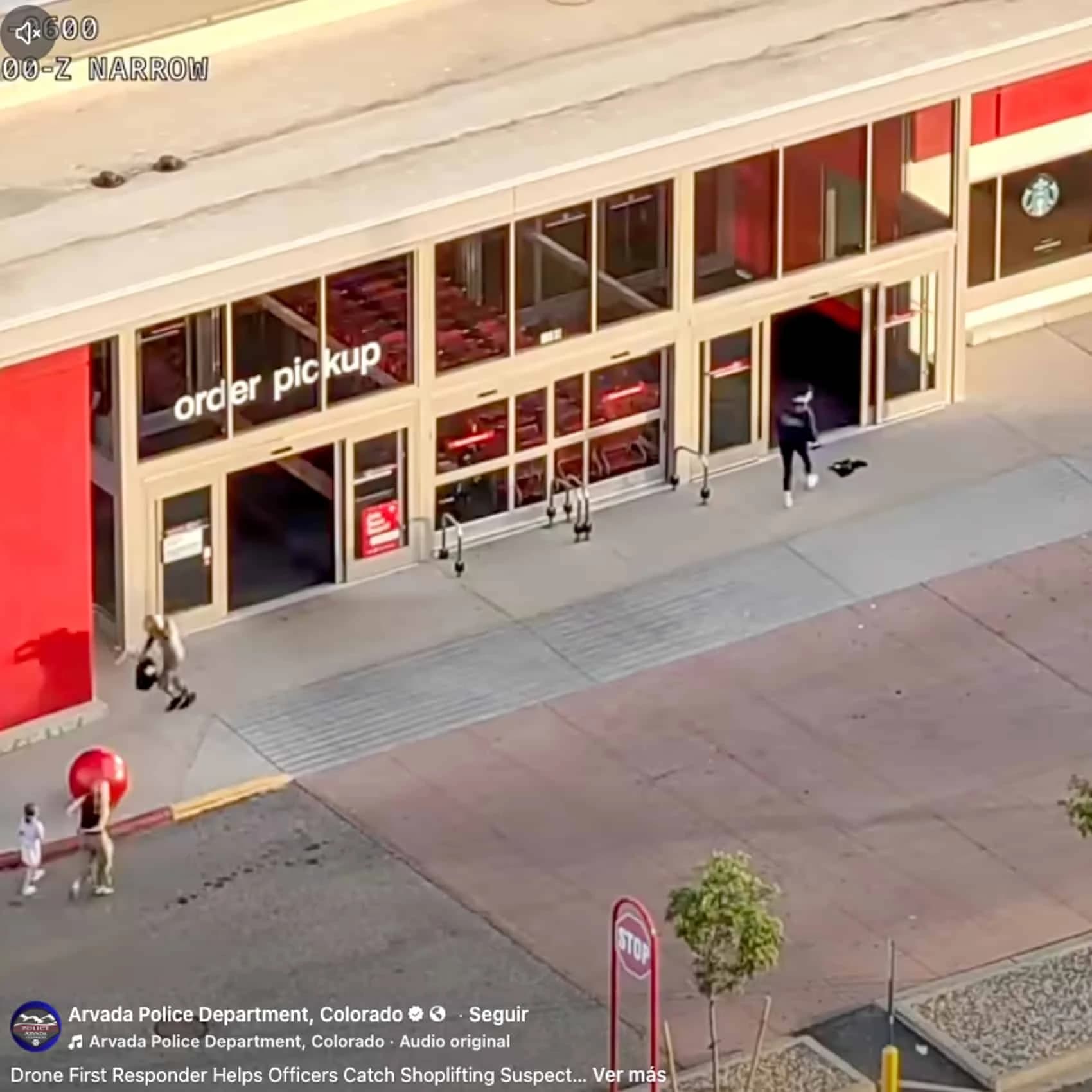
The Arvada Police Department in Colorado launched its Skydio X10 Drone First Responder (DFR) program on June 17, 2026, and immediately solved a shoplifting case at a local Target store. The drone, already airborne on patrol when the call came in, tracked the suspect across several blocks to a nearby Arby's restaurant, where officers made a peaceful arrest. The suspect faced charges for stealing merchandise valued at over $340.
Highlights
- Arvada Police Department launched its Skydio X10 Drone First Responder program on June 17, 2026, logging 83 missions across the first nine operational days—approximately 9 sorties per day.
- On the program's first operational week, a Skydio X10 tracked a shoplifting suspect from a Target store across several blocks to an Arby's restaurant, enabling a peaceful arrest on charges involving over $340 in stolen merchandise.
- The Skydio X10 features a 16x optical zoom camera, FLIR Boson+ thermal imager, approximately 35 minutes of battery endurance, and is NDAA-compliant—a key requirement for U.S. public safety procurement.
- Arvada operates three X10 drones with two digital dispatchers from the ARTIC center, and publishes all flight data to a public transparency portal.
- Arvada's DFR model pairs Skydio X10 drones for aerial coverage with Flock license plate recognition cameras on the ground, potentially representing a replicable template for mid-size U.S. city public safety drone ecosystems.
Arvada Police Use Skydio X10 Drone to Apprehend Target Store Shoplifting Suspect
The Arvada Police Department in Colorado activated its new Skydio X10 Drone First Responder (DFR) program on June 17, 2026, successfully tracking and arresting a shoplifting suspect who fled from a local Target store. According to a department statement, the drone had already been deployed and was conducting an aerial patrol when the call was dispatched.
At approximately 7:45 p.m., loss prevention staff at the Target store near 78th Avenue and Wadsworth Boulevard reported an active theft in progress. After a confrontation with store security, the suspect fled on foot heading east.
The Skydio X10 locked onto the suspect almost immediately, tracking him across several city blocks before he entered an Arby's restaurant at the intersection of 80th Avenue and Wadsworth Boulevard. Patrol officers followed the drone's guidance directly to the location.
Upon entering the restaurant, officers confirmed the suspect's identity and discovered he had an active arrest warrant. He was taken into custody without incident while in the middle of his meal. He was charged with theft of merchandise valued at over $340.
How the Case Was Resolved
This incident illustrates the core concept behind the DFR model. The drone was already airborne before the dispatch call—which is the defining difference between a true Drone First Responder program and simply using drones as supplementary support after the fact.
A foot pursuit across a shopping plaza and two major intersections in Arvada is precisely the kind of scenario where ground officers can lose visual contact within seconds. An aerial camera operating at altitude does not have that problem.
Arvada Police noted that officers arrived at the Arby's without any vehicle pursuit, use of force, or foot chase. The program's stated objective is clear: resolve incidents faster, more peacefully, and more safely.
The Arvada DFR Program at a Glance
According to local Denver media, the Arvada DFR program officially launched in late May 2026. In just the first nine operational days, the drones flew 83 service missions—a pace that indicates demand for aerial coverage far exceeds what ground officers alone can provide.
The city operates three drones out of the Arvada Real Time Information Center (ARTIC), located within the police department. Two digital dispatchers operate the system under the supervision of a police commander.
The city's official DFR webpage lists authorized use cases, including crimes in progress, searches for suspects or missing persons, and dangerous or high-risk situations. Arvada also publishes flight data to a public transparency portal.
The Target shoplifting case falls squarely in the first category. Property crimes of this nature have historically gone unresolved in many jurisdictions simply because officers arrive after the suspect has already fled.
Hardware: Skydio X10 with Autonomous Dock System
The Skydio X10 is the same platform used in the Denver Police Department's trial with Flock Aerodome, Bloomington, Minnesota's tests in May 2026, and the Orlando Police Department's recently deployed network of 11 drones.
The X10 carries a dual-sensor payload: a high-resolution visible-light camera with 16x continuous optical zoom and a FLIR Boson+ thermal imager, both mounted on a gimbal capable of tracking moving subjects during flight. Battery endurance is approximately 35 minutes per charge, and the aircraft is NDAA-compliant—a key factor in its adoption by U.S. public safety agencies in the post-DJI restriction era.
The Skydio Dock pairs with the X10 to provide Arvada with autonomous launch, recharging, and weather-protected standby capability—an essential component of any genuine DFR program. This infrastructure is what enabled three drones and two dispatchers to complete 83 missions in nine days.
Aerial tracking remains one of the few genuine force multipliers in law enforcement: identify and follow the subject, enable a ground or vehicle intercept, close the incident. The $340 Target case is one of the clearest demonstrations of that return on investment.
What This Case Actually Demonstrates
A $340 theft is not headline news on its own—but that is precisely what makes it significant as a data point.
Most DFR coverage focuses on dramatic, high-stakes scenarios: armed standoffs, missing children, active shootings. Those incidents happen, and programs do address them. But the day-to-day value of a DFR operation lies in the low-level property crimes that ground units historically never resolved—cases that Arvada can now close in under 20 minutes.
For agencies still evaluating the model, the economics are worth examining. An X10 already on a dock and airborne on patrol incurs no additional marginal cost per call. By comparison, dispatching a patrol vehicle to a $340 theft requires approximately 45 minutes of officer time, fuel, and vehicle availability.
When the drone handles the call independently, the patrol unit remains available for the next priority response. Multiply that across 83 missions in nine days and the operational savings are not theoretical—they are real.
Industry Perspective
The most telling detail in this announcement is not the arrest itself. Arvada is not a major metropolitan area—it is a Denver suburb of approximately 125,000 residents, and its Skydio X10 program was already exceeding expectations in its second week of operations.
The figure of 83 flights in nine days is the metric that deserves wider attention. That works out to roughly nine missions per operational day—a tempo that reflects a department genuinely integrating drones into daily operations, not a pilot program that stalls after the press release.
Arvada has been running Flock license plate recognition cameras for several months, and last week used that system to track down a stolen carjacking vehicle. With Skydio holding the aerial layer and Flock controlling the ground sensor layer, Arvada may represent a template for how mid-size U.S. cities will build public safety drone ecosystems: NDAA-compliant domestic hardware in the air, U.S. sensor networks on the ground, with integration remaining the contested space.
The real ROI of the X10 in a DFR context is not the cases that make the evening news. It is the dozens of low-level property incidents that previously went unaddressed—now resolved within 20 minutes.
For Skydio to meaningfully serve the agencies it aims to reach, pricing accessibility will need to be part of the conversation. A small-city police department building a genuine DFR program should not have to struggle to afford the hardware.
Image credits: Port St. Lucie Police Department, Arvada Police Department
原文來源: 查看原文
FAQ
Reviewed and published by the LAETimes editorial desk ·


