Avilus Completes 800 km Remote-Control Flight Milestone with Dual-Use Bussard UAS
German drone company Avilus has successfully demonstrated remote control of its Bussard aircraft over the North Sea from a ground control station near Munich — a distance of approximately 800 km. The dual-use platform boasts a 2,500 km range and 150 kg payload capacity, underscoring Europe's push for defence autonomy through domestically developed systems.
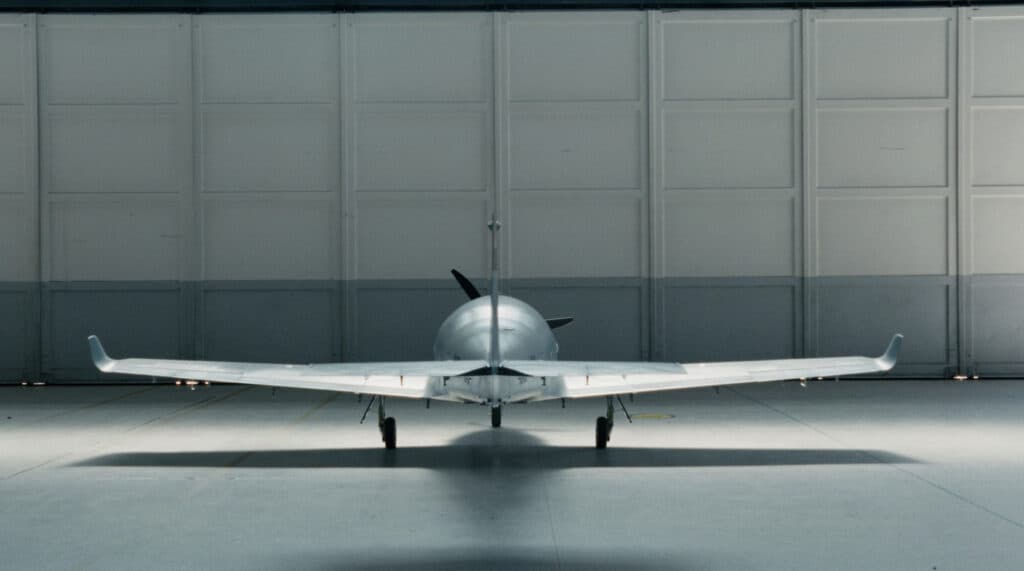
Highlights
- Avilus 從德國伊斯馬寧(Ismaning)地面控制站遠端操控 Bussard 飛機,完成約 800 公里的長程遙控飛行演示。
- Bussard 為軍民兩用固定翼平台,航程 2,500 公里、酬載 150 公斤、MTOW 800 公斤,已取得 EASA「特定類別」認證。
- 此次測試採 OPV 配置,機上有安全飛行員,但飛行控制全由地面站執行;全無人版本目前正在準備中。
- 核心航電系統 RasCore 可直接介接德國聯邦國防軍與北約戰場管理系統,支援跨平台互通性。
- Avilus 執行長 Niclas Bähr 表示,此里程碑是公司邁向結合成本效益、長程能力與歐洲自主性無人機目標的重要一步。
Avilus Completes 800 km Remote-Control Flight Milestone with Dual-Use Bussard UAS
German drone company Avilus has reached a significant milestone, successfully operating its Bussard aircraft remotely over airspace near the North Sea from a ground control station (GCS) in Ismaning, near Munich — a straight-line distance of approximately 800 km.
Dual-Use Design Focused on European Defence Autonomy
The long-range, mission-relevant remote-control demonstration highlights Avilus's goal of providing Europe with sovereign defence capabilities through a powerful dual-use system developed and manufactured entirely in Germany. The Bussard is designed for both civil and military applications, offering a range of 2,500 km and a payload capacity of 150 kg.
Primary use cases include reconnaissance, close air support, strike effects, and the surveillance and protection of critical land and maritime infrastructure. The platform is capable of delivering reliable situational awareness and robust decision support within short response windows.
A Cost-Effective, Mature Platform
The Bussard system has a maximum take-off weight (MTOW) of 800 kg and a wingspan of 8 metres. It is based on a proven German industrially produced motorised aircraft platform with years of operational validation. This approach allows Avilus to reduce cost-per-flight-hour to a fraction of comparable systems, without compromising performance or reliability.
The system holds EASA (European Union Aviation Safety Agency) "Specific" category certification for unmanned operations during peacetime. Ongoing serial production within Germany ensures short delivery lead times and scalability.
Pilot on Board, but Fully Remote Control
Footage released alongside the announcement shows the Bussard in its Optionally Piloted Vehicle (OPV) configuration. A safety pilot was on board during the test, but all actual flight control was executed by operators at the ground control station near Munich.
RasCore: The Core Avionics System
The remote operation was enabled by Avilus's proprietary RasCore flight control and avionics system, which serves as the technological backbone across the company's entire unmanned product line, including the Grille and Wespe platforms.
RasCore integrates all mission-critical components: operations and mission management, flight control, sensor and navigation systems, transponders, and a secure communications link between the aircraft and the ground station. Interoperability was a priority from the outset — RasCore can interface directly with the German Bundeswehr's and NATO's battlefield management systems.
From Testing Toward Full Unmanned Operations
While many comparable programmes remain at the concept or prototype stage, Avilus has demonstrated these capabilities in a mission-relevant environment following several months of test flights. A fully unmanned variant of the Bussard is currently in preparation.
Avilus CEO Niclas Bähr commented: "This will be the next milestone on our path toward a drone that combines cost-effectiveness, long-range capability, and European autonomy."
原文來源: 查看原文
FAQ
Reviewed and published by the LAETimes editorial desk ·