U.S. Air Force Certifies LRASM Integration on B-1B Lancer, Boosting Maritime Strike Capability
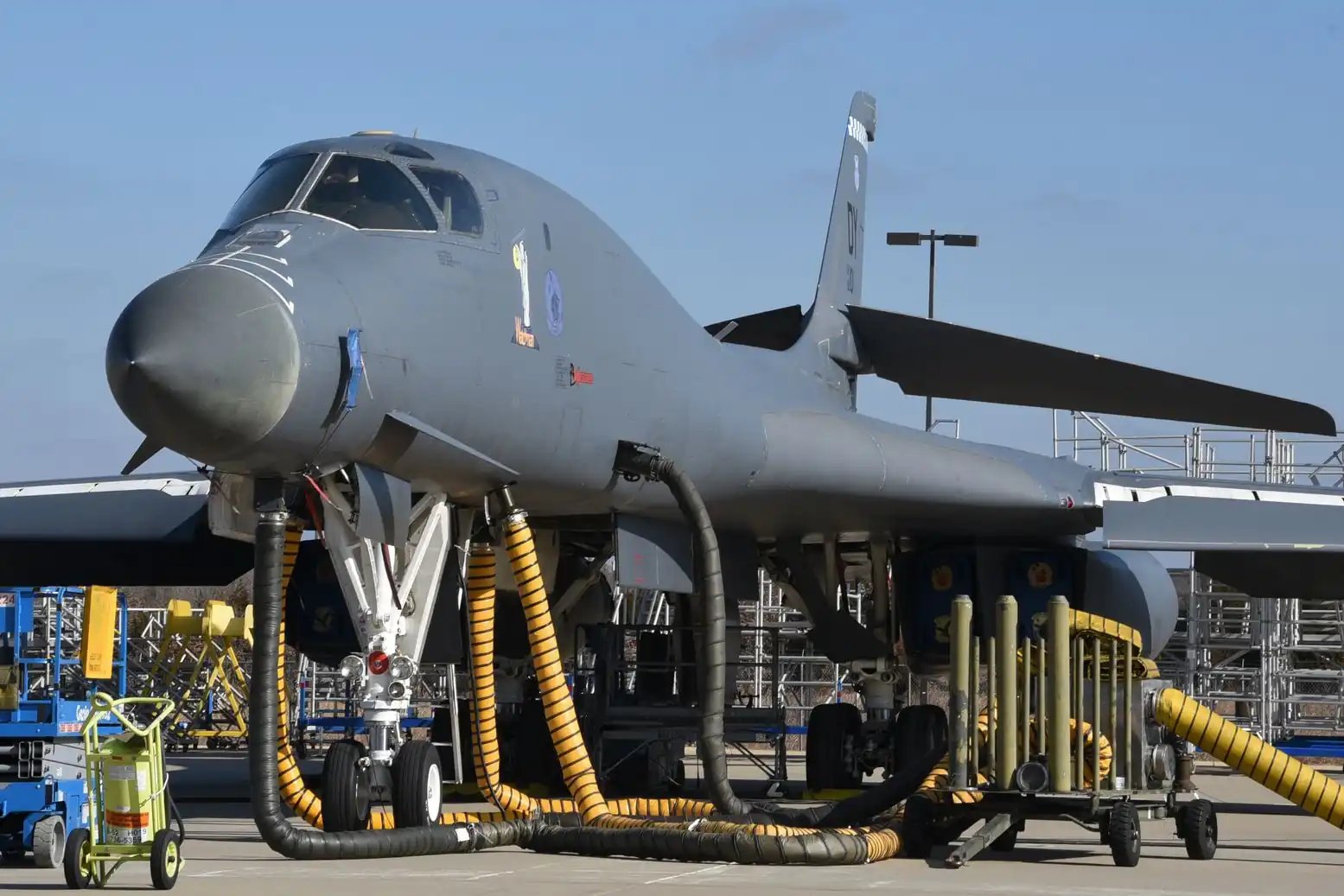
The U.S. Air Force has officially certified the integration of the Long Range Anti-Ship Missile (LRASM) on the B-1B Lancer bomber, declaring the capability operational. The milestone significantly enhances America's ability to strike surface targets at extended range, coming amid heightened maritime competition in the Indo-Pacific region.
Highlights
- The U.S. Air Force has officially certified the LRASM on the B-1B Lancer bomber and declared the capability operational.
- The B-1B can carry multiple LRASMs per sortie thanks to its large internal weapons bays and supersonic performance, multiplying per-mission strike capacity.
- LRASM, developed by Lockheed Martin, is a stealthy, autonomous missile designed to defeat modern high-end naval defenses in contested electromagnetic environments.
- The certification coincides with rising maritime tensions in the Indo-Pacific, where B-1Bs can be forward-deployed to threaten adversary fleets at standoff range.
- The Air Force described the integration as a key step in building multi-domain joint warfighting capability and a pillar of Indo-Pacific strategic deterrence.
EDWARDS AIR FORCE BASE (Defense Feeds) — The U.S. Air Force has officially announced the completion of certification for integrating the Long Range Anti-Ship Missile (LRASM) onto the B-1B Lancer bomber, declaring the capability fully operational. The milestone delivers a significantly enhanced long-range maritime strike capability at a time when naval competition has become a central pillar of international strategic planning.
Enhanced Maritime Strike Power
With LRASM now formally certified on the B-1B platform, the Air Force can execute precision strikes against surface targets from greater distances and across a wider range of airspace. The B-1B's supersonic performance and large internal weapons bays allow the aircraft to carry multiple LRASMs per sortie, substantially increasing the volume of firepower deliverable in a single mission.
LRASM is a stealthy, highly autonomous anti-ship missile capable of autonomously planning its flight path and engaging target vessels even in contested electromagnetic environments and against sophisticated layered defenses. Developed by Lockheed Martin, the weapon was specifically designed to defeat modern high-end maritime threats.
Strategic Implications
The certification comes as maritime tensions in the Indo-Pacific continue to rise, lending the development considerable strategic weight. B-1B bombers are based at Edwards Air Force Base and can be forward-deployed to Pacific locations; paired with LRASM's long-range precision strike capability, the combination allows U.S. forces to pose a credible threat to adversary fleets while remaining at a safe standoff distance.
The Air Force emphasized that establishing this capability is a key component of its response to an increasingly complex maritime competitive environment, and that it will continue to deepen training and deployment planning for integrated air-sea operations.
Looking Ahead
The entry into operational service of the B-1B/LRASM combination marks a significant step forward in the U.S. Air Force's multi-domain joint warfighting capability. As training matures and operational experience accumulates, this integration is expected to become an indispensable element of America's Indo-Pacific strategic deterrence architecture.
原文來源: 查看原文
FAQ
Newsletter
Subscribe to our Low-Altitude Industry Newsletter
Daily curated news on low-altitude economy and drone industry, delivered to your inbox.
Reviewed and published by the LAETimes editorial desk ·