U.S. Air Force Officially Confirms Two-Pilot Crew Configuration for B-21 Raider Bomber
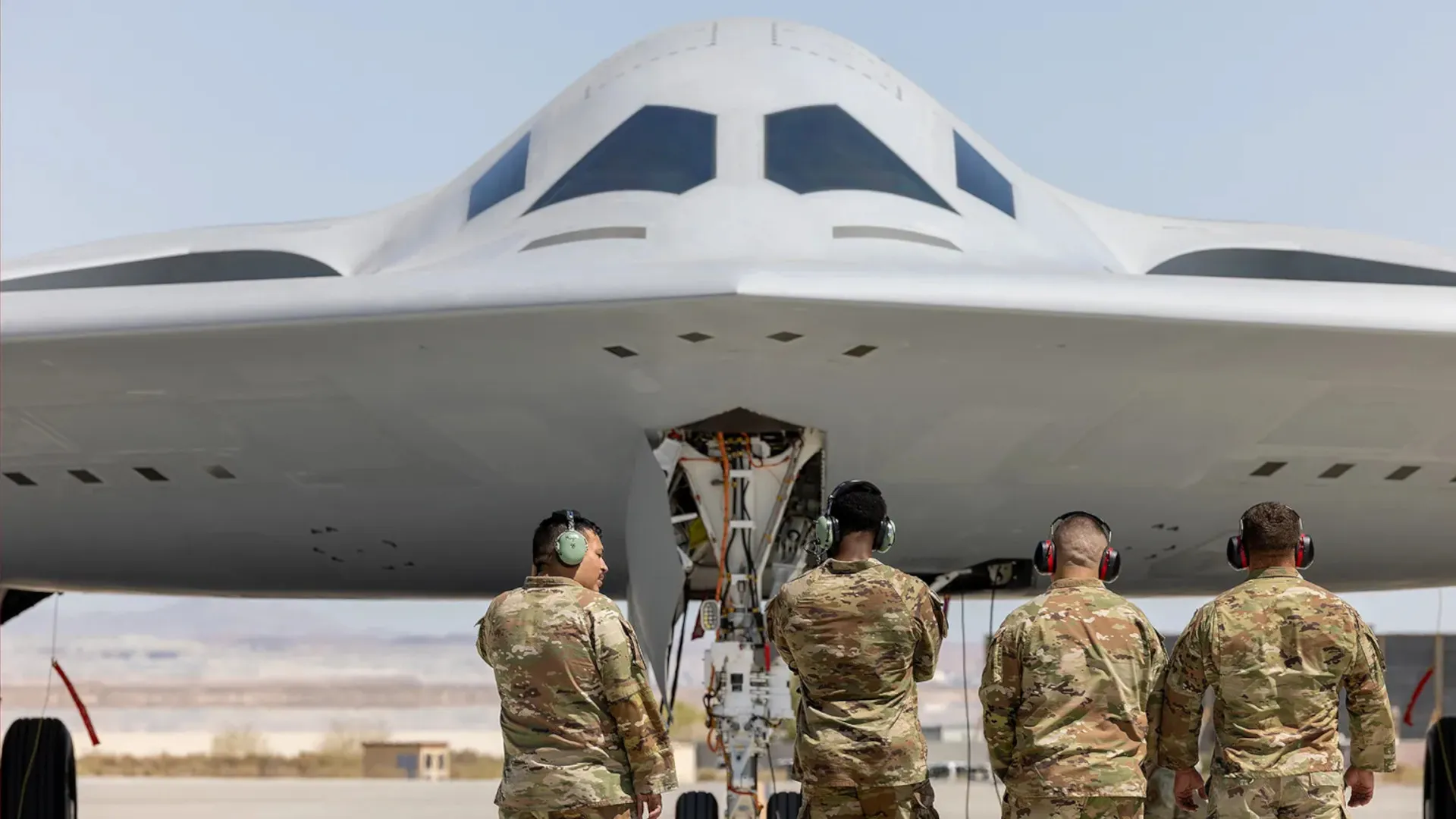
The U.S. Air Force has formally announced that the B-21 Raider stealth bomber will operate with a two-pilot crew, mirroring the B-2 Spirit's configuration. The service dropped an earlier option of a single pilot paired with a Weapon Systems Officer (WSO). A conversion training program will be established to transition qualified WSOs and Combat Systems Officers (CSOs) into B-21 pilots. Initial operational deployment at Ellsworth AFB, South Dakota, is planned for as early as next year.
Highlights
- The U.S. Air Force officially confirmed the B-21 Raider will use a two-pilot crew configuration, matching the B-2 Spirit, and dropped the earlier single-pilot plus WSO proposal.
- The Air Force is establishing a conversion training program to transition qualified WSOs and CSOs into B-21 bomber pilots (designated AFSC 11B).
- Initial operational deployment of the B-21 at Ellsworth Air Force Base, South Dakota, is planned for as early as 2026, with a procurement target of at least 100 aircraft.
- DARPA's ALIAS program and companies such as Shield AI and Merlin are developing AI virtual co-pilot technology that could eventually enable optional-pilot or unmanned modes for the B-21.
- In February 2025, the Air Force announced an increased B-21 production rate to accelerate the deployment timeline, with the program broadly regarded as on schedule and within budget.
U.S. Air Force Officially Confirms Two-Pilot Crew Configuration for B-21 Raider Bomber
The U.S. Air Force has formally announced that the B-21 Raider bomber will operate with a two-pilot crew, matching the configuration of the currently serving B-2 Spirit. The service had previously evaluated a single-pilot arrangement paired with a Weapon Systems Officer (WSO, commonly known as a "wizzo"), but has now abandoned that option. The current plan calls for select qualified WSOs and Combat Systems Officers (CSOs) to undergo conversion training to become pilots for the future B-21 fleet.
Official Announcement and Statement
The formal announcement of the B-21's standard two-pilot crew configuration was released recently, shortly after the Air Force disclosed in June that a combat test pilot had flown a pre-production Raider prototype for the first time.
According to the official statement: "Following deliberate analysis of the B-21's advanced capabilities, Air Force leadership determined that a two-pilot configuration best supports the aircraft's mission profiles. To maximize the Raider's lethality and survivability, it is essential to retain the deep tactical and combat experience residing within the current WSO and CSO communities."
The statement further noted: "The Air Force is establishing a pilot conversion program for select Weapon Systems Officers and Combat Systems Officers. Those selected will attend flight training and subsequently be assigned to B-21 units. Eligible officers will receive more information through command channels at the appropriate time."
Deployment Plans and Procurement Scale
The B-21 Raider is still in developmental testing, but the Air Force plans to begin formal operational deployment at Ellsworth Air Force Base, South Dakota, as early as next year. The publicly stated procurement target is at least 100 aircraft, though Air Force officials have indicated a more precise figure will be released next year. Analysts widely expect the final procurement number to be higher, which will in turn affect the total number of pilots required.
An Air Force spokesperson told TWZ: "B-21 pilots will be designated as 11B bomber pilots, and the Air Force is still assessing the total number of B-21 pilots needed." The "11B" designation refers to the bomber pilot Air Force Specialty Code (AFSC), and should not be confused with the U.S. Army's 11B infantry Military Occupational Specialty (MOS).
Advantages of the Two-Pilot Design
The B-2 bomber similarly operates with a standard two-pilot crew and features a small crew rest area, allowing one pilot to sleep during long-duration missions that can sometimes span multiple days. The two-pilot configuration also provides an additional safety margin. Under the single-pilot alternative, however, the Air Force could have trained WSOs to handle the aircraft in emergency situations.
Gen. Stephen Davis, Commander of Air Force Global Strike Command (AFGSC), told TWZ in January: "I think the B-21 will be broadly similar to the B-2 in terms of crew support. There's enough room for crew rest, a lavatory, and food preparation—all of those features will be present on the B-21."
Historical Background and Future Outlook
Gen. Davis's predecessor, retired Gen. Thomas Bussiere, had advocated for a single-pilot plus WSO configuration for the B-21. In his TWZ interview, Gen. Davis also noted that the B-2 itself underwent a similar crew configuration debate before ultimately adopting a two-pilot arrangement—partly due to the platform's high unit cost and limited production numbers. He pointed out that the B-2 originally required pilots to have a navigator or WSO background before that requirement was later dropped.
Whether a single-pilot operational mode might be considered for the B-21 in the future remains unclear. As early as 2017, a Defense Department Inspector General report obtained by TWZ through a Freedom of Information Act (FOIA) request revealed that the Long Range Strike Bomber (LRS-B) program—the Raider's predecessor—had listed an "optional pilot mode" or the ability to rapidly integrate such a capability as a requirement.
When reports first emerged in November 2025 that the Air Force was considering a single-pilot option for the B-21, TWZ noted strong indications that advanced automation and artificial intelligence (AI) autonomy are already deeply embedded in the aircraft's design.
The U.S. military has invested heavily in "virtual co-pilot" technology over the years, aimed at improving safety margins and reducing crew workload on both fixed-wing aircraft and helicopters. DARPA has been advancing AI co-pilot development since the early 2010s through its Aircrew Labor In-Cockpit Automation System (ALIAS) program, centered on Lockheed Martin's MATRIX autonomous flight control software. Companies such as Shield AI and Merlin are also developing similar autonomy packages; Merlin is actively integrating its autonomous software into Air Force KC-135 tankers.
While these capabilities may eventually open the door to an optional-pilot or even unmanned mode for the B-21, they equally benefit the human pilots flying the bomber today.
Overall, based on assessments from military officials and members of Congress, the B-21 remains a model acquisition program—broadly on schedule and within budget despite some challenges. In February of this year, the Air Force announced an increased B-21 production rate to accelerate the deployment timeline.
When the first B-21 lands at Ellsworth Air Force Base, there will be two pilots in the cockpit.
Co-reported by Howard Altman.
原文來源: 查看原文
FAQ
Reviewed and published by the LAETimes editorial desk ·