B-2 Spirit Stealth Bomber Armed with Up to 16 LRASMs Could Reshape the Taiwan Strait Strategic Equation
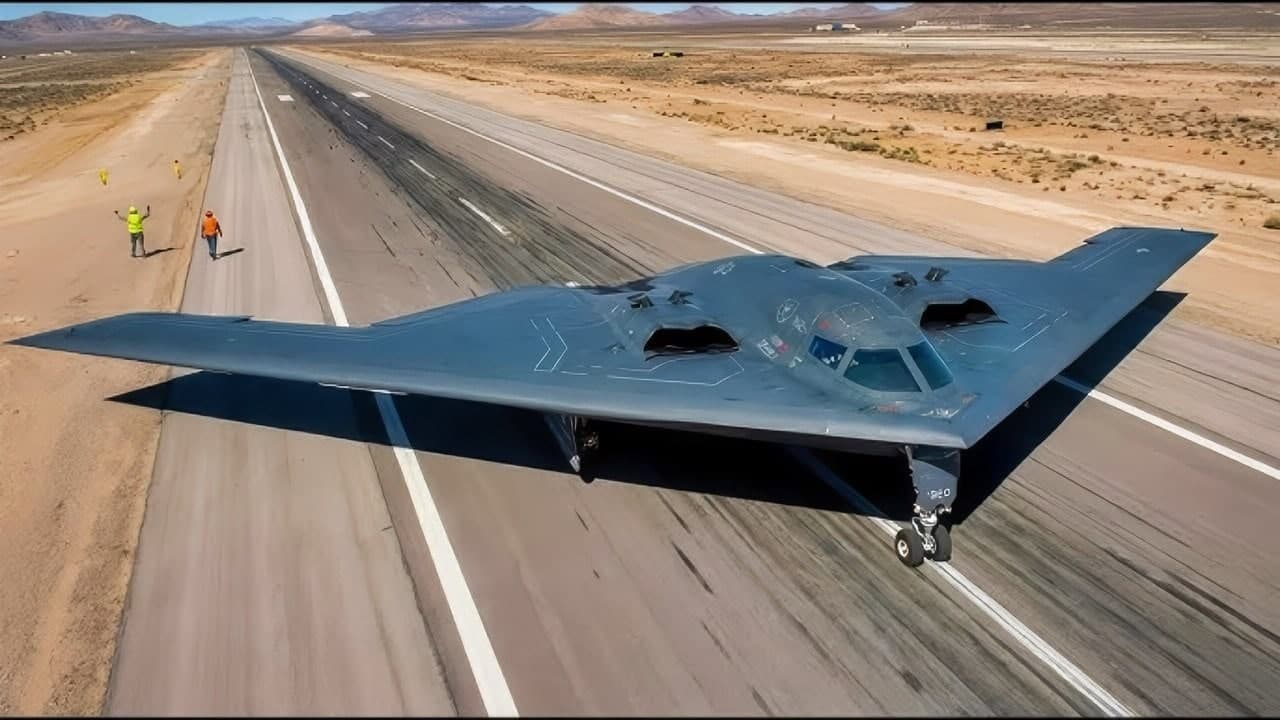
The U.S. Air Force has quietly integrated the Long-Range Anti-Ship Missile (LRASM) into the B-2 Spirit stealth bomber, with reports indicating the aircraft can carry up to 16 missiles. The move carries significant implications for Taiwan Strait scenarios, where China must achieve sea control to execute an invasion or blockade. A stealth platform capable of penetrating A2/AD defenses and threatening naval fleets could prove decisive in denying Beijing maritime dominance.
Highlights
- The U.S. Air Force has quietly integrated LRASM anti-ship missiles into the B-2 Spirit stealth bomber, with each aircraft able to carry up to 16 missiles per sortie.
- LRASM has a publicly acknowledged range of over 200 nautical miles and is derived from the JASSM-ER platform, which is estimated to reach 575 nautical miles.
- China must achieve sea control over the Taiwan Strait to execute an invasion or blockade of Taiwan; denying that control could neutralize Beijing's military options.
- The B-2/LRASM combination is designed to penetrate the PLA's A2/AD bubble and strike Chinese naval forces, buying time for heavier U.S. and allied forces to deploy.
- The U.S. military faces a significant cultural shift in adopting a 'denial defense' posture—defending from a position of initial inferiority—rather than its traditional offensive 'seize and hold' approach.
B-2 Spirit Stealth Bomber Integrates LRASM, Rewriting the Taiwan Strait Strategic Equation
A major development concerning the venerable B-2 Spirit stealth bomber quietly surfaced this past summer. According to Sandboxx News reporter Alex Hollings, the U.S. Air Force has discreetly armed the B-2 with the Long-Range Anti-Ship Missile (LRASM)—a weapon specifically designed to strike enemy vessels in flashpoint regions such as the Taiwan Strait. The announcement caught many observers off guard, as the program had advanced in near-total secrecy.
The news is nonetheless welcome. For China to invade Taiwan, or to impose a blockade that would isolate the island's population, Beijing must first achieve sea control over the Taiwan Strait. Deny that sea control, and China's strategic options against Taiwan collapse entirely—leaving the island able to stand firm.
Up to 16 LRASMs per Sortie
The U.S. Air Force is now moving onto a war footing. Reports indicate the B-2 can carry as many as 16 LRASMs, delivering formidable firepower in sea-denial missions. Pairing this missile with a stealth platform carries implications that extend well beyond tactics, resonating at the operational, strategic, and political levels.
Three Critical Challenges: Time, Range, and Military Culture
1. The Time Factor
China's People's Liberation Army (PLA) has meticulously constructed its Anti-Access/Area-Denial (A2/AD) architecture to delay the arrival of joint U.S. forces—including the Pacific Fleet and Air Force and Army expeditionary elements—long enough for PLA commanders to accomplish their objectives in the Taiwan Strait or South China Sea.
Beijing's calculus is straightforward: fragment American power, attrite each piece in turn, and exploit the resulting window of opportunity. The core logic of A2/AD, from China's perspective, is to slow U.S. reinforcement and secure a fast-decision window against Taiwan.
Yet the same logic applies in reverse. U.S. forces equally need to make time work in their favor—delaying Chinese operations long enough for heavier forces from the continental United States to mass and arrive.
2. Weapon Range
The U.S. Air Force has developed what it terms "countersea" doctrine and has been actively exercising relevant missions in recent years. LRASM's publicly acknowledged range exceeds 200 nautical miles, though the Pentagon keeps precise specifications closely guarded for obvious reasons. Notably, LRASM is derived from the Joint Air-to-Surface Standoff Missile–Extended Range (JASSM-ER), whose estimated range reaches approximately 575 nautical miles.
While LRASM burns more fuel maneuvering against mobile targets—likely preventing it from approaching JASSM-ER's range figures—its real-world reach almost certainly exceeds the official 200-nautical-mile figure, thereby improving the B-2's odds of penetrating the PLA's A2/AD bubble and delivering effective strikes.
3. The Military Culture Challenge
The 2026 U.S. National Defense Strategy calls for a "denial defense" posture—fundamentally the strategy of the weaker party at the outset of conflict. U.S. forces forward-deployed in East Asia must initially absorb the full weight of China's military machine at a relative disadvantage, on Beijing's doorstep.
This runs counter to decades of American warfighting tradition. Since the decisive victory at the Battle of Midway in 1942—with only a brief exception during the opening phase of the Korean War—the U.S. military has rarely entered combat from a position of inferiority. Transitioning from an offensive "seize sea control" mindset to a defensive "deny sea control" posture represents a profound cultural challenge for any military institution.
Conclusion: Tactical Offense in Service of Strategic Defense
The LRASM–B-2 pairing exemplifies the sophisticated use of tactical offense to achieve strategic defense: stealth bombers penetrate deep into PLA defensive layers, strike Chinese invasion fleets, and buy time for heavier U.S. and allied forces to assemble and project power. This combination carries meaningful implications at the tactical, operational, and strategic levels, and represents a significant and commendable commitment by the U.S. Air Force in the competition over the Taiwan Strait.
About the Author: Dr. James Holmes is the J.C. Wylie Chair of Maritime Strategy at the U.S. Naval War College and a Senior Fellow at the University of Georgia's School of Public and International Affairs. The views expressed are solely his own.
原文來源: 查看原文
FAQ
Reviewed and published by the LAETimes editorial desk ·