US Air Force Officially Confirms B-2 Stealth Bomber Can Launch LRASM Anti-Ship Missiles, Sinks Target Vessel Near Guam
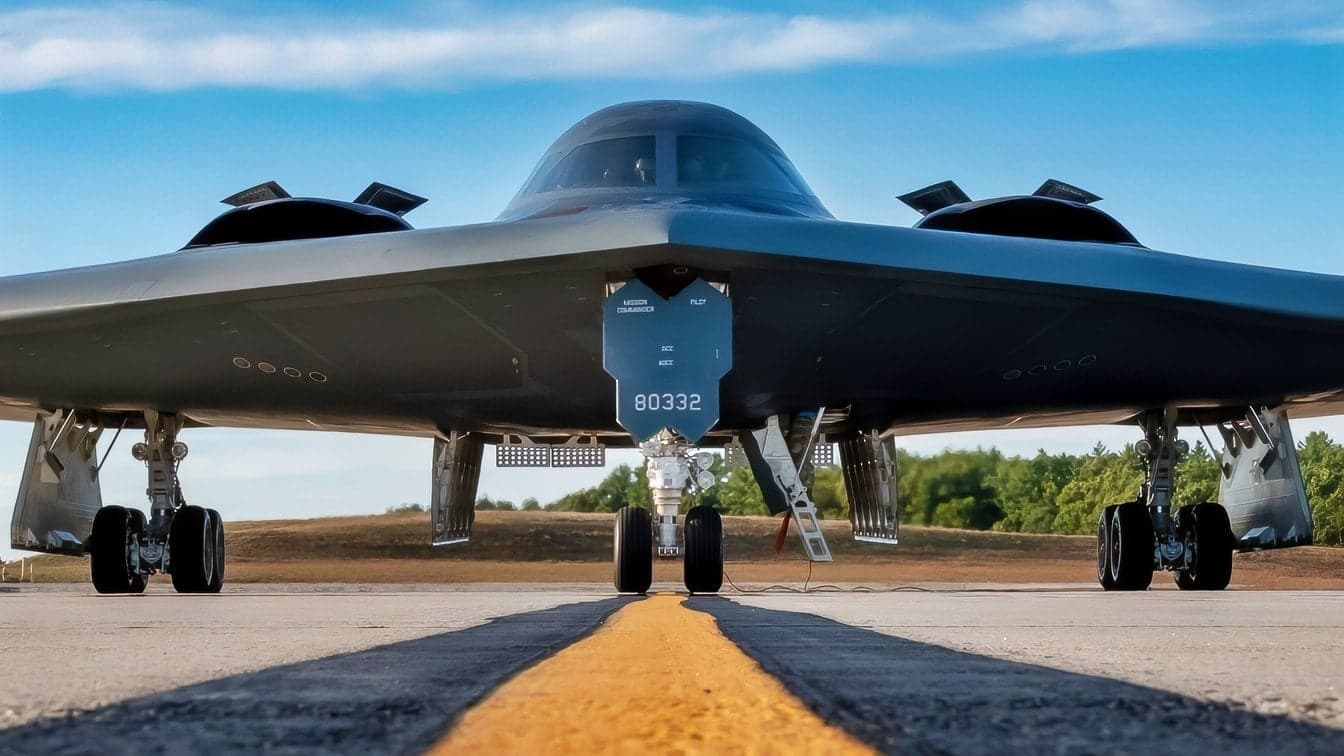
During Exercise Valiant Shield 2026, the US Air Force publicly confirmed for the first time that the Northrop Grumman B-2 Spirit stealth bomber is capable of launching the AGM-158C Long Range Anti-Ship Missile (LRASM). A B-2 successfully struck the decommissioned USS Juneau in a multinational sinking exercise north of Guam. The integration significantly expands the B-2's role from strategic bomber to a long-range maritime strike platform, with major strategic implications for potential conflicts in the Indo-Pacific.
Highlights
- During Exercise Valiant Shield 2026, the US Air Force publicly confirmed for the first time that the B-2 Spirit stealth bomber is integrated with the AGM-158C LRASM anti-ship missile.
- A B-2 successfully struck the decommissioned USS Juneau north of Guam in a multinational SINKEX, with a Japanese submarine firing the final torpedo to complete the sinking.
- The B-2 is estimated to carry up to 16 LRASMs internally, combining stealth penetration with long-range autonomous maritime strike capability.
- LRASM's autonomous guidance — including ESM-based mid-course maneuvering and passive infrared terminal homing — enables engagement of heavily defended naval targets from hundreds of miles away.
- The B-2's LRASM integration strongly suggests the forthcoming B-21 Raider, planned for procurement well beyond 100 aircraft, will carry the same capability against China's A2/AD networks.
US Air Force Officially Confirms B-2 Bomber's LRASM Anti-Ship Strike Capability
The US Air Force has publicly confirmed for the first time that the Northrop Grumman B-2 Spirit stealth bomber is capable of employing the AGM-158C Long Range Anti-Ship Missile (LRASM), with the announcement coming during Exercise Valiant Shield 2026.
During the exercise, a B-2 launched a single LRASM against the decommissioned vessel USS Juneau in waters north of Guam, as part of a multinational sinking exercise (SINKEX). In addition to the United States, Japan participated in the exercise, with a Japanese submarine firing the final torpedo to complete the sinking.
Although the B-2 has long been defined as a stealth strategic bomber, the integration of LRASM extends its role to long-range maritime strike missions — a development with far-reaching implications for any future conflict in the Indo-Pacific region. The B-2 is nonetheless expected to be retired in the near future, to be succeeded by the next-generation B-21 Raider.
Key Event Summary
Pacific Air Forces confirmed that the B-2 launched an LRASM during Exercise Valiant Shield. This marks the first time the US Air Force has publicly disclosed the B-2's integration of LRASM. Officials did not release technical details, emphasizing that related integration work remains classified.
The LRASM and B-2 Combination
LRASM is derived from the AGM-158 JASSM family of missiles, which the B-2 already carries. Because LRASM shares essentially the same external dimensions as JASSM, the B-2 is estimated to be capable of carrying up to 16 missiles internally while maintaining its stealth profile.
LRASM is a highly capable modern weapon that offers a substantially greater degree of autonomy compared to older anti-ship missiles. Its guidance sequence includes:
- Cruise phase: GPS/Inertial Navigation System (INS) guidance
- Mid-course maneuvering: Onboard Electronic Support Measures (ESM) to detect enemy emissions and autonomously avoid air defense systems in flight
- Terminal phase: Passive infrared seeker for target acquisition
- Target recognition: An onboard target database capable of identifying ship type and optimal aim points
The Perfect Pairing: Stealth Penetration + Autonomous Precision Maritime Strike
The B-2 provides stealth penetration capability, while LRASM delivers long-range, precision maritime strike capability. Together, they form a strike platform capable of approaching heavily defended naval formations with minimal risk of detection.
This gives the Air Force a stealth aircraft that can operate within contested airspace and directly engage high-value naval targets — without relying on stand-off bombers or surface vessels.
This capability is particularly critical in the context of a potential conflict with China. China's naval strategy relies on aircraft carriers, large amphibious assault ships, and dense escort fleets, all operating under an integrated Anti-Access/Area Denial (A2/AD) defensive umbrella that is exceptionally difficult to penetrate.
A stealth bomber launching multiple autonomous anti-ship missiles could simultaneously engage densely deployed Chinese capital ships while significantly complicating Chinese defensive planning. In conventional anti-ship operations, aircraft must approach heavily defended fleets; the B-2's stealth characteristics reduce the probability of early detection, while LRASM's beyond-visual-range standoff distance allows engagement from hundreds of miles away.
Breaking Through A2/AD Networks
Modern naval warfare is increasingly focused on penetrating A2/AD networks. China has invested heavily in its A2/AD architecture, including long-range missiles, integrated sensor networks, and layered air and maritime defenses designed to deny US forces access within the First Island Chain.
LRASM provides the United States with an additional means of defeating A2/AD systems without requiring surface fleets or strategic bombers to operate deep within those networks and accept unnecessary risk.
Furthermore, this announcement may also signal the future capabilities of the B-21 Raider. Although the B-21 is smaller and carries fewer weapons than the B-2, it will be procured in far greater numbers — the B-2 fleet numbers fewer than 24 aircraft, while the Air Force is currently discussing whether to exceed the original procurement target of 100 B-21s. The confirmed LRASM integration on the B-2 strongly suggests the B-21 will similarly be equipped with LRASM capability.
Strategic Implications
This announcement signals an evolution in US Air Force doctrine: the B-2 is transitioning from a pure strategic bomber into a multi-role platform capable of long-range, stealth maritime strike — capable of threatening enemy surface fleets.
In the Pacific theater, surface vessels and amphibious forces are likely to be decisive factors in determining the outcome of any conflict. Combining stealth penetration capability with autonomous anti-ship cruise missiles gives the United States an effective tool for engaging high-value naval targets on terms highly unfavorable to the adversary.
原文來源: 查看原文
FAQ
Reviewed and published by the LAETimes editorial desk ·