Boom CEO Offers $100,000 Prize for First Amateur RC Plane to Break Mach 1
Boom Supersonic founder and CEO Blake Scholl announced on July 2 via X a $100,000 prize — $50,000 cash plus $50,000 in Boom stock — for the first amateur-built RC aircraft to exceed Mach 1. The challenge was sparked within hours by a viral post from college student Tomas Salvo, who claims his 5 kg carbon-fiber jet RC plane 'Reaper' can reach 500 mph.
Highlights
- Boom Supersonic CEO Blake Scholl announced a $100,000 prize ($50,000 cash + $50,000 Boom stock) on July 2, 2025 for the first amateur-built RC aircraft to break Mach 1.
- The challenge was sparked by college student Tomas Salvo's viral post about his homemade 5 kg carbon-fiber jet RC plane 'Reaper,' which he claims reaches 500 mph.
- Mach 1 at sea level is approximately 761 mph — more than 50% faster than Salvo's claimed speed and well beyond the verified jet RC record of 465 mph held by Niels Herbrich.
- FAA Part 107 limits RC aircraft to 100 mph, meaning any Mach 1 attempt would require specially permitted cleared airspace; a Mojave Desert event is reportedly being planned.
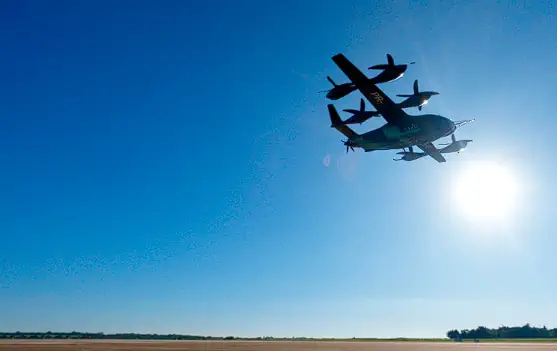
- Boom's own XB-1 demonstrator became the first privately developed civil aircraft to break the sound barrier in January 2025, giving Scholl direct experience with the engineering challenges involved.
Boom CEO Offers $100,000 Prize for First Amateur RC Plane to Break Mach 1
Boom Supersonic founder and CEO Blake Scholl announced on July 2 via X a total prize of $100,000 — comprising $50,000 in cash and $50,000 in Boom stock — for the first amateur-built remote-controlled aircraft to exceed Mach 1.
Scholl made the announcement while retweeting a post by college student Tomas Salvo, writing: "Boom will offer a prize of $50K cash + $50K in Boom stock for the first amateur-built RC plane to break Mach 1." Salvo's post had claimed his homemade 5 kg carbon-fiber RC jet, dubbed "Reaper," could reach speeds of 500 mph (approximately 805 km/h). The prize announcement accumulated 3,800 likes in under three hours.
From Dorm Room Post to Six-Figure Challenge — In Half a Day
The entire sequence of events unfolded in roughly half a day. As DroneXL reported earlier, Salvo had posted the previous evening about his homemade turbojet aircraft, claiming it to be the world's fastest RC plane. Scholl responded late that night: "Congrats, this is badass, DM me." By morning, he had transformed his personal enthusiasm into an open engineering prize challenge for the entire RC aircraft community.
Scholl has firsthand knowledge of supersonic challenges. Boom's XB-1 demonstrator became the first privately developed civil aircraft to break the sound barrier in January 2025, and the company continues to develop its Overture supersonic airliner around the concept of "quiet supersonic flight." Using prize incentives to motivate enthusiasts follows a proud tradition in aviation history: the Orteig Prize led to Lindbergh's transatlantic crossing, while the Ansari X Prize catalyzed civilian private spaceflight.
Mach 1 Is a Long Way Beyond 500 mph
The bar Scholl has set far exceeds anything an RC aircraft has verifiably achieved. Mach 1 at sea level is approximately 761 mph (around 1,225 km/h). The current verified speed record for a jet-powered RC aircraft is held by Niels Herbrich at 465 mph, while the overall RC aircraft speed record — set by Spencer Lisenby using an unpowered dynamic-soaring glider — stands at 548 mph.
Even using Salvo's claimed 500 mph as a baseline, reaching Mach 1 would require a speed increase of more than 50%, pushing the vehicle into a flight regime where transonic drag, flutter, and control latency multiply dramatically. These are precisely the technical challenges that took Boom years of work and an entire experimental aircraft development program to address.
Regulatory hurdles are equally significant. No current U.S. regulatory framework accommodates such a flight: FAA Part 107 limits RC aircraft to 100 mph, while the Academy of Model Aeronautics (AMA) turbine waiver program caps speeds at 200 mph. Any legitimate attempt would require a permitted and cleared airspace — and one of Salvo's collaborators has indicated that an event is being planned in California's Mojave Desert.
DroneXL's Take
This is exactly the right way to respond to viral engineering talent: not with a cease-and-desist over airspace regulations, but with a prize that channels the energy in a legitimate direction. A Mach 1 attempt cannot happen in a college parking lot — it requires cleared airspace, precision instrumentation, and proper organizational infrastructure. A six-figure carrot will pull every garage builder chasing it toward that full ecosystem. For Boom, by aerospace industry standards, this is a modest investment in talent discovery and publicity; for the RC community, it is their own moonshot.
The next thing to watch is whether Boom will formalize competition rules — both "amateur-built" and "verified Mach 1" need clear definitions before anyone can actually claim the prize. If this evolves into a sanctioned event with timing gates in the desert, the dorm-room jet that started it all will end up being the least remarkable chapter in the entire story.
Source: Blake Scholl's post on X
原文來源: 查看原文
FAQ
Reviewed and published by the LAETimes editorial desk ·