Breaking the BVLOS Scalability Barrier: High Lander and Thirdeye Partner to Deliver Multi-Aircraft Detect-and-Avoid Field Solution
High Lander and Thirdeye have announced a partnership to bring multi-aircraft Detect-and-Avoid (DAA) technology into real-world deployment, addressing one of the key safety obstacles blocking large-scale commercial BVLOS drone operations. The joint solution enables drones to automatically detect and maneuver around other aircraft in low-altitude airspace shared with manned aviation, moving the industry closer to routine BVLOS commercialization.
Highlights
- High Lander and Thirdeye have formally partnered to bring a multi-aircraft Detect-and-Avoid (DAA) system into real-world field deployment for BVLOS operations.
- The joint DAA system enables drones to detect surrounding aircraft in real time and autonomously execute avoidance maneuvers in complex low-altitude environments.
- High Lander contributes drone flight management and automation expertise, while Thirdeye provides core airspace sensing and detection technology.
- Both companies have entered the field testing and validation phase, with plans to engage regulators to advance BVLOS compliance frameworks.
- The solution targets commercial applications including logistics delivery, infrastructure inspection, and emergency response, where scalable BVLOS capability is critical.
Breaking the BVLOS Scalability Barrier: High Lander and Thirdeye Partner to Deliver Multi-Aircraft Detect-and-Avoid Field Solution
Low-altitude airspace worldwide currently operates largely under Visual Flight Rules (VFR), with manned aircraft — including helicopters and small fixed-wing planes — regularly transiting at the same altitudes targeted by commercial drones. As unmanned operations continue to expand, enabling drones to fly Beyond Visual Line of Sight (BVLOS) safely and at scale in this shared environment has become one of the industry's most pressing challenges.
High Lander and Thirdeye have now announced a formal partnership to address that challenge, bringing multi-aircraft Detect-and-Avoid (DAA) technology into field-deployable reality and laying the groundwork for scalable BVLOS operations.
The Safety Challenge in Low-Altitude Airspace
Low-altitude airspace presents a complex operational environment where manned helicopters, small fixed-wing aircraft, and unmanned systems must coexist. Without effective DAA mechanisms, BVLOS drone operations carry significant collision risk. Regulations in most jurisdictions impose strict limitations on BVLOS flights, requiring operators to demonstrate robust safety capabilities before waivers or approvals are granted.
The Joint Solution
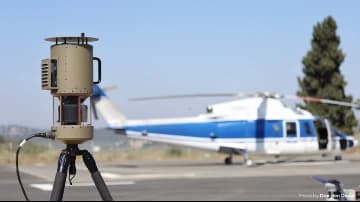
The collaboration combines High Lander's expertise in drone flight management and operational automation with Thirdeye's core strengths in airspace sensing and detection technology. Together, the two companies have developed a DAA system capable of supporting multiple drones operating simultaneously.
The system is designed to enable drones to detect other aircraft in surrounding airspace in real time and autonomously execute avoidance maneuvers, ensuring safe flight in complex low-altitude environments.
A Critical Step Toward BVLOS Commercialization
As regulators around the world progressively open pathways for BVLOS approvals, reliable DAA capability is expected to become a prerequisite for compliance. The High Lander–Thirdeye partnership represents a significant milestone on the road to large-scale commercial BVLOS deployment, with the potential to accelerate real-world implementation across applications including logistics and last-mile delivery, infrastructure inspection, and emergency response.
Both companies have entered the field testing and validation phase, with ongoing work to refine system performance and engage with regulatory authorities to support the development of relevant frameworks.
原文來源: 查看原文
FAQ
Reviewed and published by the LAETimes editorial desk ·