US Air Force Combat Drone Fires Long-Range Missile for First Time, Marking Major CCA Milestone
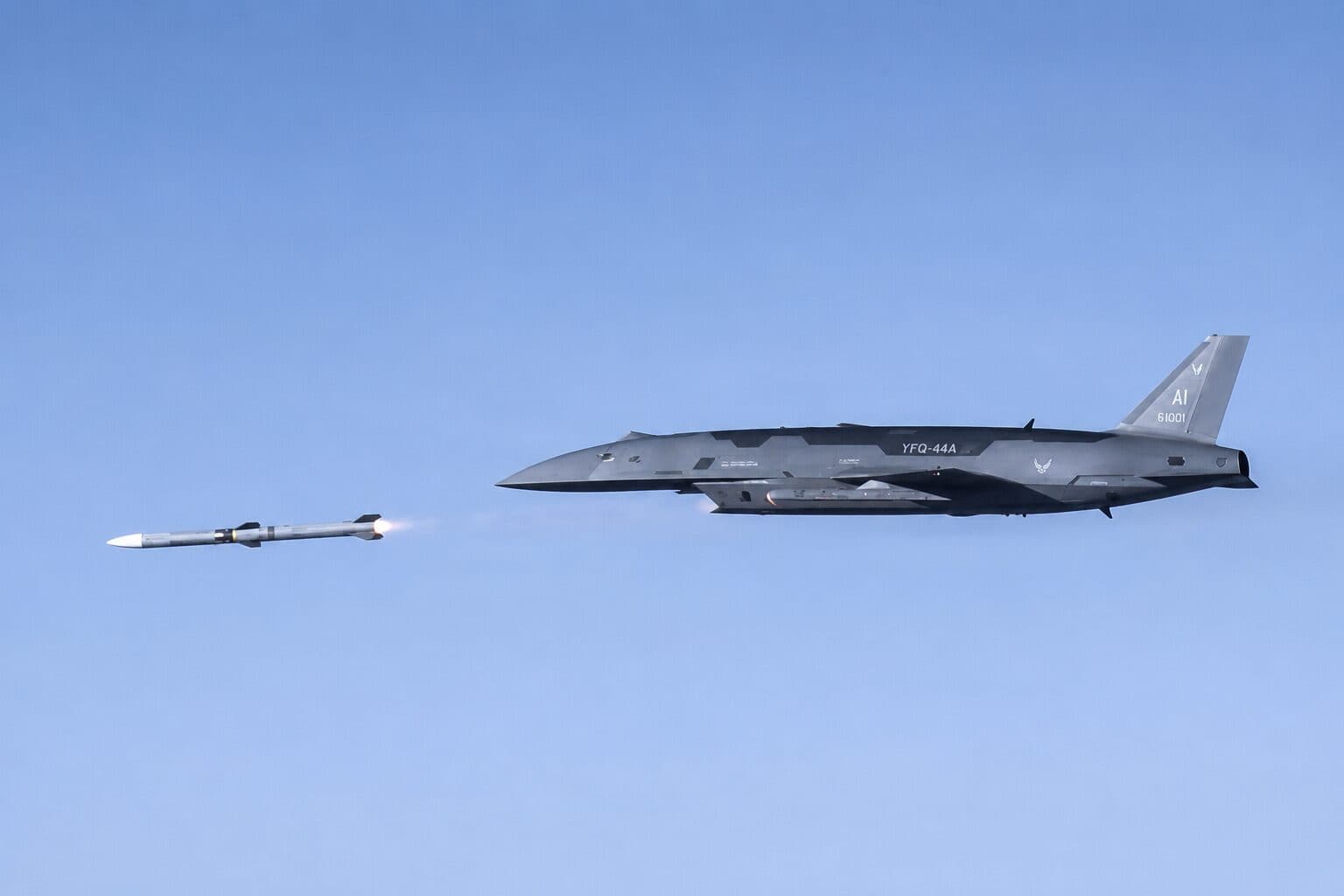
The US Air Force announced on July 15, 2026 that Anduril's YFQ-44A drone successfully fired an AIM-120 AMRAAM missile over California's Mojave Desert, marking a significant breakthrough in the Collaborative Combat Aircraft (CCA) program. A human operator retained final authority over the firing decision throughout the test, while the drone autonomously executed targeting and launch procedures.
Highlights
- On July 15, 2026, the US Air Force announced that Anduril's YFQ-44A drone fired an AIM-120 AMRAAM missile over California's Mojave Desert in the first live-fire weapons test for a CCA-program aircraft.
- A human operator retained final firing authority throughout the test; the YFQ-44A autonomously handled targeting and launch procedures but cannot employ weapons without human authorization.
- The Air Force described the target as a 'digital target,' meaning the engagement used a simulated target track rather than a physical airborne object — confirming a live launch but not a physical intercept.
- General Dale White cited the progression from inert-carriage flights earlier in 2026 to live weapons employment as evidence of the program's maturity and its ability to validate digital integration models with real data.
- The YFQ-44A is one of two Phase 1 CCA platforms, alongside General Atomics' YFQ-42A; both are classified as semi-autonomous and designed to reduce risk to pilots by entering heavily defended airspace ahead of manned aircraft.
US Air Force Combat Drone Fires Long-Range Missile for the First Time
The US Air Force announced a major milestone on July 15, 2026: a jet-powered combat drone fired a live air-to-air missile during operational testing for the first time, marking a critical step forward in the development of unmanned aircraft designed to fly alongside manned fighters.
YFQ-44A Successfully Fires AIM-120 Missile
Anduril's YFQ-44A drone successfully launched an AIM-120 Advanced Medium-Range Air-to-Air Missile (AMRAAM) against a designated target over restricted airspace above California's Mojave Desert. The Air Force stated that the YFQ-44A autonomously completed the targeting and launch sequence, but that a human operator retained final control over the firing decision throughout the entire test.
The Air Force emphasized: "CCAs will not autonomously employ weapons. The decision to employ any weapons system always rests with a human operator, who maintains command and control of the platform at all times."
The test was conducted by the "Air Superiority Combined Test Force" of the 412th Test Wing, comprising active-duty service members, government employees, and contractors.
A Phased Testing Approach: From Inert Carriage to Live Fire
Testing began earlier in 2026 with inert weapon carriage flights to gather operational data. Subsequent evaluations focused on the datalink between the aircraft and the missile, as well as verifying that operator commands were correctly executed within a simulated environment.
General Dale White, the Pentagon's program executive officer for major weapons systems, said: "The progression from inert carriage earlier this year to this weapons employment demonstrates the maturity of the program and allows us to validate our digital integration models with real data."
The Air Force did not confirm whether the AIM-120 physically intercepted or destroyed an airborne target, describing the target as a "digital target." The event was classified as a live-fire test — meaning the missile was physically launched — but the engagement relied on a simulated target track.
Air Force Chief of Staff General Ken Wilsbach called the test "an important next step" for the CCA program, adding: "We are one step closer to delivering capability to the warfighter."
YFQ-44A: Background of an Autonomous Escort Fighter
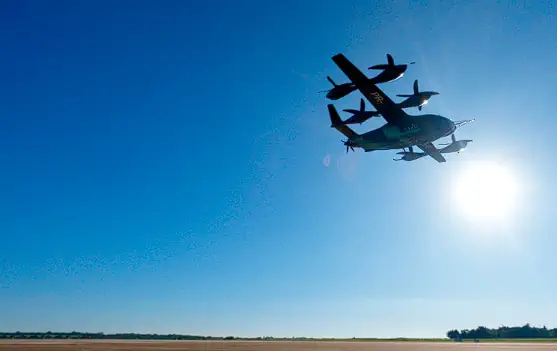
The YFQ-44A, previously known as "Fury," is one of two aircraft selected for Phase 1 of the Air Force's Collaborative Combat Aircraft (CCA) program. The other platform under evaluation is the YFQ-42A, developed by General Atomics Aeronautical Systems.
Both designs are intended to operate alongside manned aircraft on missions including reconnaissance, electronic warfare, and air-to-air combat. The Air Force has stated that these relatively cost-effective drones can enter airspace defended by dense air defense systems ahead of manned aircraft, reducing risk to pilots.
In terms of configuration, Anduril's design carries weapons on underwing pylons, while General Atomics' design uses an internal weapons bay to reduce radar cross-section.
The Air Force characterizes these platforms as "semi-autonomous" rather than fully autonomous. They are expected to independently execute many flight and mission tasks with limited direct control, while humans remain in the decision-making loop throughout.
CCA Program Accelerates
The weapons test for the YFQ-44A closely follows the Air Force's decision to advance both competing aircraft into a new phase of development and procurement. The Air Force has indicated it aims to field CCAs faster and in greater numbers than traditional manned aircraft programs, using shorter development cycles and software that can be updated as the threat environment evolves.
An Air Force statement noted: "This latest milestone continues the rapid developmental test pace that drives safe and effective CCA operations."
The Air Force has not disclosed the exact date on which the YFQ-44A conducted the missile launch, nor has it announced a projected timeline for the platform's entry into operational service.
原文來源: 查看原文
FAQ
Reviewed and published by the LAETimes editorial desk ·