US Air Force Completes First Live-Fire CCA Test Using Anduril YFQ-44A Drone
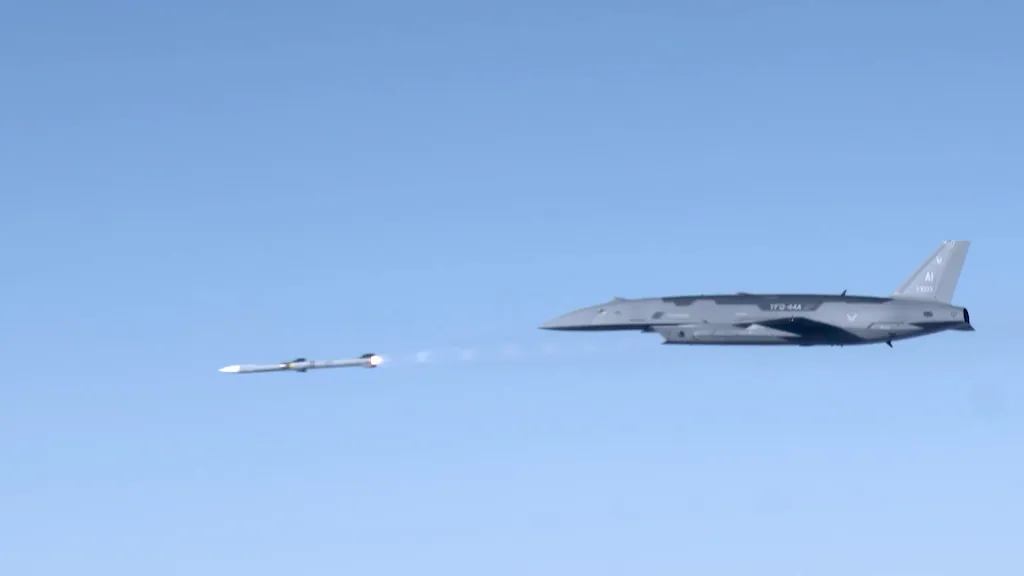
The US Air Force has completed its first-ever live-fire test of a Collaborative Combat Aircraft (CCA), using Anduril Industries' YFQ-44A semi-autonomous drone. The aircraft successfully executed a complete end-to-end BVLOS strike mission against a simulated target, marking a critical milestone in the Air Force's 'Loyal Wingman' program and advancing its Manned-Unmanned Teaming (MUM-T) combat concept.
Highlights
- The US Air Force completed its first-ever live-fire Collaborative Combat Aircraft (CCA) test using Anduril Industries' YFQ-44A semi-autonomous drone.
- The YFQ-44A successfully executed a full end-to-end BVLOS precision strike against a simulated target under operationally realistic conditions.
- The YFQ-44A competes against Boeing's MQ-28 for the Air Force's next-generation CCA procurement contract.
- The successful test marks a critical technical validation milestone and paves the way for serial production and deployment of CCA platforms.
- The advance accelerates the US Air Force's Manned-Unmanned Teaming (MUM-T) combat architecture and is expected to influence global military drone policy.
US Air Force Completes First Live-Fire CCA Test Using Anduril YFQ-44A Drone
The US Air Force has completed its first-ever live-fire test of a Collaborative Combat Aircraft (CCA), using the YFQ-44A semi-autonomous drone developed by Anduril Industries — the central platform of what the Air Force calls its "Loyal Wingman" concept.
End-to-End BVLOS Strike Mission
According to reports, the YFQ-44A successfully executed a complete end-to-end mission during the test, conducting a precision strike against a simulated target beyond visual line of sight (BVLOS). The test validated the aircraft's autonomous combat capability under operationally realistic conditions.
A Major Milestone for the Loyal Wingman Program
The CCA program aims to develop semi-autonomous drones capable of operating alongside crewed fighter aircraft, enhancing overall Air Force combat effectiveness through human-machine teaming. The YFQ-44A, developed by Anduril Industries, is competing against Boeing's MQ-28 and other rival platforms for the Air Force's next-generation collaborative combat drone procurement contract.
The successful live-fire test represents a key inflection point in the program's technical validation phase and lays the groundwork for future serial production and operational deployment. It signals that the US Air Force is actively accelerating the development of its next-generation Manned-Unmanned Teaming (MUM-T) combat architecture.
Strategic Implications
As major powers compete to develop autonomous aerial combat systems, the technical progress demonstrated through the CCA program is expected to have far-reaching implications for the global military drone industry and related regulatory frameworks. Analysts note that the successful live-fire validation of the YFQ-44A marks a significant step forward in the US military's push to field combat-ready autonomous armed drones.
原文來源: 查看原文
FAQ
Reviewed and published by the LAETimes editorial desk ·