U.S. Military's First Combat Deployment of Saronic Corsair USVs Strikes Iranian Submarine at Bandar Abbas Naval Base
U.S. Central Command (CENTCOM) has deployed three Saronic Corsair uncrewed surface vessels (USVs) in combat for the first time, striking a berthed Ghadir-class midget submarine at Iran's Bandar Abbas Naval Base. The operation marks the U.S. military's first-ever use of maritime one-way attack drones in combat, aimed at degrading Iran's ability to threaten commercial shipping through the Strait of Hormuz.
Highlights
- Three Saronic Corsair USVs struck a berthed Ghadir-class midget submarine at Iran's Bandar Abbas Naval Base in the first-ever U.S. combat deployment of maritime one-way attack drones.
- The Corsair USV has a 1,000-nautical-mile combat radius and carries up to 1,000 lbs (453 kg) of payload; Saronic has produced at least 300 units as of May 2026.
- Saronic received a U.S. Navy full-rate production contract for the Corsair in December 2025, and the vessel previously made headlines rescuing two Apache helicopter pilots.
- CENTCOM stated the Sunday strikes — encompassing dozens of attacks on Iranian air defense and coastal systems — were aimed at degrading Iran's ability to threaten commercial shipping through the Strait of Hormuz.
- Saronic's USV concept was inspired by Ukraine's asymmetric use of maritime drones against Russia's Black Sea Fleet, a tactic closely mirrored in the Bandar Abbas operation.
U.S. Military Makes History with First Combat Use of Maritime Drone, Corsair USVs Strike Iranian Midget Submarine
U.S. Central Command (CENTCOM) has announced that three Saronic Corsair uncrewed surface vessels (USVs) successfully struck a berthed Ghadir-class midget submarine at Iran's Bandar Abbas Naval Base — marking the first time in history that the U.S. military has deployed maritime one-way attack drones in a combat operation.
Mission Details: Three Corsairs Strike Naval Base in Coordinated Attack
In an official statement, CENTCOM said: "Three Corsair uncrewed surface vessels struck the port at Bandar Abbas Naval Base — the first use of maritime drones in a U.S. combat operation. Last night's strike degraded Iran's ability to continue attacking commercial shipping."
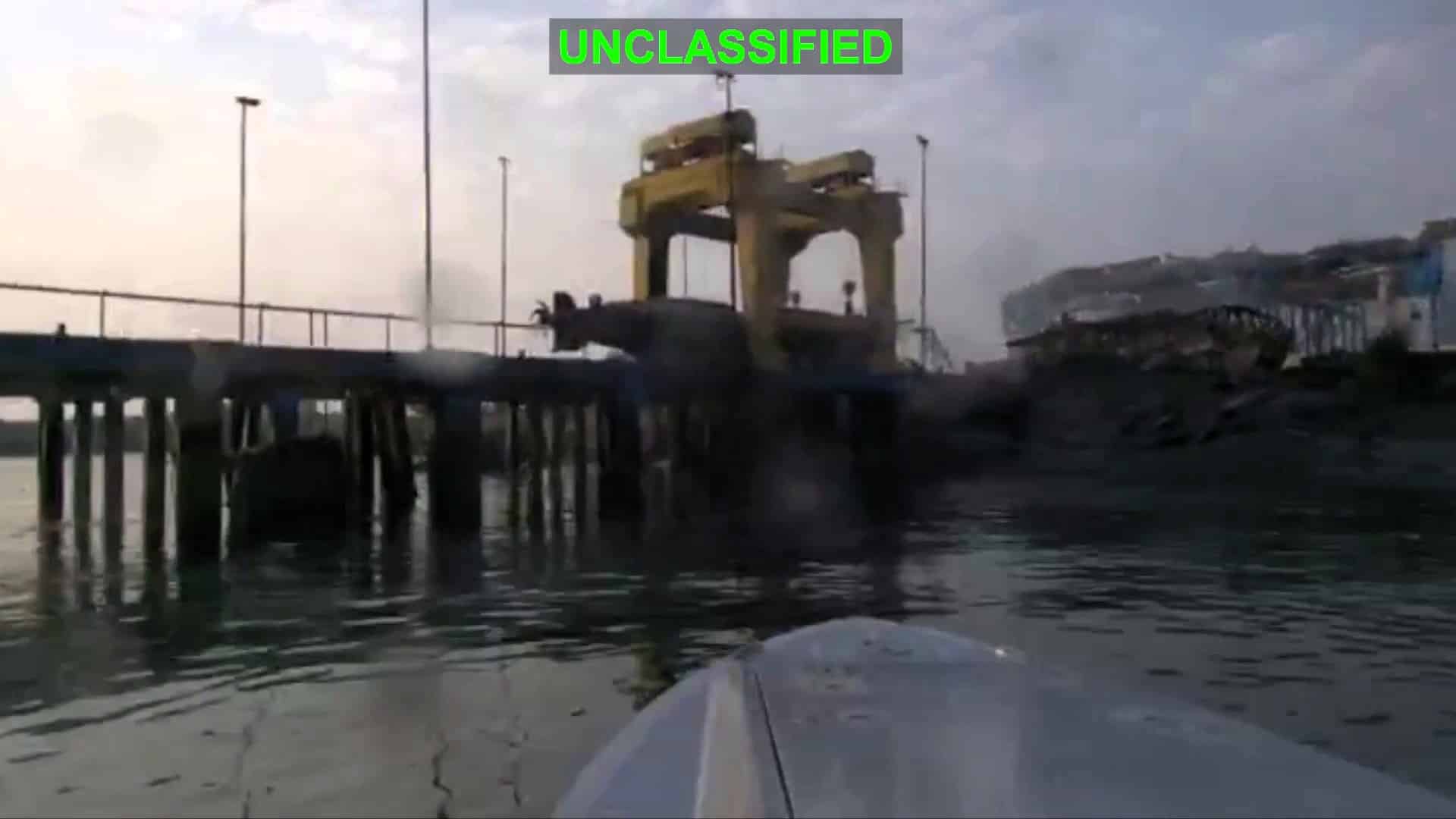
The command announced the maritime drone debut on Sunday (local time), though footage was not released until CENTCOM published a social media post the following day. Video shows multiple Corsair USVs approaching the target submarine berthed at the base from different angles before detonating their onboard explosive payloads.
Saronic: From Rescue to Strike, an Overnight Sensation
The conflict has brought enormous visibility to Saronic, a U.S. defense startup specializing in uncrewed surface vessels. The company had already made headlines just last month when a Corsair USV successfully rescued two Apache attack helicopter pilots.
The Corsair boasts impressive specifications: a combat radius of 1,000 nautical miles and a payload capacity of up to 1,000 lbs (approximately 453 kg). According to a social media post published by Saronic in May 2026, the company has produced at least 300 Corsair USVs to date. Saronic was awarded a Corsair full-rate production contract by the U.S. Navy in December 2025.
In a statement responding to the strike, Saronic said: "We are proud that our technology was able to support this mission and help protect the brave men and women of our armed forces. Saronic remains committed to delivering autonomous maritime systems that enhance the security of the United States and its allies."
Inspired by Ukraine, Rewriting Naval Warfare
Saronic's founding was inspired by the asymmetric effectiveness demonstrated by uncrewed maritime vehicles during the Russia-Ukraine war. Ukraine conducted multiple USV raids into Russian naval bases in the Black Sea, inflicting significant damage on a far larger and more capable Russian fleet — a tactical playbook closely mirrored by the Bandar Abbas strike.
Broader U.S.-Iran Conflict Context
This first use of one-way attack drones by the U.S. military came as part of a broader escalation following renewed tensions over commercial shipping passage through the Strait of Hormuz. CENTCOM noted that Sunday's operations encompassed dozens of strikes targeting Iranian air defense systems and coastal defense systems, aimed at degrading Iran's capacity to attack international shipping.
Since the outbreak of hostilities, Washington has introduced several new long-range strike systems into the theater, including the Precision Strike Missile with a range of up to 500 km, and the Low-Cost Uncrewed Combat Attack System aerial drone. Early in the conflict, U.S. strikes focused on Iranian warships, drones, missile launchers, and mine-laying assets deployed around the Strait of Hormuz.
原文來源: 查看原文
FAQ
Reviewed and published by the LAETimes editorial desk ·


