Sydney Coogee Beach Shark Attack Prompts Australia's CASA to Review Drone Flight Restrictions
A shark attack that left a 35-year-old woman critically injured at Sydney's Coogee Beach has prompted Australia's Civil Aviation Safety Authority (CASA) to review drone flight restrictions over the area. Because Coogee lies beneath Sydney Kingsford Smith Airport's approach corridor, commercial drone use has long been curtailed there, limiting routine shark patrol coverage. The incident has now formally triggered a regulatory review.
Highlights
- A 35-year-old woman was critically injured in a shark attack at Sydney's Coogee Beach on Saturday, approximately 30 metres from shore, and required multiple surgeries for severe lacerations to her leg and arms.
- CASA issued a statement after the attack saying it will examine adjusting drone flight restrictions over Coogee, which currently exist because the beach lies under Sydney Kingsford Smith Airport's approach corridor.
- Queensland's SharkSmart Drone Trial (2020–2024) recorded nearly 18,000 drone patrol flights across 10 beaches, detecting 4,959 sharks — more than twice the yield of traditional nets and drumlines — with no harm to marine life.
- Under emergency provisions, drones were deployed over Coogee waters after the attack, bypassing the normal restrictions; the ongoing CASA review will determine whether a permanent patrol exemption can be established.
- NSW Agriculture Minister Tara Moriarty described this summer as a 'very significant season for shark activity and attacks' in Sydney, with the state government committing to examine expanded use of drones and other technology to protect swimmers.
A shark attack at Sydney's Coogee Beach last Saturday, which left a 35-year-old woman with serious injuries, has prompted Australia's Civil Aviation Safety Authority (CASA) to reconsider the drone flight restrictions over the beach. Those restrictions exist because Coogee sits directly beneath the approach corridor for Sydney Kingsford Smith Airport — a location that has long constrained commercial drone operations in the area. The incident has now brought that constraint under formal scrutiny.
Emergency responders were called to the eastern Sydney beach on Saturday morning after the woman was attacked by a large shark approximately 30 metres (100 feet) from shore. As of Sunday, she remained in a critical but stable condition at St Vincent's Hospital with severe injuries to her left leg and both arms. A hospital spokesperson said bystanders pulled her from the water and administered first aid at the scene. "She has significant lacerations to her leg and arms and will require multiple surgeries," NSW Ambulance Inspector Mike Corlis told reporters at the scene. Coogee and other beaches in the Randwick Council area were closed for 24 hours, and drones were deployed over Coogee waters under emergency provisions that allowed them to bypass normal restrictions.
CASA to Review Airport Safety Rules — Not Shark Patrol Policy
CASA issued a statement after the incident saying it would examine whether the current flight rules over Coogee could be adjusted. The restrictions were not designed to prevent shark monitoring; they exist because the beach lies under a Sydney airport approach corridor, where unregulated drone operations near crewed aircraft pose a genuine aviation safety risk. The tension is between two legitimate safety interests: keeping airspace clear for aircraft, and enabling lifeguards to monitor the water from above.
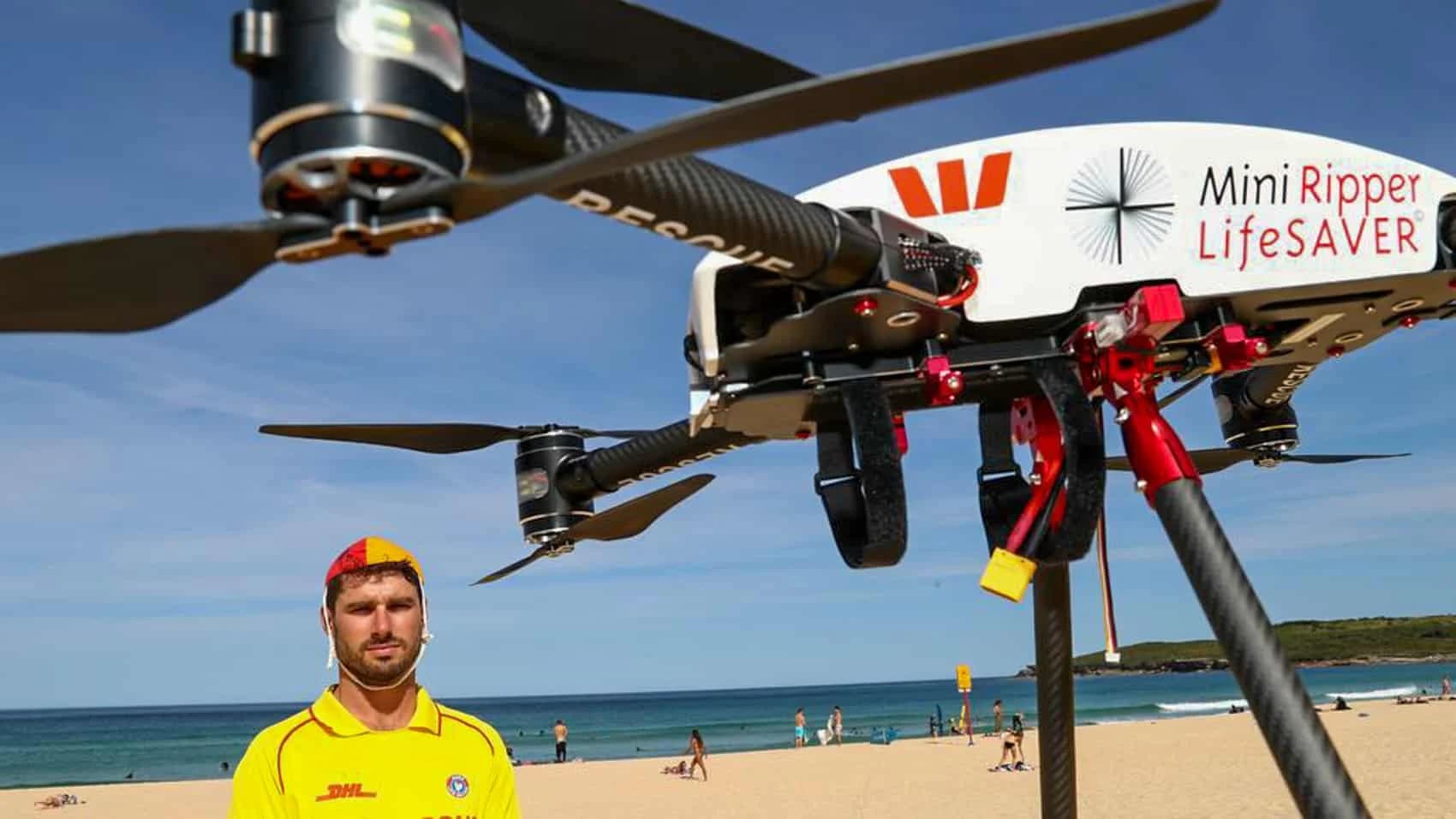
Australian surf lifesavers have long used drones routinely for shark surveillance at beaches not affected by airport restrictions. The most commonly deployed models are DJI Mavic and Matrice series drones, which were also used in search operations following last year's fatal Long Reef attack, where drones worked alongside helicopters and SMART drumlines to track the white shark responsible. Coogee is the exception, not the rule, and the ongoing review will determine whether that exception is maintained.
NSW Faces a Difficult Shark Season
NSW officials have framed the attack as part of a broader seasonal trend. "Sydney has had a very significant season for shark activity and attacks this summer, and the NSW Government takes that very seriously," said Agriculture Minister Tara Moriarty. She said the government would examine new measures to protect swimmers, including expanded use of drones and other technology. In January, dozens of beaches along the east coast — including in Sydney — were closed after four shark attacks occurred within two days, following heavy rain that had reduced water visibility.
The rescue itself came down to a person, not a machine. Charlie Verco, 25, a surfboat champion and off-duty lifeguard, pulled the woman from the water and brought her to shore. He told the Australian Broadcasting Corporation that he had been "really scared" when he spotted a shark three to four metres in length approaching a group of swimmers. "I looked to the beach and tried to signal the lifeguards, doing big X's, to let them know the situation and clear the water as much as possible and get the IRB over," he said. He described the moment the woman was pulled under: "She got dragged under at one point. I couldn't see where she was because it was all red. Luckily she came back up, the shark let go, and I was able to get close enough to get her back to shore."
Most shark attacks in Australia occur along the eastern and southeastern coastlines, averaging approximately 20 incidents per year, according to the Australian Institute of Health and Welfare, as cited in BBC reporting.
Drone Shark Detection Effectiveness Is Well-Documented
The case for flying drones over Coogee is not wishful thinking — it rests on four years of government data. Queensland's SharkSmart Drone Trial, conducted between 2020 and 2024, found that drones detected more than twice as many sharks as traditional shark nets and drumlines, without harming marine life. Lifeguards logged nearly 18,000 flights across 10 beaches, recording 676 shark incidents, detecting 4,959 sharks, of which 190 were longer than two metres. Under Queensland's 2025–2029 shark management plan, the number of patrolled beaches is set to expand from 10 to 20.
That does not mean a drone would have prevented last Saturday's attack. Patrol drones operate on limited schedules — typically a few hours each morning — and sharks can enter swimming areas at any time. What the data establishes is long-term detection capability, not protection at any given moment. The findings have also crossed borders: Dutch beach rescue organisations introduced DJI drones for the 2026 summer season, directly citing the Australian model as their basis. The pattern is clear: where regulations give lifeguards sufficient airspace to operate, drones deliver results. Coogee is now a test case — whether the airport approach corridor changes that calculation, or whether the rules need a dedicated carve-out for emergency and patrol monitoring.
DroneXL Editorial Perspective
This is a textbook example of a problem we have covered from multiple angles: drone airspace rules designed for one risk colliding with another risk that was never anticipated when those rules were written. We covered the fatal Long Reef attack in September 2025, when Surf Life Saving NSW deployed drones and helicopters above the water to search for the white shark involved. We have also reported on NSW's broader shark drone programme and its detection record. Coogee adds a third thread: what happens when the airspace itself is restricted for reasons entirely unrelated to sharks.
To be fair, CASA is not the villain here. Restricting drone flight near a Sydney Kingsford Smith Airport approach path is a reasonable decision in isolation. I also need to be careful not to suggest that any reporting supports the claim that a patrol drone would have changed the outcome last Saturday. The actual tension is more specific: before the attack, no one had reconciled the airport restriction with the shark patrol use case. Emergency provisions allowed drones to fly after the fact. The review must now determine whether a standing, pre-authorised patrol exemption can coexist with the flight path. Altitude restrictions, geofenced corridors, and certified operator credentials are standard tools for managing this kind of coordination problem — but CASA has not yet indicated which approach it intends to take.
CASA has said it will examine adjusting the rules. Whether that statement translates into a workable exemption, and how precisely that exemption is scoped, will determine whether Coogee gets the same aerial surveillance coverage as beaches outside airport approach corridors. That is the signal worth watching. The deeper open question is: how many other Australian beaches are operating under similar airspace constraints with the same unexamined gap? Will this review be limited to Coogee, or will it trigger a national audit? Current reporting has not answered that question, and CASA's statement does not address it.
Sources: Reuters, Australian Broadcasting Corporation, BBC, Australian Institute of Health and Welfare.
原文來源: 查看原文
FAQ
Reviewed and published by the LAETimes editorial desk ·