CENTCOM Confirms Corsair Unmanned Surface Vessel's Combat Debut in Strike on Iran's Bandar Abbas Naval Facilities
U.S. Central Command (CENTCOM) has released footage confirming the first-ever combat deployment of the Corsair one-way attack unmanned surface vessel (USV) during a nighttime strike on Iranian naval infrastructure at Bandar Abbas on July 12. Built by Saronic Technologies, the 24-foot diesel-powered USV boasts a range exceeding 1,000 nautical miles and a top speed of over 35 knots. Prior to its combat debut, Corsair also completed the first publicly confirmed search-and-rescue mission by a USV, recovering the crew of a downed AH-64 Apache helicopter.
Highlights
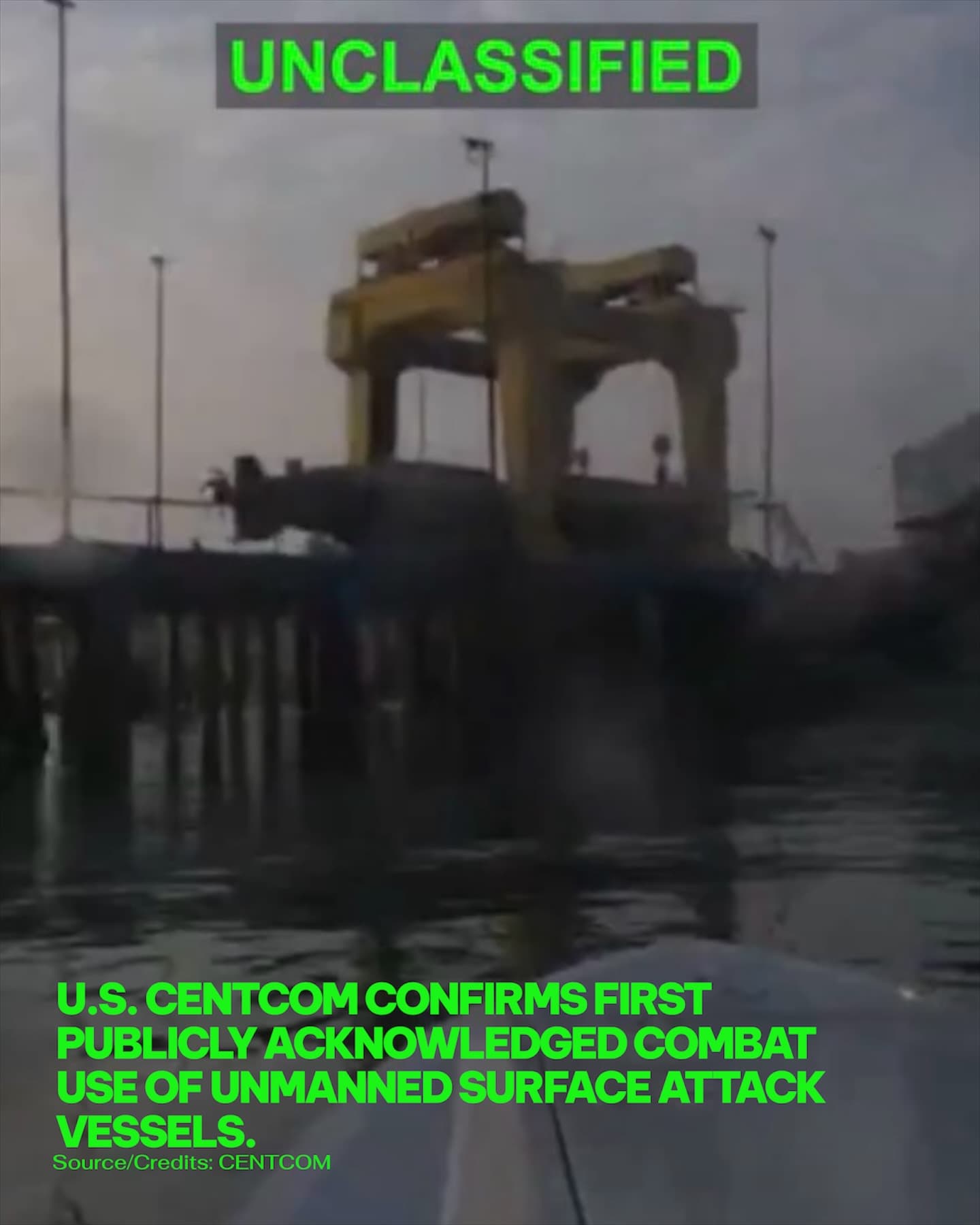
- CENTCOM confirmed on July 12 that the Corsair one-way attack USV, built by Saronic Technologies, made its first combat deployment in a strike on Iranian naval facilities at Bandar Abbas.
- Corsair is a 24-foot diesel-powered autonomous surface vessel with a range exceeding 1,000 nautical miles, a top speed over 35 knots, and a payload capacity of up to 1,000 lbs.
- Prior to its attack mission, Corsair completed the first publicly confirmed USV search-and-rescue operation, recovering two U.S. Army aviators downed in the Strait of Hormuz area.
- The dual-mission success — offensive strike and personnel recovery — marks a significant milestone for autonomous maritime systems in modern military operations.
U.S. Navy's Corsair USV Makes Combat Debut in Strike on Iranian Naval Infrastructure
U.S. Central Command (CENTCOM) has officially confirmed that the Corsair one-way attack unmanned surface vessel (USV) was deployed in combat for the first time during a nighttime strike on Iranian naval facilities at Bandar Abbas on July 12, releasing footage to verify the operation.
Mission Objectives and Strategic Significance
According to CENTCOM, the strike targeted infrastructure supporting Iranian naval capabilities. The acknowledgment marks the first time the U.S. military has publicly admitted to using the Corsair USV in active combat, signaling that autonomous surface warfare systems have formally entered the modern naval battlespace.
Corsair Technical Specifications
Developed by U.S. defense technology startup Saronic Technologies, Corsair is a 24-foot, diesel-powered autonomous surface vessel designed for long-range, independent maritime operations. Key specifications include:
- Range: Over 1,000 nautical miles
- Payload capacity: Up to 1,000 lbs (approx. 454 kg)
- Top speed: Over 35 knots
- Sensor suite: Passive 360-degree day/night situational awareness
- Operational design: Capable of autonomous operation in highly contested maritime environments with minimal human supervision
A Historic First in Search and Rescue
Notably, before its "kamikaze"-style attack mission debut, Corsair had already quietly made history as the platform used in the first publicly confirmed search-and-rescue (SAR) mission conducted by a USV.
The incident stemmed from the downing of an AH-64 Apache attack helicopter near the Strait of Hormuz, which left two U.S. Army aviators in the water. Corsair was dispatched to recover the crew, transporting both personnel to safety before a helicopter completed the final evacuation, ensuring the soldiers' survival.
A New Milestone for Autonomous Maritime Systems
This series of operations demonstrates the real-world versatility of unmanned surface vessels across two fundamentally different mission sets — offensive strike and personnel recovery — foreshadowing an increasingly critical role for autonomous maritime systems in modern military operations.
Sources: CENTCOM, Saronic Technologies
原文來源: 查看原文
FAQ
Reviewed and published by the LAETimes editorial desk ·