Meet the Teams Competing in the DARPA Lift Challenge
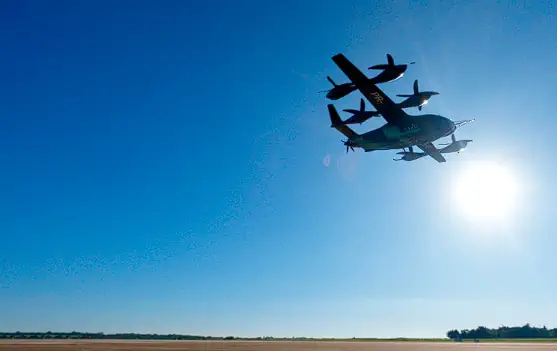
More than 100 teams will converge on the National Museum of the United States Air Force in Ohio this August for the DARPA Lift Challenge, competing to achieve unprecedented payload-to-weight ratios in vertical flight. Successful designs could transform heavy vertical-lift aviation, advance the DoD's Drone Dominance initiative, and significantly reduce the cost of heavy vertical-lift operations.

Highlights
- More than 100 teams will compete in the DARPA Lift Challenge at the National Museum of the United States Air Force in Dayton, Ohio, in August.
- The competition targets payload-to-weight ratios in vertical flight that have never previously been achieved.
- DARPA organized the Lift Challenge to drive breakthroughs in Heavy Vertical-Lift (HVL) aviation technology.
- The challenge supports the U.S. Department of Defense's Drone Dominance initiative, aimed at accelerating next-generation unmanned aerial vehicle development.
- Successful designs could have major applications in military logistics, disaster relief cargo delivery, and commercial drone freight, speeding eVTOL commercialization.
Meet the Teams Competing in the DARPA Lift Challenge
This August, more than 100 competing teams will gather at the National Museum of the United States Air Force in Dayton, Ohio, to take on a payload-to-weight ratio record that has never before been achieved in vertical flight.
Challenge Goals and Significance
Organized by the Defense Advanced Research Projects Agency (DARPA), the Lift Challenge is designed to drive breakthrough advances in heavy vertical-lift aviation technology. Should competitors successfully meet the challenge objectives, their innovative designs could fundamentally reshape the landscape of Heavy Vertical-Lift (HVL) aviation.
The competition also directly supports the U.S. Department of Defense's "Drone Dominance" initiative, which seeks to harness innovation from the private sector and academia to accelerate the development of next-generation unmanned aerial vehicles and make heavy vertical-lift missions more cost-competitive.
Scale of Participation and Venue
The challenge has attracted over one hundred registered teams from across the country and beyond. Hosting the event at the National Museum of the United States Air Force—a venue rich in aviation history—underscores the significance of the competition and the high level of attention it has drawn from the broader aerospace community.
Industry Outlook
Industry analysts note that if the challenge succeeds in producing practical high-payload vertical-flight designs, the implications would be far-reaching—spanning military logistics and resupply, disaster relief cargo delivery, and commercial drone freight. Such outcomes could further accelerate the commercialization of eVTOL platforms and large-scale unmanned aerial systems.
A full list of registered teams and additional event details are expected to be released in the lead-up to the August competition.
原文來源: 查看原文
FAQ
Reviewed and published by the LAETimes editorial desk ·