DARPA and U.S. Air Force Complete VENOM Program Flight Tests with AI-Controlled F-16
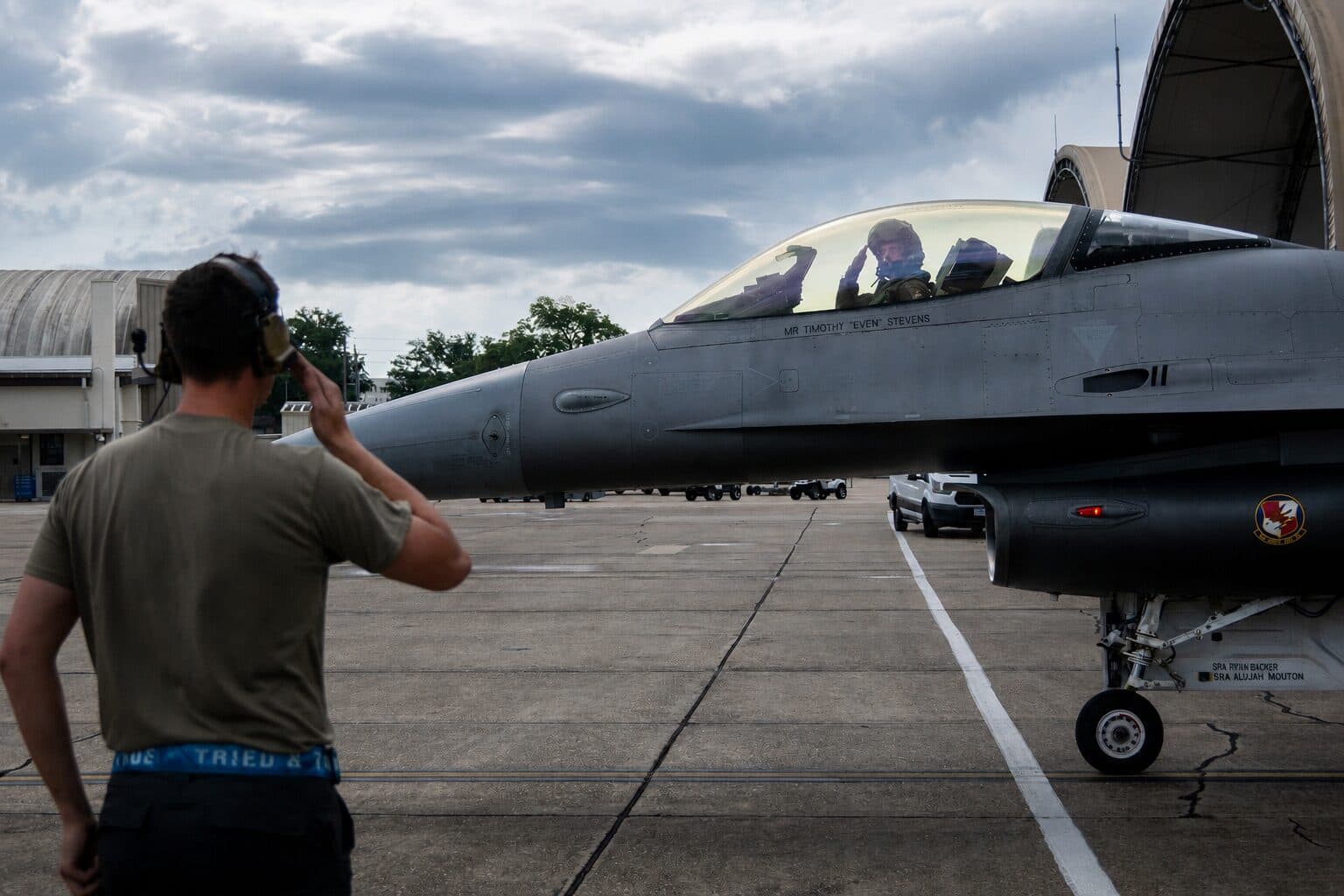
DARPA and the U.S. Air Force have successfully demonstrated an AI agent controlling a modified F-16 fighter jet in flight, with a pilot monitoring from the cockpit. Conducted at Eglin Air Force Base, Florida, in July 2026, the VENOM-AFT program (Viper Experimentation and Next-generation Operations Model–Autonomy Flying Testbed) advances the foundation for autonomous air combat and future unmanned combat aircraft development.
Highlights
- In July 2026, DARPA and the U.S. Air Force successfully demonstrated an AI agent flying a modified F-16 at Eglin Air Force Base, Florida, with a pilot monitoring from the cockpit.
- The VENOM-AFT modification adds hardware, software, and instrumentation to automate flight controls and sensors without altering the F-16's core software, and allows pilots to toggle between manual and autonomous modes.
- Ground testing for the VENOM program dates back to 2024, and the Air Force received its first three VENOM-designated F-16s at Eglin that same year.
- VENOM builds on AI dogfight tests conducted with the X-62A VISTA under DARPA's Air Combat Evolution (ACE) program, but scales testing to multiple standard F-16s.
- Future VENOM work will feed DARPA's Artificial Intelligence Reinforcements program for multi-aircraft BVR combat and support the Air Force's Collaborative Combat Aircraft (CCA) program testing the General Atomics YFQ-42A and Anduril YFQ-44A.
DARPA and U.S. Air Force Complete VENOM Program Flight Tests with AI-Controlled F-16
DARPA and the U.S. Air Force have successfully demonstrated an AI agent controlling a modified F-16 fighter jet in flight, marking a significant step forward in autonomous combat testing — moving from a single research aircraft to an operationally representative, modified frontline fighter.
The Air Force began flying the VENOM-modified aircraft in June 2026 to verify the safety of the jet and its new systems. Test teams subsequently allowed an AI agent to take control of the F-16 in flight during July, while a pilot remained in the cockpit throughout to monitor the aircraft and assume manual control if necessary.
The program's full name is the Viper Experimentation and Next-generation Operations Model–Autonomy Flying Testbed, abbreviated as VENOM-AFT.
Modification Details: Core Software Preserved, Autonomy Hardware Added
Engineers fitted the F-16 with additional hardware, software, and instrumentation to enable AI agent control of the aircraft. DARPA stated that the modifications automate the aircraft's flight control systems and sensors without altering the F-16's core software.
Pilots can toggle between conventional manual control and autonomous operating modes during flight. Throughout the test program, a pilot remained in the cockpit at all times, continuously monitoring the AI agent's behavior, aircraft systems status, and mission objective execution.
DARPA Program Manager Brigadier General James Valpiani said: "These groundbreaking flight tests of the VENOM-modified F-16 advance the infrastructure needed to develop trusted autonomous air combat capabilities."
Valpiani noted that the system provides the Air Force and DARPA with a faster pathway to develop and test AI technologies applicable to air combat.
The Air Force has not disclosed the specific maneuvers or mission tasks performed by the AI during recent test flights, nor has it revealed the autonomous software used or the vendors behind its development.
Solid Ground Testing Foundation, Program History Traceable to 2024
DARPA stated that early sorties focused on confirming that the VENOM-equipped modified aircraft could fly safely. Engineers completed months of engine runs, aircraft systems checks, and simulation work before beginning flight tests. Ground testing for the program dates back to 2024.
VENOM test pilot Tim Stevens said: "Getting the aircraft airborne is always a major milestone for any complex test program. It represents years of work by hundreds of team members dedicated to design, modification, and test planning."
The 40th Flight Test Squadron led much of the early developmental testing at Eglin Air Force Base, Florida. The 53rd Wing and 96th Test Wing also participated in the program with DARPA support.
VENOM Builds on X-62A VISTA Test Results
The VENOM program builds upon earlier research conducted with the X-62A Variable Stability In-flight Simulator Test Aircraft (VISTA).
DARPA used the heavily modified F-16 test aircraft under its Air Combat Evolution (ACE) program to validate AI-controlled air combat capabilities. The agency reported that AI agents had controlled the X-62A during close-range dogfight tests against human pilots.
The X-62A remains a highly specialized, one-of-a-kind research aircraft. The VENOM program allows the Air Force to install and test autonomous systems on a broader fleet of standard F-16s without requiring a full aircraft redesign.
The Air Force received its first three F-16s designated for VENOM modification at Eglin in 2024. At the time, the Air Force stated that developmental and operational test pilots would work together at the same location to share data and feedback directly with autonomous systems developers.
Path Toward Unmanned Combat Aircraft
The VENOM-modified aircraft will next support DARPA's Artificial Intelligence Reinforcements program, which focuses on AI-controlled, multi-aircraft Beyond Visual Range (BVR) combat. DARPA plans to test autonomous software on manned F-16s first before transitioning it to unmanned combat aircraft.
The program will also help the Air Force develop methods for pilots to command autonomous aircraft formations, rather than controlling each individual maneuver.
This work is part of the Air Force's broader initiative to field manned fighter jets operating alongside unmanned combat aircraft. The service is currently testing the General Atomics YFQ-42A and Anduril YFQ-44A under its Collaborative Combat Aircraft (CCA) program.
The Air Force stated that the team will continue refining the aircraft and autonomous systems after each flight and will progressively increase the complexity of testing, though no timeline for the program's next phase has been released.
原文來源: 查看原文
FAQ
Reviewed and published by the LAETimes editorial desk ·